 Henan Xuye Machinery Equipment Co., Ltd.

SEARCH WHAT YOU WANT
Search allProductNews
SEARCH
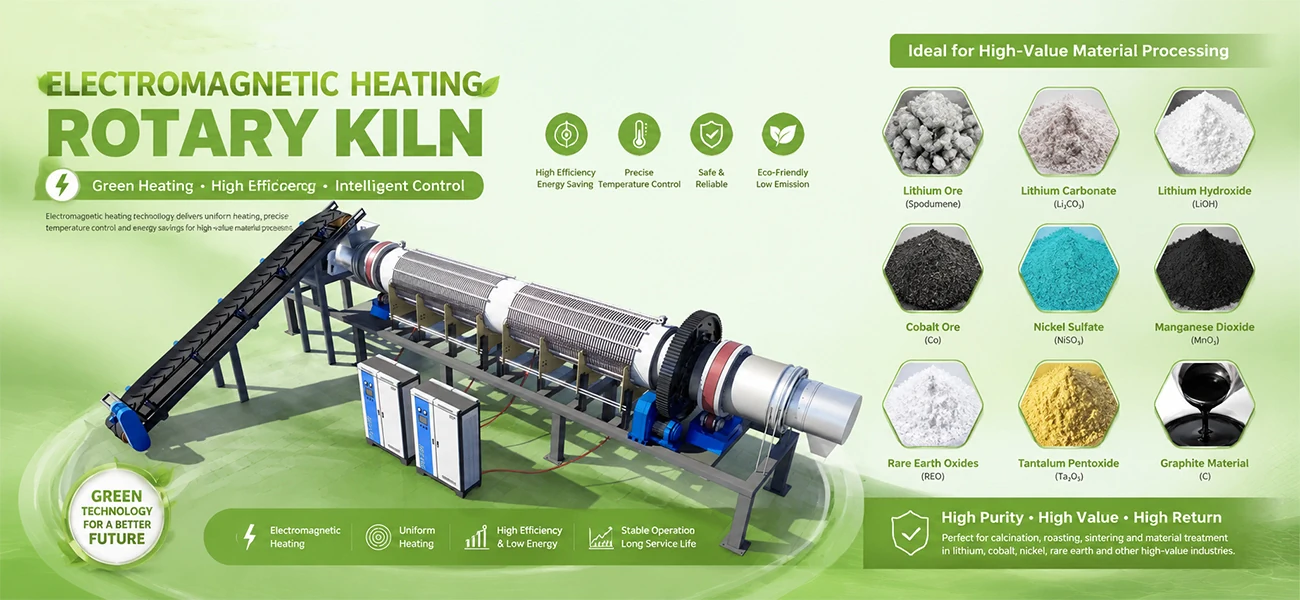
An Electromagnetic Heating Rotary Kiln is an advanced thermal processing system designed for high-value material calcination, roasting, and heat treatment. Unlike traditional fuel-fired rotary kilns, this equipment uses electromagnetic induction heating technology to directly convert electrical energy into heat, providing faster temperature response, higher thermal efficiency, and more precise temperature control. The rotary drum continuously rotates during operation, ensuring uniform heating of materials and stable product quality.
This type of rotary kiln is widely used in industries such as new energy materials, lithium battery materials, rare earth processing, catalysts, advanced ceramics, and chemical powders. It is especially suitable for applications requiring clean heating environments and accurate temperature control. The electromagnetic heating system significantly reduces heat loss and lowers energy consumption compared with conventional gas or coal-fired kilns.
The equipment is usually equipped with an intelligent control system that allows automatic temperature adjustment, speed regulation, and real-time monitoring. With low emissions, quiet operation, and compact structure, the electromagnetic heating rotary kiln meets modern industrial requirements for energy saving, environmental protection, and continuous production. It is an ideal solution for manufacturers seeking high efficiency, stable performance, and premium product quality.
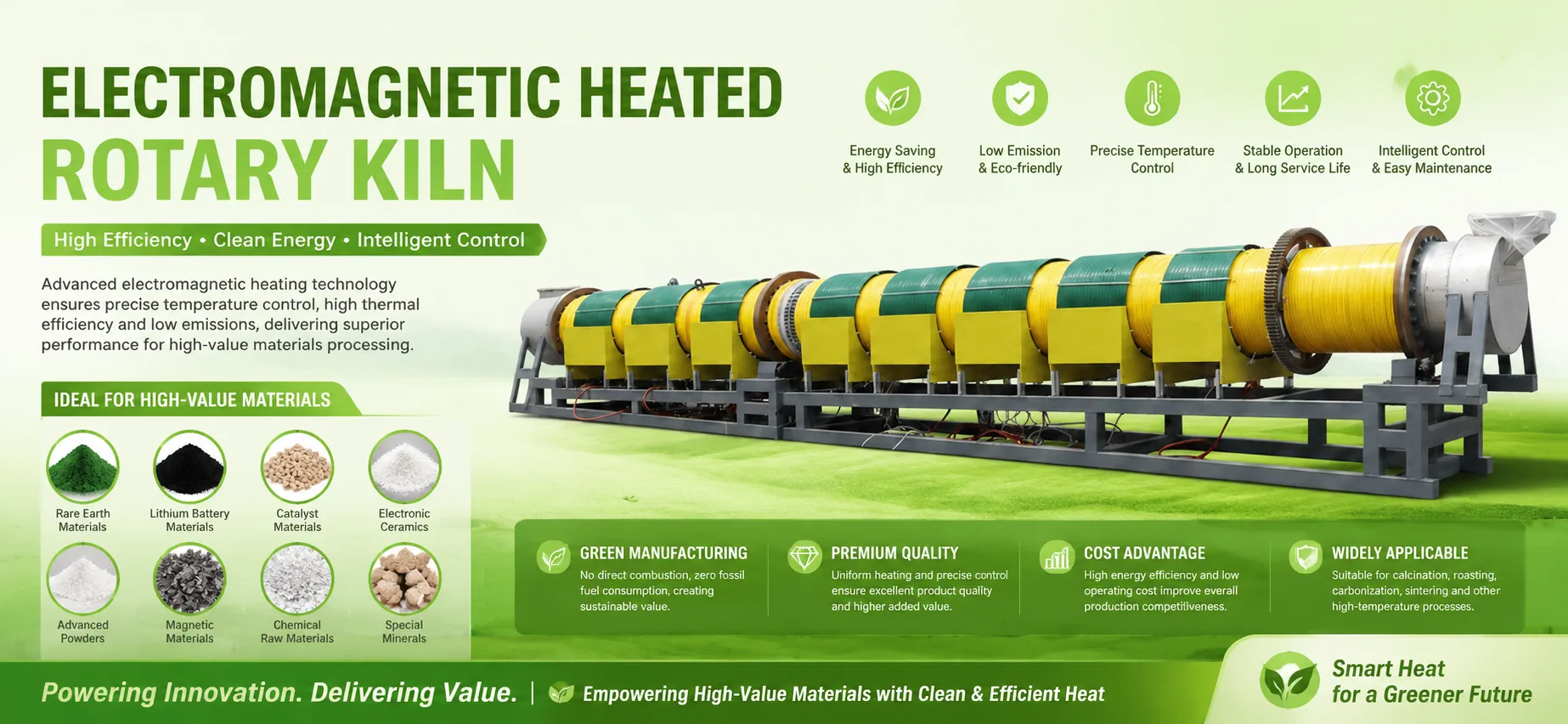
The working principle of an Electromagnetic Heating Rotary Kiln is based on electromagnetic induction heating technology combined with continuous rotary material processing. During operation, the electromagnetic induction system generates a high-frequency alternating magnetic field around the rotary kiln shell. The metal kiln body cuts the magnetic field lines and rapidly produces heat through electromagnetic induction and eddy current effects. This heating method directly transfers thermal energy to the kiln wall, greatly improving heating efficiency and reducing heat loss.
The rotary kiln is installed with a slight incline and rotates continuously at a controlled speed. Raw materials are fed into the higher end of the kiln and gradually move toward the discharge end under the combined action of rotation and gravity. During this process, the materials are evenly heated and undergo physical or chemical reactions such as drying, calcination, roasting, sintering, or thermal decomposition.
Compared with traditional gas-fired or coal-fired kilns, electromagnetic heating provides more accurate temperature control, faster heating speed, and a cleaner production environment. The intelligent control system can automatically adjust heating power, kiln rotation speed, and process temperature according to production requirements, ensuring stable product quality and lower energy consumption. This technology is especially suitable for high-value materials that require precise thermal processing and uniform heating conditions.
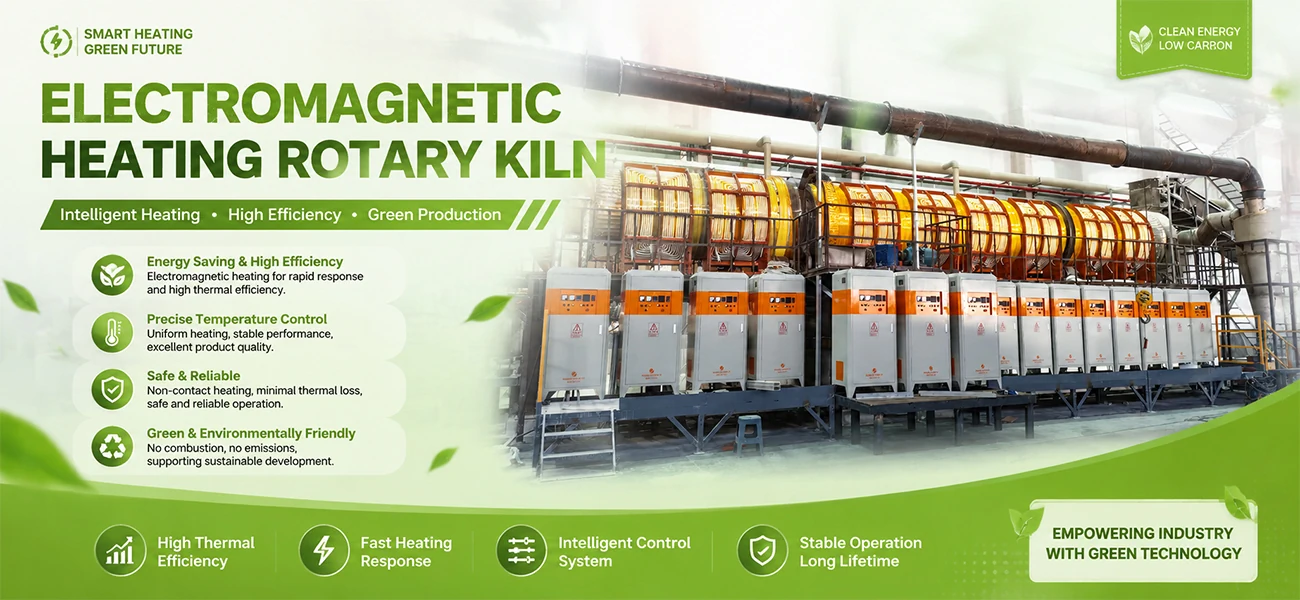
Electromagnetic heating rotary kilns are widely used in the processing of high-value advanced materials that require precise and uniform temperature control. Compared with traditional fuel-fired kilns, electromagnetic heating provides faster thermal response, higher energy efficiency, and cleaner heating conditions, making it suitable for industries with strict product quality requirements. Common application materials include lithium battery cathode and anode materials, rare earth powders, metal oxides, electronic ceramics, magnetic materials, catalyst carriers, quartz sand, silicon carbide, alumina powder, and other fine chemical or inorganic materials.
The kiln is especially suitable for calcination, roasting, drying, reduction, and heat treatment processes that demand stable temperatures and low contamination. With accurate temperature adjustment and continuous rotary operation, the material can be heated evenly, improving product consistency and reducing energy consumption. Electromagnetic heating rotary kilns are widely applied in new energy, electronic materials, chemical processing, advanced ceramics, powder metallurgy, and environmental protection industries.