 Henan Xuye Machinery Equipment Co., Ltd.

SEARCH WHAT YOU WANT
Search allProductNews
SEARCH
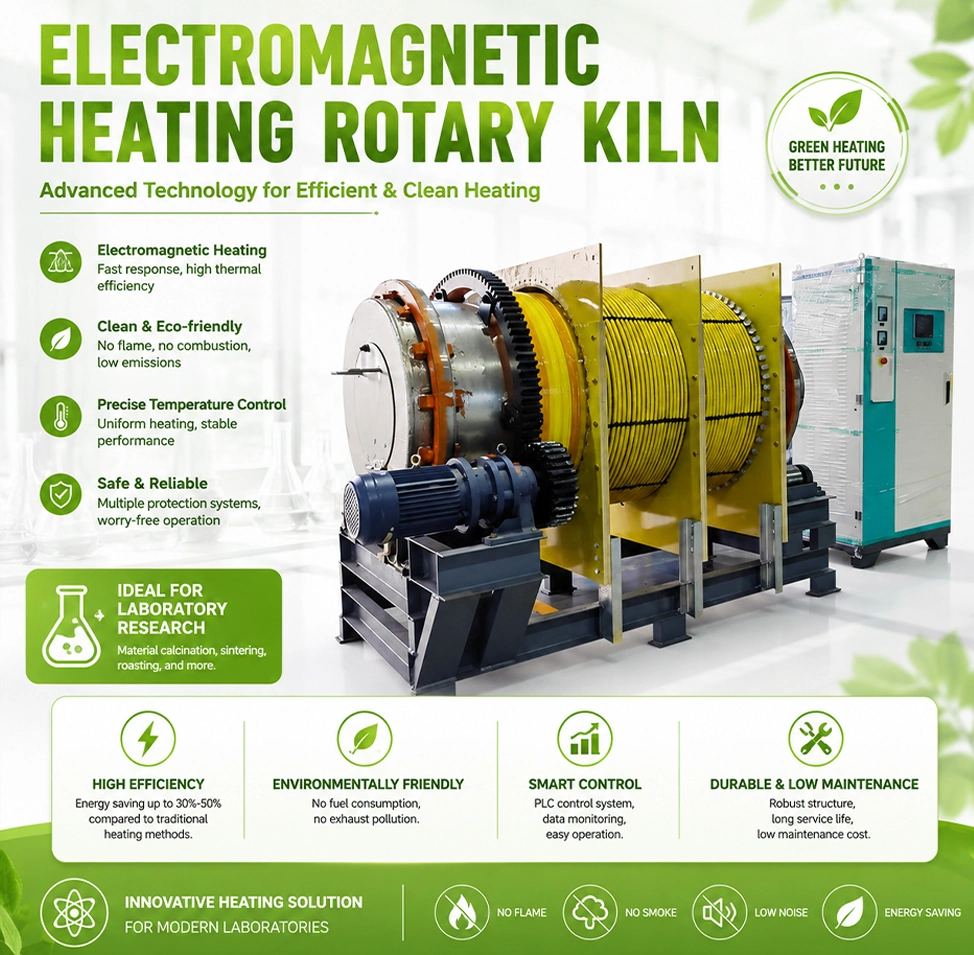
The Lithium Ore Roasting Electromagnetic Heating Rotary Kiln is a high-efficiency thermal processing system specifically designed for the roasting and activation of lithium-bearing ores such as spodumene, lepidolite, petalite, and lithium clay. Utilizing advanced electromagnetic induction heating technology, the kiln provides precise temperature control, rapid heat transfer, superior energy efficiency, and lower carbon emissions compared to conventional fuel-fired rotary kilns.
As global demand for lithium batteries continues to grow, efficient lithium extraction processes have become increasingly important. Electromagnetic heating rotary kilns offer a cleaner and more controllable solution for lithium ore roasting, helping mining and lithium chemical producers improve lithium recovery rates while reducing operating costs and environmental impact.
Lithium ore roasting is a critical pretreatment process in lithium extraction. Most lithium minerals require thermal conversion before leaching.
For example, natural spodumene exists primarily in the α-spodumene phase, which is difficult to leach. Through high-temperature roasting, it transforms into β-spodumene, which is more porous and reactive, allowing efficient lithium recovery during subsequent processing.
The roasting process is commonly applied to:
Electromagnetic induction heating directly heats the rotary kiln shell through induced currents, reducing heat loss and improving thermal efficiency.
Benefits include:
Lithium mineral phase transformation requires strict temperature control.
Typical roasting temperatures:
The electromagnetic system maintains temperature fluctuations within a narrow range, ensuring consistent product quality.
The rotary kiln continuously rotates, allowing lithium ore particles to tumble and mix throughout the roasting process.
Advantages:
Compared with coal-fired and gas-fired kilns, electromagnetic heating offers:
Advanced PLC systems enable:
Lithium ore concentrate is fed continuously into the kiln through a sealed feeding system.
Electromagnetic coils surrounding the kiln generate a magnetic field that induces heat directly within the kiln shell.
Key advantages:
As the kiln rotates, lithium ore gradually moves through the high-temperature zone where:
The roasted material exits the kiln and enters a cooling system before proceeding to:
Features include:
The kiln supports:
The kiln utilizes:
Suitable for temperatures up to:
1200°C
The heating system is designed to maintain:
System functions include:
Conversion of α-spodumene into β-spodumene for enhanced lithium recovery.
Thermal activation of lithium mica ores prior to extraction.
Preparation of lithium ores for sulfuric acid leaching processes.
Suitable for:
Used in:
| Item | Specification |
|---|---|
| Heating Method | Electromagnetic Induction |
| Kiln Diameter | 500–3500 mm |
| Kiln Length | 5–40 m |
| Operating Temperature | 800–1200°C |
| Capacity | 0.5–50 TPH |
| Temperature Accuracy | ±5°C |
| Rotation Speed | Variable Frequency Control |
| Control System | PLC Automatic Control |
| Power Supply | 380V/415V/440V |
Custom specifications are available based on project requirements.
| Feature | Electromagnetic Rotary Kiln | Gas/Coal Rotary Kiln |
|---|---|---|
| Energy Efficiency | High | Medium |
| Temperature Control | Precise | Moderate |
| Carbon Emissions | Low | High |
| Heating Response | Fast | Slow |
| Maintenance Cost | Low | High |
| Automation Level | High | Medium |
| Environmental Performance | Excellent | Moderate |
The system can be equipped with:
Lithium ore is crushed to the required particle size.
Crushed ore is fed into the rotary kiln continuously.
The ore undergoes high-temperature phase transformation.
Roasted ore is cooled under controlled conditions.
The activated ore is ground for subsequent processing.
Lithium is recovered through leaching and purification processes.