 Henan Xuye Machinery Equipment Co., Ltd.

SEARCH WHAT YOU WANT
Search allProductNews
SEARCH
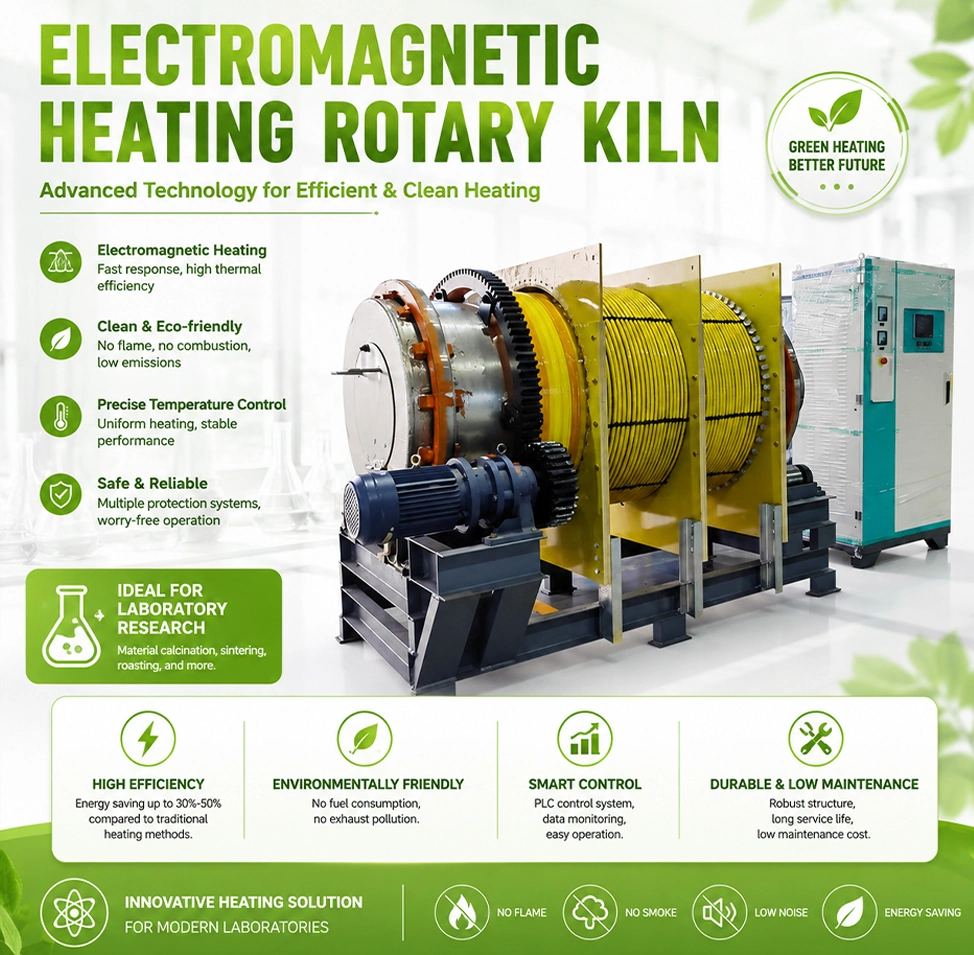
The Industrial Waste Salt Treatment Electromagnetic Heating Rotary Kiln is an advanced thermal treatment system specifically designed for the harmless treatment, resource recovery, and volume reduction of industrial waste salts generated from chemical, pharmaceutical, pesticide, dye, and hazardous waste treatment industries.
Compared with traditional gas-fired or coal-fired rotary kilns, the electromagnetic heating rotary kiln provides precise temperature control, rapid heating, lower energy consumption, and zero direct carbon emissions. It is particularly suitable for waste salt pyrolysis, organic impurity removal, salt regeneration, and hazardous waste salt detoxification processes.
At Henan Yexin Technology Co., Ltd., we manufacture high-efficiency electromagnetic heating rotary kilns that help industrial enterprises comply with environmental regulations while reducing operational costs and improving resource utilization.
Industrial waste salt refers to by-product salts generated during industrial production processes, including:
These waste salts often contain:
Without proper treatment, industrial waste salt can cause severe environmental pollution and regulatory compliance issues.
Electromagnetic induction heating allows accurate temperature control from:
This ensures complete decomposition of organic contaminants while preserving valuable salt components.
The rotating kiln continuously tumbles the waste salt material, ensuring:
Compared with traditional fuel-fired systems:
The system produces:
Integrated PLC control enables:
Industrial waste salt is fed into the rotary kiln through a sealed feeding system.
Electromagnetic coils installed outside the kiln body generate induced heat directly within the metallic kiln shell.
Advantages include:
As the kiln rotates, the waste salt moves gradually through the heating zone where:
After treatment, the purified salt is discharged through the outlet and can be:
The exhaust gas system may include:
This ensures compliance with environmental standards.
Benefits include:
The kiln supports:
Waste salt often contains corrosive compounds.
The kiln can be manufactured with:
Features include:
Treatment of:
Removal of:
Treatment of waste salts containing:
Processing of:
Suitable for:
| Item | Specification |
|---|---|
| Heating Method | Electromagnetic Induction |
| Kiln Diameter | 400-3000 mm |
| Kiln Length | 3-30 m |
| Operating Temperature | 200-1200°C |
| Temperature Accuracy | ±5°C |
| Capacity | 100-10000 kg/h |
| Control System | PLC Automatic Control |
| Operation Mode | Continuous |
| Power Supply | 380V/415V/440V |
Custom designs are available according to project requirements.
| Feature | Electromagnetic Rotary Kiln | Gas/Oil Rotary Kiln |
|---|---|---|
| Heating Efficiency | High | Medium |
| Temperature Control | Precise | Less Accurate |
| Carbon Emissions | Very Low | High |
| Maintenance Cost | Low | Higher |
| Heating Speed | Fast | Slower |
| Automation Level | High | Medium |
| Environmental Compliance | Excellent | Moderate |
According to customer requirements, the system can be equipped with: