 Henan Xuye Machinery Equipment Co. Ltd.


RECHERCHEZ CE QUE VOUS VOULEZ
Rechercher tousProduitActualités
RECHERCHE
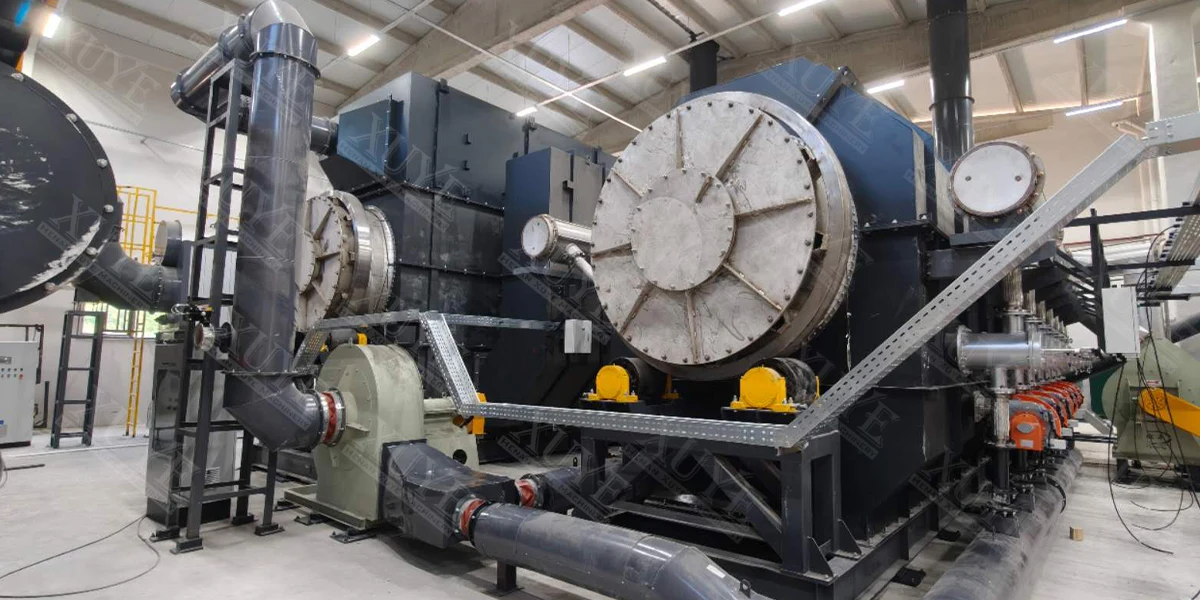
Coal-based granular activated carbon kilns are specialized thermal equipment for producing coal-based granular activated carbon. Through two core processes, carbonization and activation, they transform raw materials such as anthracite into a porous adsorbent material. Their operating principle is as follows:
Carbonization: Coal (such as high-quality anthracite) is heated in an oxygen-free environment, causing pyrolysis to form a carbon structure and remove volatiles, creating initial pores.
Activation: Activators such as steam and carbon dioxide are introduced under high temperature and pressure to further expand pores, increase specific surface area, and enhance adsorption performance.
Forming and Post-Processing: The carbonized and activated material is crushed, screened (typically to a particle size of 2-4 mm), washed, and dried to produce the finished granular activated carbon.
Raw Material Compatibility: Anthracite is the primary raw material, but lignite, bituminous coal, and other types can also be processed. Raw materials are selected based on carbon content and density.
Product Specifications: The mainstream product is 2-4 mm granular activated carbon, with a specific surface area of 800-1200 m²/g and a strength of ≥90%. Environmental protection requirements: It must be equipped with tail gas treatment equipment to reduce sulfide and nitrogen oxide emissions and comply with clean production standards.
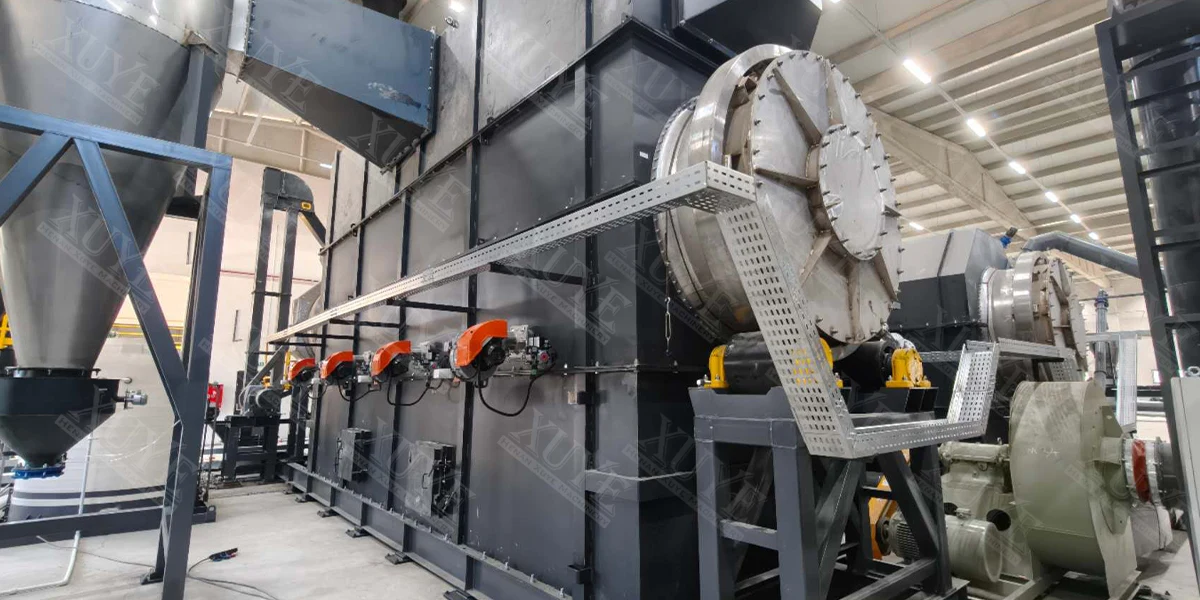
Temperature Control: 400-600°C for the carbonization stage and 800-1000°C for the activation stage, with an accuracy of ±5°C to ensure pore structure stability.
Atmosphere Control: Oxygen content monitoring and inert gas (nitrogen) supplementation are used to maintain a weakly oxidizing environment to avoid excessive ablation.
Raw Material Compatibility: A variety of wood-based materials, including sawdust, coconut shells, and fruit shells, can be processed. The moisture content of the raw materials should be controlled at 10%-15% to improve thermal efficiency.
Core Applications in Water Treatment
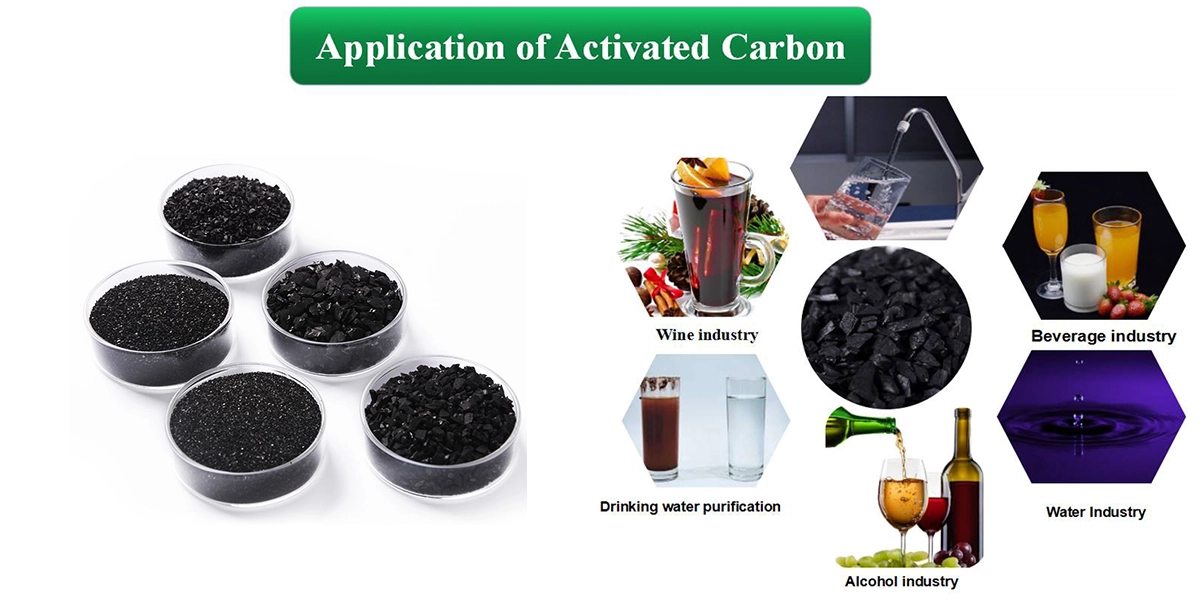
Products produced in coal-based granular activated carbon kilns are ideal for water treatment due to their well-developed pore structure and high adsorption efficiency:
Municipal Water Supply: Removes odor, taste, residual chlorine, and heavy metals (lead, mercury, etc.) from water, while reducing color.
Rainwater Purification: Used in rainwater collection systems to adsorb organic compounds, pesticides, and suspended solids, improving water quality and taste.
Industrial Wastewater Treatment: Treats printing and dyeing and chemical wastewater, removing COD, BOD, and recalcitrant organic matter.
Other Key Applications:
Air Purification: Adsorbs harmful gases such as formaldehyde and VOCs, and is used in air purifier filters.
Solvent Recovery: Recovers organic solvents such as benzene and ethanol in chemical production, reducing raw material consumption.
Desulfurization and Denitrification: Used as a catalyst carrier in power plant flue gas treatment to remove SO₂ and NOx.

High carbon yield: One ton of activated carbon can be produced from 5-6 tons of raw material. Both carbonization and activation are performed in an oxygen-free environment, minimizing carbon loss. The carbonization furnace utilizes segmented temperature control for controlled carbonization.
Adjustable Product Quality: Adjustable production process parameters enable the production of coconut shell activated carbon in various specifications.
High Automation: The entire equipment utilizes PLC automation control, and sensors are installed at multiple process nodes throughout the production line to ensure safety at every stage. The equipment’s process parameters can be automatically adjusted via the PLC, providing exceptional flexibility. The entire production line utilizes minimal labor, saving labor.
High production output: 5-20 tons/day.
| capacité | 5-8t/d | 8-10t/d | 10-12t/d | 12-15t/d | 15-20t/j |
| Modèle de séchoir | HG-800 | HG-1000 | HG-1200 | HG-1500 | HG-1800 |
| Puissance du séchoir | 3kw | 4kw | 7,5 kW | 15kw | 22kw |
| modèle de four de carbonisation en continu | TH-1500 | TH-1500 | TH-1800 | TH-2000 | TH-2000 |
| Température de carbonisation | 600-850℃ | ||||
| Teneur en carbone fixe après carbonisation | 70-80% | ||||
| Matériau du tambour du four de carbonisation | 309S/310S | 309S/310S | 309S/310S | 309S/310S | 309S/310S |
| Modèle de four d'activation | HN-5 | HN-8 | HN-10 | HN-12 | HN-15 |
| Puissance du four d'activation | 15kw | 22kw | 30kw | 37kw | 37kw |
| Matériau de la chambre du four d'activation | QQ345+plaque d'isolation thermique nanométrique+réfractaire | ||||
| Température d'activation | 850-950℃ | ||||
| Activateur | Vapeur d'eau ou acide phosphorique (personnalisé selon les exigences du client, la conception de l'équipement sera mise à jour) | ||||
| Temps d'activation | 1-2h | ||||
| Modèle de machine de refroidissement | GTL-1004 | GTL-1204 | GTL-1206 | GTL-1504 | GTL-1506 |
| Température après refroidissement | ≤40℃ | ||||
| Modèle de broyeur de charbon actif | SGP-400 | SGP-400 | SGP-600 | SGP-800 | SGP-800 |
| Taille du produit fini en charbon actif | 4-60mesh | ||||
| Indice d'iode du charbon actif | 800-1300mg/g | ||||
| Surface spécifique du charbon actif | 800-1500m²/g | ||||
| Résistance du charbon actif | ≥95 | ||||
| CTC | ≥60% | ||||
| Densité de remplissage | 0,45-0,55g/cm3 | ||||
| Cendres de charbon actif | ≤3% | ||||
Ce site web utilise des cookies pour améliorer votre expérience de navigation. En continuant à utiliser ce site, vous acceptez l'utilisation de nos cookies. Les données collectées sur ce site sont traitées et stockées aux États-Unis.