 Henan Xuye Machinery Equipment Co., Ltd.
SEARCH WHAT YOU WANT
Search allProductNews
SEARCH
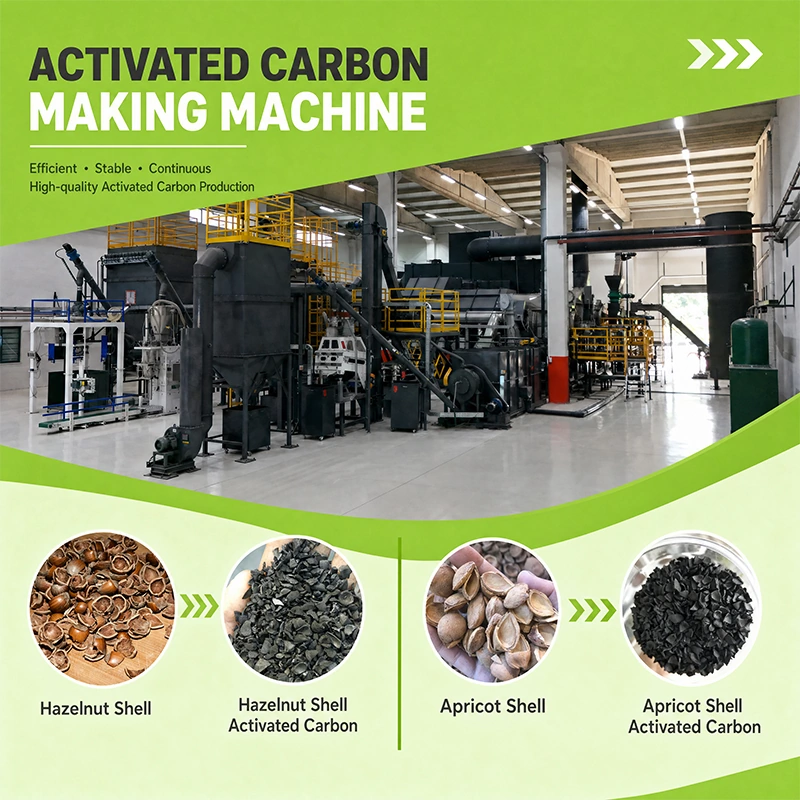
An activated carbon making machine is a complete industrial solution designed to convert carbon-rich raw materials into high-value activated carbon through carbonization, activation, cooling, crushing, screening, and packaging. It is widely used for producing activated carbon from coconut shells, wood chips, bamboo, palm shells, fruit shells, sawdust, coal, and other biomass or carbonaceous materials.
As global demand for clean water, air purification, gold recovery, food processing, chemical treatment, and environmental protection continues to grow, activated carbon has become one of the most important adsorption materials in modern industry. Choosing the right activated carbon production equipment is essential for stable quality, high iodine value, efficient operation, and long-term profitability.
Our activated carbon making machine is engineered for manufacturers who need reliable output, controllable process parameters, energy-saving performance, and flexible raw material compatibility. Whether you are building a small activated carbon workshop or a complete automatic activated carbon production line, we can provide customized equipment according to your raw material, capacity, fuel type, workshop layout, and final product requirements.
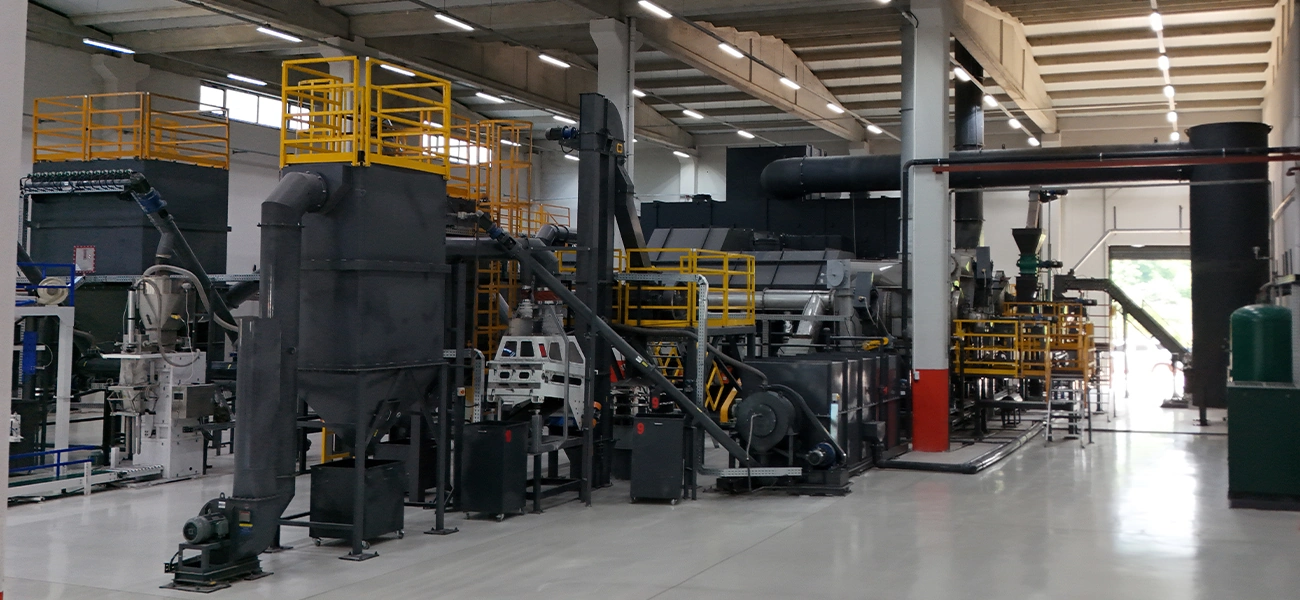
An activated carbon making machine is a complete production system designed to produce high-quality activated carbon from carbon-containing raw materials through controlled carbonization and activation processes. XUYE activated carbon equipment adopts an externally heated activated carbon furnace design, which uses an external heating source to transfer heat through the furnace wall. This structure helps avoid direct contact between combustion gases and raw materials, ensuring a cleaner production environment and more stable activated carbon quality.
The activated carbon production process generally includes two main stages: carbonization and activation.
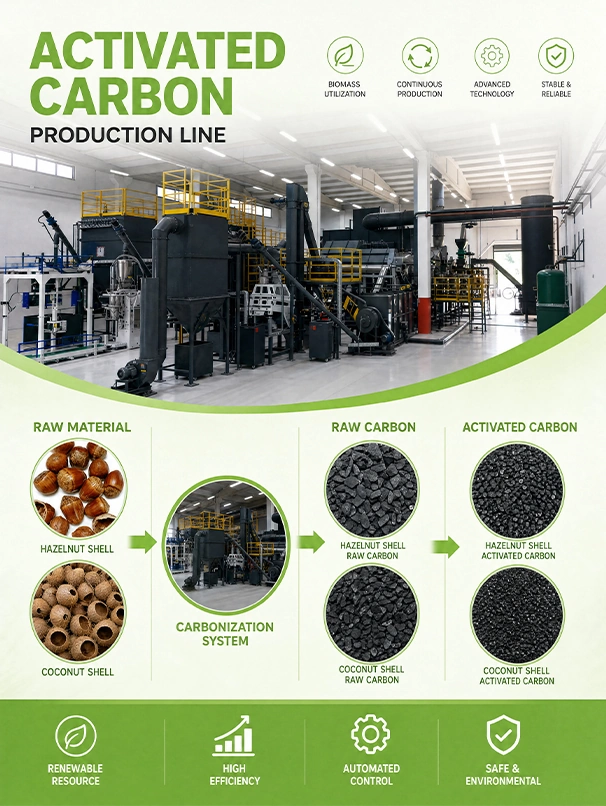
During the carbonization stage, raw materials such as coconut shells, wood, bamboo, nutshells, and other biomass materials are heated in an oxygen-limited environment. Moisture, volatile compounds, tar, and other non-carbon components are gradually removed, producing carbonized material with a higher carbon content.
During the activation stage, the carbonized material is further treated at high temperature with activating agents such as steam, carbon dioxide, or chemical additives. This process develops and enlarges the internal pore structure of the carbon material, creating activated carbon with excellent adsorption capacity and a large specific surface area.
The finished activated carbon can be processed into various forms, including granular activated carbon (GAC), powdered activated carbon (PAC), columnar activated carbon, pellet activated carbon, and crushed activated carbon. These products are widely used in water purification, air filtration, solvent recovery, gas separation, chemical industries, pharmaceuticals, food processing, mining, and industrial wastewater treatment.
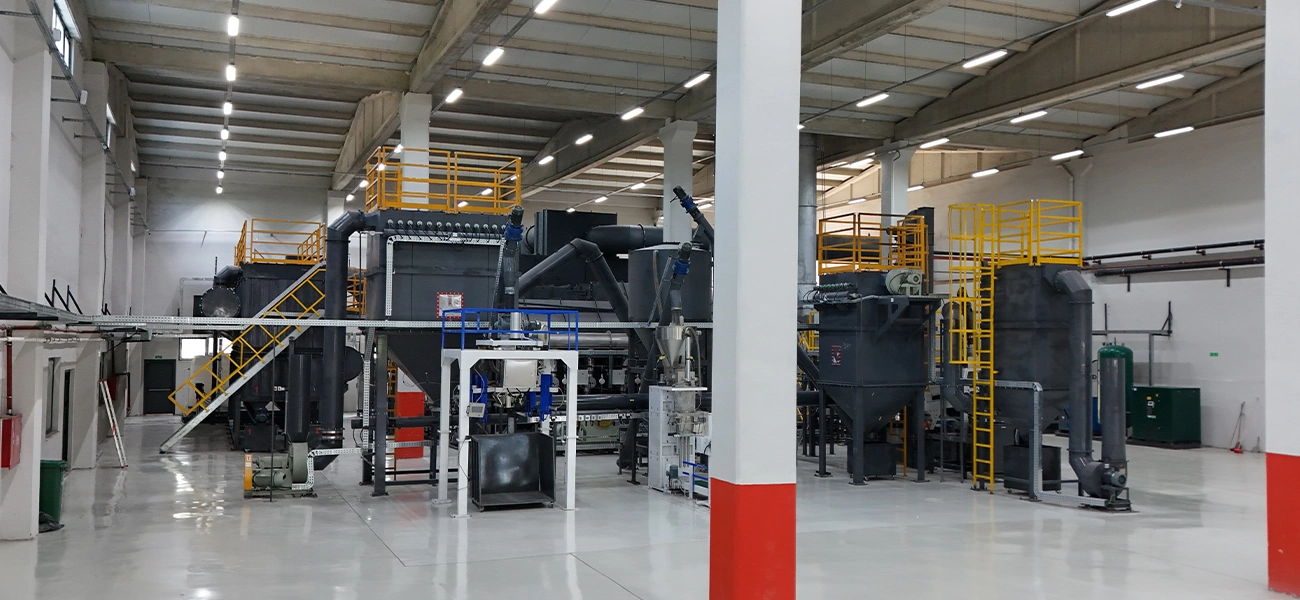
Unlike a single carbonization or activation furnace, a complete XUYE activated carbon making machine is an integrated production line that may include raw material preparation equipment, drying system, feeding system, externally heated activated carbon furnace, cooling system, dust collection system, waste gas treatment system, gas recycling system, crushing machine, screening equipment, storage silo, and automatic packing system.
With its stable heating performance, energy-saving design, and environmentally friendly operation, XUYE externally heated activated carbon equipment provides an efficient solution for industrial-scale activated carbon production.
Our activated carbon making machine can process many types of carbon-rich raw materials. Different materials create different activated carbon properties, so raw material selection is very important.
Common raw materials include coconut shell, palm kernel shell, wood chips, bamboo, sawdust, rice husk, apricot shell, walnut shell, peach shell, olive stone, coal, lignite, anthracite, and other biomass materials.
Coconut shell activated carbon is popular because it usually has high hardness, high micropore volume, and excellent adsorption performance. It is widely used in drinking water purification, gold recovery, gas masks, and high-end filtration.
Wood-based activated carbon has well-developed mesopores and is often used for decolorization, food processing, pharmaceuticals, and chemical purification.
Bamboo activated carbon is valued for its renewable source, clean structure, and broad application in air purification, household products, and water treatment.
Coal-based activated carbon offers good mechanical strength and stable performance, making it suitable for industrial water treatment, gas purification, and large-scale environmental applications.
Before entering the carbonization furnace, raw materials may need to be crushed, dried, or screened. Proper pretreatment improves heating uniformity, reduces energy consumption, and helps produce activated carbon with more consistent quality.
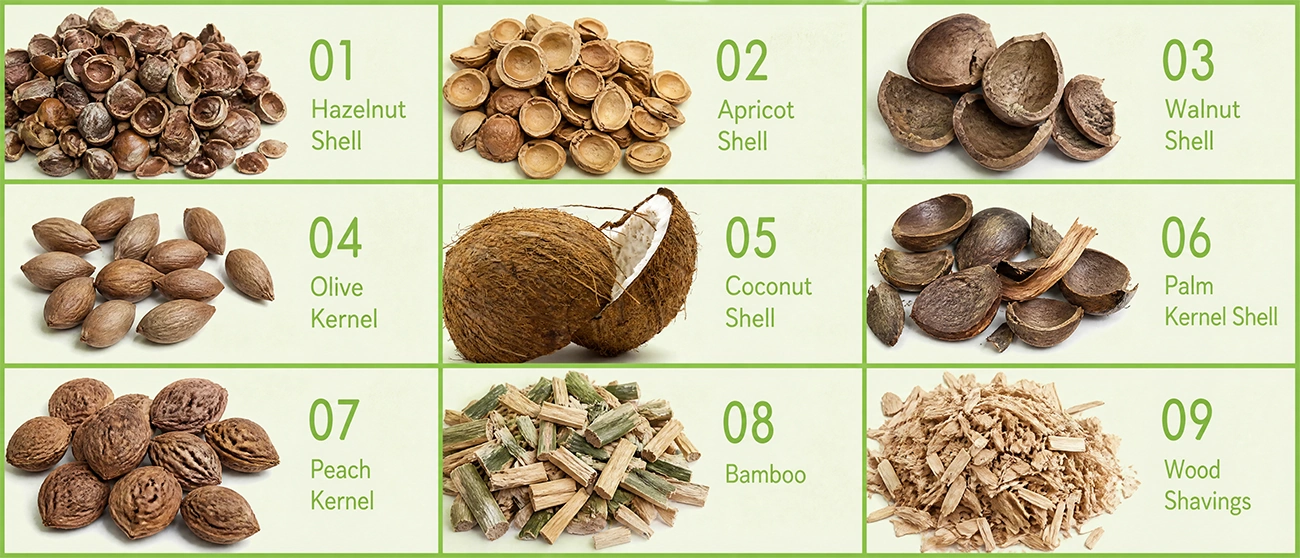
A complete activated carbon making machine can be configured according to the customer’s production needs. The main equipment usually includes the following systems.
The pretreatment system prepares raw materials for carbonization. It may include a crusher, dryer, conveyor, screening machine, and storage bin. If the moisture content of the raw material is too high, drying is necessary before carbonization. Lower moisture improves thermal efficiency and reduces furnace load.
The carbonization furnace is used to convert raw materials into charcoal. It operates under limited oxygen conditions and controlled temperature. The structure can be rotary, vertical, continuous, or batch-type, depending on capacity and raw material characteristics.
A high-quality carbonization furnace should provide stable temperature control, uniform heating, good sealing performance, long service life, and efficient exhaust gas treatment.
The activation furnace is the core equipment for producing activated carbon. It develops the internal pore structure of the carbonized material. Steam activation is commonly used for physical activation, while chemical activation may use agents such as phosphoric acid or zinc chloride depending on the required product type.
The activation temperature, residence time, steam flow, material size, and furnace atmosphere all affect the iodine value, methylene blue value, surface area, pore distribution, and yield of the finished activated carbon.
After activation, the material is extremely hot and must be cooled safely before crushing or packaging. The cooling system reduces temperature while preventing oxidation and combustion. Proper cooling protects product quality and improves production safety.
Activated carbon can be crushed and screened into different particle sizes according to market demand. Granular activated carbon, powdered activated carbon, and customized mesh sizes can be produced by selecting suitable crushers, mills, and vibrating screens.
Activated carbon production may generate smoke, dust, tar gas, and combustible gas. A professional activated carbon making machine should include dust collection, exhaust gas treatment, and heat recovery systems. These systems help reduce emissions, improve workplace cleanliness, and recycle energy where possible.
The final product can be packed into bags, jumbo bags, or customized packaging. Automatic weighing and packaging systems improve production efficiency and reduce labor costs.
The working process of an activated carbon making machine begins with raw material feeding. After pretreatment, the raw material is delivered into the carbonization furnace. Inside the furnace, the material is heated under controlled oxygen conditions. Water evaporates, volatile components are released, and the carbon structure is formed.
The carbonized material then enters the activation stage. In the activation furnace, high-temperature steam or other activating medium reacts with the carbon material. This reaction removes part of the carbon and creates a network of pores. The more developed the pore structure, the stronger the adsorption capacity of the activated carbon.
After activation, the hot activated carbon is cooled in a sealed cooling system. It is then crushed, screened, and classified into different specifications. Finally, the finished activated carbon is packed and stored for sale or further processing.
The entire process can be designed as a continuous production line. Continuous activated carbon making machines are suitable for large-scale factories that require stable output and lower labor input. Batch systems are often suitable for smaller capacity projects, pilot production, or manufacturers with flexible raw material sources.
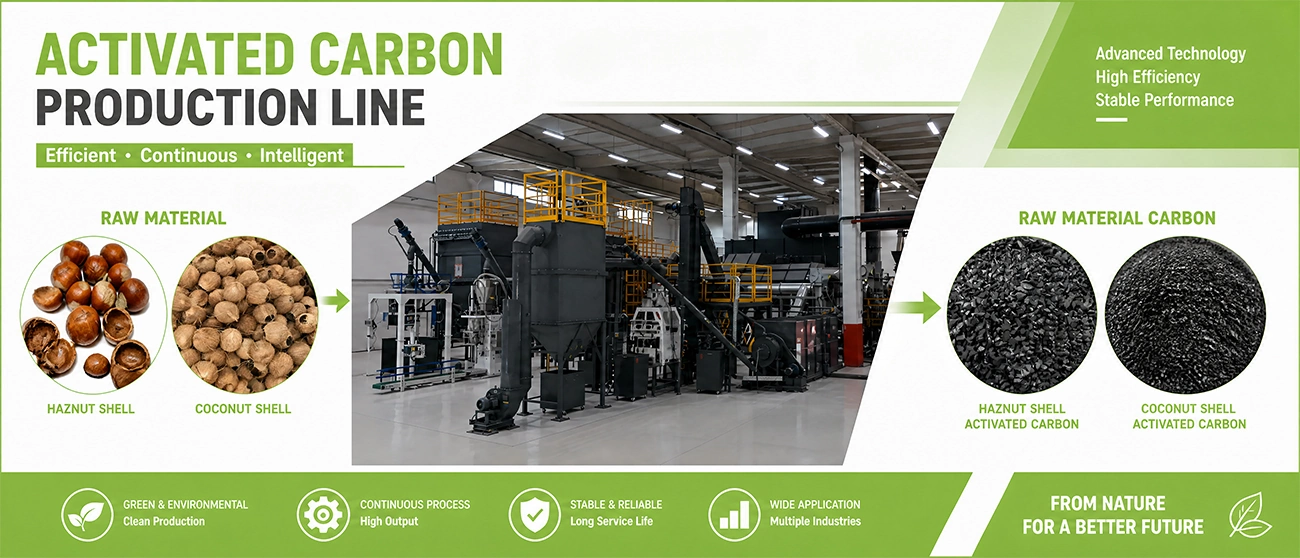
Our activated carbon making machine is designed to help customers achieve stable production, lower operating costs, and reliable product quality.
The equipment is designed for efficient heat transfer and continuous material processing. With proper configuration, the production line can achieve stable output and reduce downtime. Automated feeding, discharging, temperature control, and conveying systems can be added to improve overall efficiency.
The machine can process coconut shell, wood, bamboo, palm shell, sawdust, coal, fruit shell, and other carbonaceous materials. We can recommend the best furnace type and process route according to your raw material characteristics.
Combustible gas generated during carbonization can be collected and reused as fuel after proper treatment. Heat recovery systems can also be configured to reduce fuel consumption. This helps customers lower production costs and improve project profitability.
Accurate control of temperature, residence time, steam flow, and material movement helps produce activated carbon with consistent adsorption performance. The final product can be adjusted according to requirements such as iodine value, hardness, ash content, moisture, particle size, and surface area.
Dust removal, smoke purification, tar treatment, and exhaust gas recycling systems can be included in the production line. These systems help reduce environmental impact and support cleaner production.
We provide different activated carbon making machine models for small, medium, and large-scale projects. The capacity can be customized according to customer investment budget, factory space, local fuel conditions, labor level, and target market.
The furnace body, refractory materials, transmission parts, sealing structure, and high-temperature components are selected for long service life. A durable machine reduces maintenance frequency and improves long-term production stability.
Activated carbon produced by our activated carbon making machine can be used in many industries.
In water treatment, activated carbon removes chlorine, odor, organic pollutants, color, and harmful substances from drinking water, wastewater, groundwater, and industrial process water.
In air purification, activated carbon adsorbs volatile organic compounds, toxic gases, odors, smoke, and chemical vapors. It is used in air filters, gas masks, ventilation systems, and industrial exhaust treatment.
In gold recovery, coconut shell activated carbon is widely used in carbon-in-pulp and carbon-in-leach processes because of its high hardness and strong adsorption capacity for gold complexes.
In food and beverage processing, activated carbon is used for decolorization, deodorization, impurity removal, and purification of sugar, edible oil, alcohol, juice, and other products.
In chemical and pharmaceutical industries, activated carbon is used to purify intermediates, remove impurities, recover solvents, and improve product quality.
In environmental protection, activated carbon plays an important role in sewage treatment, flue gas treatment, soil remediation, and hazardous waste treatment.
Because activated carbon has such broad applications, investing in an activated carbon production line can serve multiple markets and create flexible business opportunities.
Every activated carbon project is different. Raw material, moisture content, ash content, factory space, fuel availability, labor cost, environmental standard, product specification, and investment budget all influence equipment selection.
We provide customized activated carbon making machine solutions based on your actual project conditions. Before recommending a machine, we usually need to understand your raw material type, raw material size, moisture content, target capacity, expected final product, required iodine value, available fuel, local power supply, and workshop layout.
Based on this information, we can design a suitable production process, equipment configuration, layout plan, and technical proposal. Optional systems include automatic feeding, continuous carbonization, steam activation, heat recovery, dust removal, tar treatment, gas purification, cooling, crushing, screening, and automatic packing.
Whether you need a single carbonization furnace, an activation furnace, or a complete activated carbon production line, we can provide practical solutions for commercial production.
| capacity | 5-8t/d | 8-10t/d | 10-12t/d | 12-15t/d | 15-20t/d |
| Dryer model | HG-800 | HG-1000 | HG-1200 | HG-1500 | HG-1800 |
| Dryer power | 3kw | 4kw | 7.5kw | 15kw | 22kw |
| continuous carbonization furnace model | TH-1500 | TH-1500 | TH-1800 | TH-2000 | TH-2000 |
| Carbonization temperature | 600-850℃ | ||||
| Fixed carbon content after carbonization | 70-80% | ||||
| Carbonization furnace drum material | 309S/310S | 309S/310S | 309S/310S | 309S/310S | 309S/310S |
| Activation furnace model | HN-5 | HN-8 | HN-10 | HN-12 | HN-15 |
| Activation furnace power | 15kw | 22kw | 30kw | 37kw | 37kw |
| Activation furnace chamber material | QQ345+nano thermal insulation board+refractory | ||||
| Activation temperature | 850-950℃ | ||||
| Activator | Water vapor or Phosphoric acid (customized according to customer requirements, equipment design will be updated) | ||||
| Activation time | 1-2h | ||||
| Cooling machine model | GTL-1004 | GTL-1204 | GTL-1206 | GTL-1504 | GTL-1506 |
| Temperature after cooling | ≤40℃ | ||||
| Activated carbon crusher model | SGP-400 | SGP-400 | SGP-600 | SGP-800 | SGP-800 |
| Activated carbon finished product size | 4-60mesh | ||||
| Activated carbon iodine value | 800-1300mg/g | ||||
| Activated carbon specific surface area | 800-1500m²/g | ||||
| Activated carbon strength | ≥95 | ||||
| CTC | ≥60% | ||||
| Filling density | 0.45-0.55g/cm3 | ||||
| Activated carbon ash | ≤3% | ||||
Frequently asked questions
Here are answers to some frequently asked questions about skid-mounted carbonization furnaces. If you have any other questions, please feel free to contact our customer service team directly, and we will be happy to provide you with a detailed explanation.
For best results, raw coconut shells should be dried to a moisture content below 15% before crushing and carbonization. Excess moisture increases fuel consumption and can reduce carbonization efficiency.
Yes. Most of our carbonization and activation equipment can also process similar hard biomass materials such as palm kernel shell, walnut shell, fruit stones, and bamboo, with minor parameter adjustments.
With proper raw material preparation and correctly calibrated activation parameters, our equipment is capable of producing coconut shell activated carbon with iodine values ranging from 900 to 1100 mg/g or higher, depending on target grade.
Most activation furnace configurations require a steam source. We can supply an integrated steam-generation system or help you size an appropriate boiler based on your furnace capacity and production targets.
Yes. We provide full technical documentation, and can arrange on-site or remote installation guidance along with operator training to ensure your team can run the production line safely and efficiently from the start.