 Henan Xuye Machinery Equipment Co., Ltd.
SEARCH WHAT YOU WANT
Search allProductNews
SEARCH
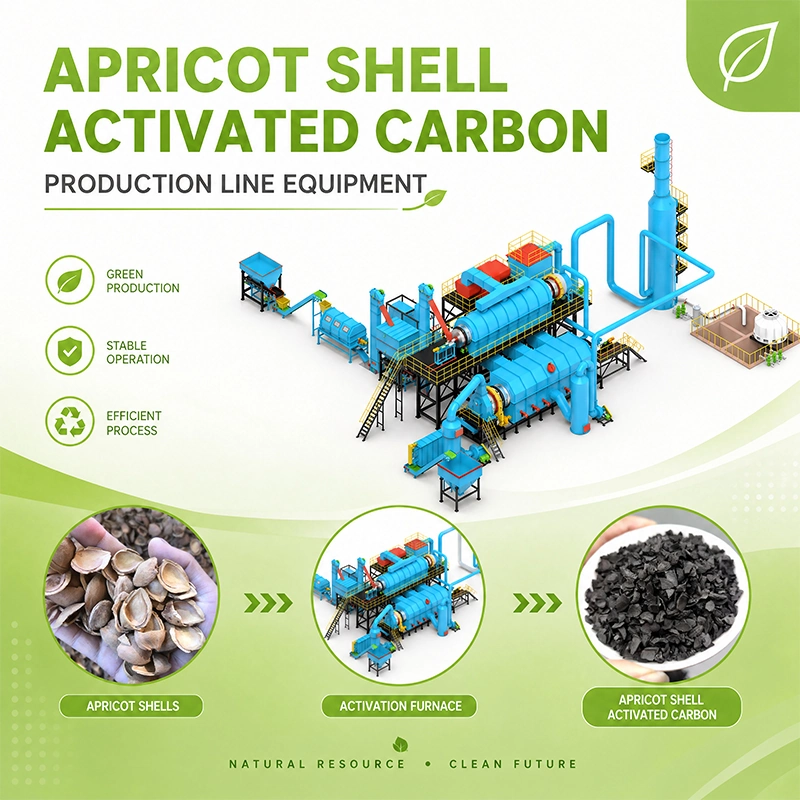
Every year, millions of tons of apricot shells are discarded or burned as low-grade fuel. Yet inside that hard, dense shell lies one of the best raw materials in the world for producing premium granular activated carbon — a product that sells for 10 to 30 times the price of the raw shell itself.
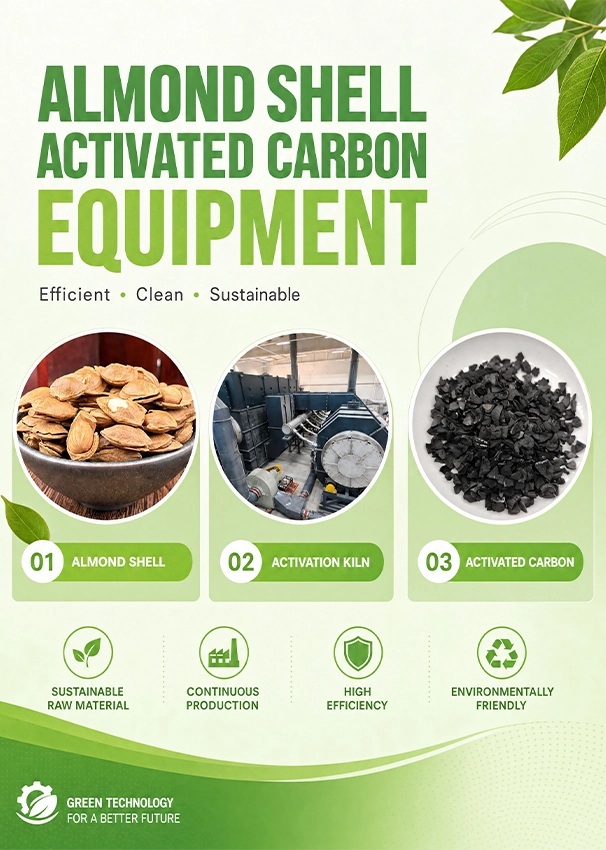
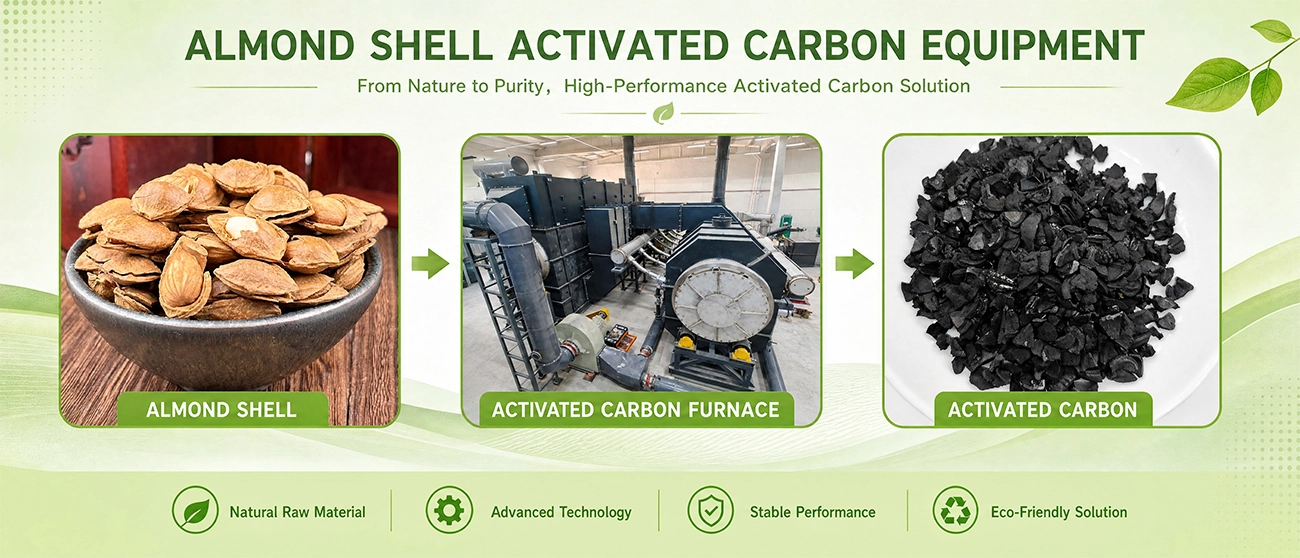
Our apricot shell activated carbon kiln is a complete carbonization and activation system engineered specifically for nut-shell feedstocks. It converts raw apricot shells into high-iodine-value activated carbon in a single, continuous, energy-recycling process. Whether you are a nut-processing plant looking to monetize your by-products, an investor entering the activated carbon industry, or an established carbon producer upgrading from outdated brick kilns, this equipment gives you a reliable, profitable, and environmentally compliant production line.
With more than two decades of experience in thermal processing equipment, we have delivered activated carbon kilns to customers in Central Asia, the Middle East, Southeast Asia, Africa, Europe, and South America. Every kiln is manufactured in our own factory, tested before shipment, and backed by on-site installation support and a full one-year warranty.
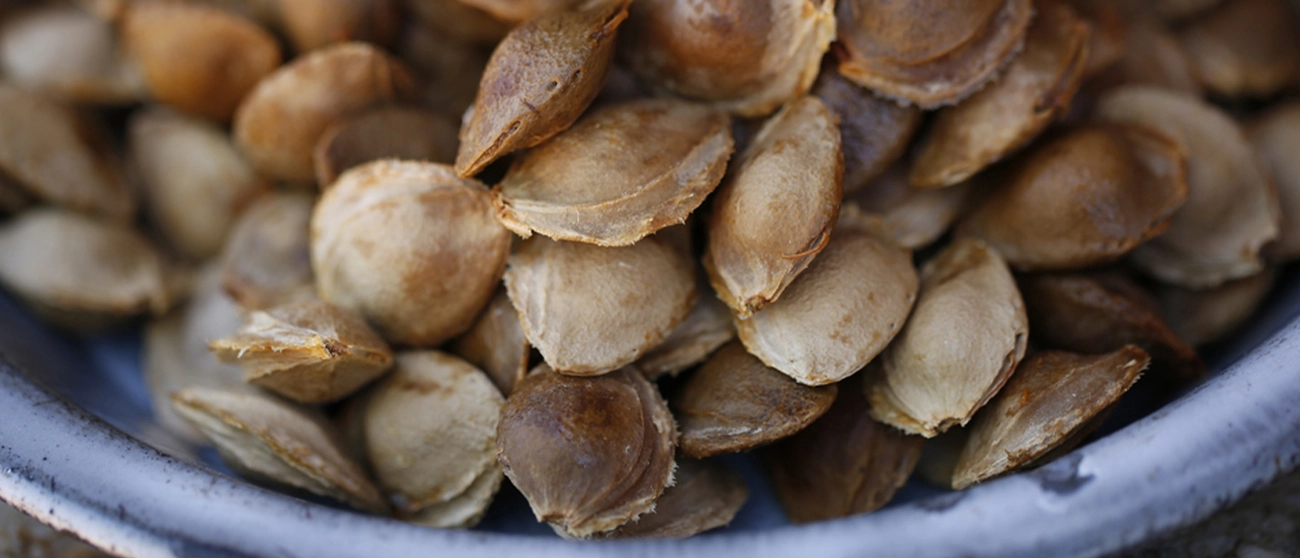
Not all biomass is equal when it comes to activated carbon production. Apricot shells stand out for several scientific and commercial reasons:
1. High density and hardness. Apricot shells have a dense lignocellulosic structure similar to coconut shell. This translates into activated carbon with excellent mechanical strength (typically ≥ 95%), low dust generation, and long service life in filtration beds — qualities buyers pay a premium for.
2. High fixed carbon content. With roughly 20–30% fixed carbon after carbonization, apricot shells deliver strong charcoal yields and, after steam activation, produce carbon with a well-developed micropore structure.
3. Low ash content. Apricot shell activated carbon typically shows ash content below 3–5%, far lower than most coal-based carbons. Low ash means higher purity, better adsorption performance, and suitability for food-grade, water-treatment, and gold-recovery applications.
4. Excellent adsorption performance. Properly activated apricot shell carbon achieves iodine adsorption values of 900–1100 mg/g and methylene blue values of 120–150 mg/g — performance on par with coconut shell carbon, which commands the highest prices in the global market.
5. Abundant, cheap, and renewable. In apricot-producing regions — Turkey, Uzbekistan, Iran, Tajikistan, China’s Xinjiang and Hebei provinces, and parts of North Africa — shells are an agricultural residue with minimal cost. Converting them into activated carbon is one of the highest-margin biomass valorization routes available today.
In short: if you have access to apricot shells, you are sitting on a raw material that the global activated carbon market actively seeks. Our kiln is the bridge between that raw material and a finished, exportable product.
A competitive activated carbon business needs more than a kiln. We supply the entire turnkey line, engineered as one integrated system:
Every component is matched in capacity so there are no bottlenecks — one supplier, one warranty, one point of responsibility.
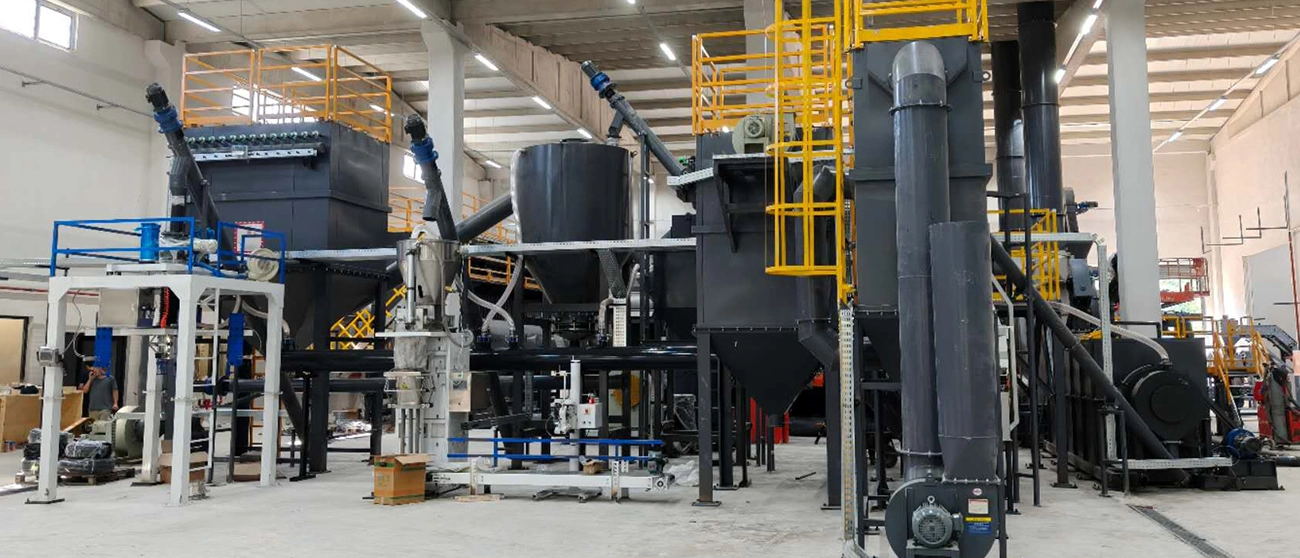
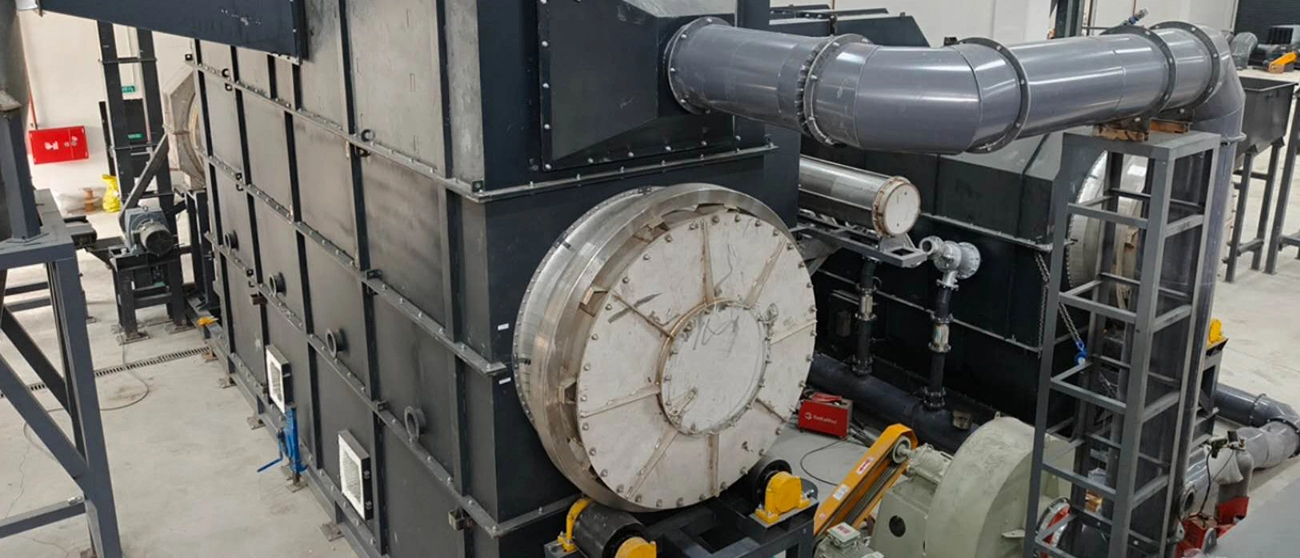
The single biggest operating cost in activated carbon production is fuel. Our integrated gas-recovery design captures the combustible volatiles released during carbonization, purifies them, and feeds them back into the kiln burners. After a startup period of 1–2 hours, the system runs primarily on its own gas. Customers routinely report fuel cost reductions of 60–70% compared with old-style brick kilns or lines without gas recycling.
Global buyers of activated carbon — water utilities, gold mines, air-purification manufacturers — demand tight specifications. Our PLC temperature control holds activation temperature within ±10°C, and the rotary design ensures every granule receives uniform steam exposure. That means batch-to-batch consistency in iodine value, hardness, and ash — the difference between selling at commodity prices and winning long-term supply contracts.
Traditional earthen and brick charcoal kilns emit smoke, tar aerosols, and CO directly to the atmosphere — a practice now banned in many countries. Our sealed system captures all pyrolysis gas, burns it cleanly, and passes exhaust through dust collection before discharge. Visible smoke is virtually eliminated. The line meets or exceeds the emission requirements of most jurisdictions, making permits easier to obtain and keeping your operation future-proof.
Although optimized for apricot shells, the same kiln processes walnut shell, peach pit, hazelnut shell, olive pomace/pit, palm kernel shell, and coconut shell with only parameter adjustments. If your shell supply is seasonal, you can run alternative feedstocks year-round and keep the kiln — and your revenue — working 300+ days a year.
The kiln shell is fabricated from thick Q235B steel plate, lined with high-alumina refractory brick and ceramic-fiber insulation. Riding rings and support rollers are cast and machined in-house. Drive systems use reputable gearbox and motor brands. With routine maintenance, the kiln body serves for well over a decade of continuous operation.
We are a manufacturer, not a trading company. Our service covers:
12-month warranty plus lifetime technical support and fast spare-parts supply
Free plant layout design based on your site dimensions
Foundation drawings delivered before shipment so civil works proceed in parallel
On-site installation and commissioning by our engineers
Operator training until your team runs the line independently
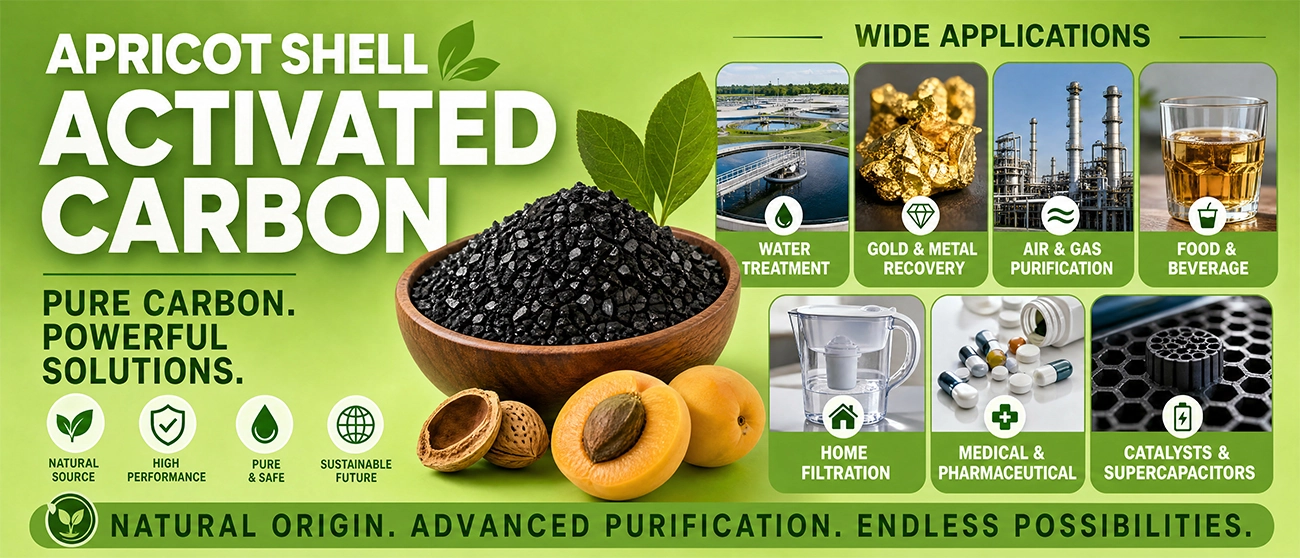
The carbon your kiln produces serves a wide, diversified customer base:
This diversity protects your business: if one segment softens, others absorb your output.
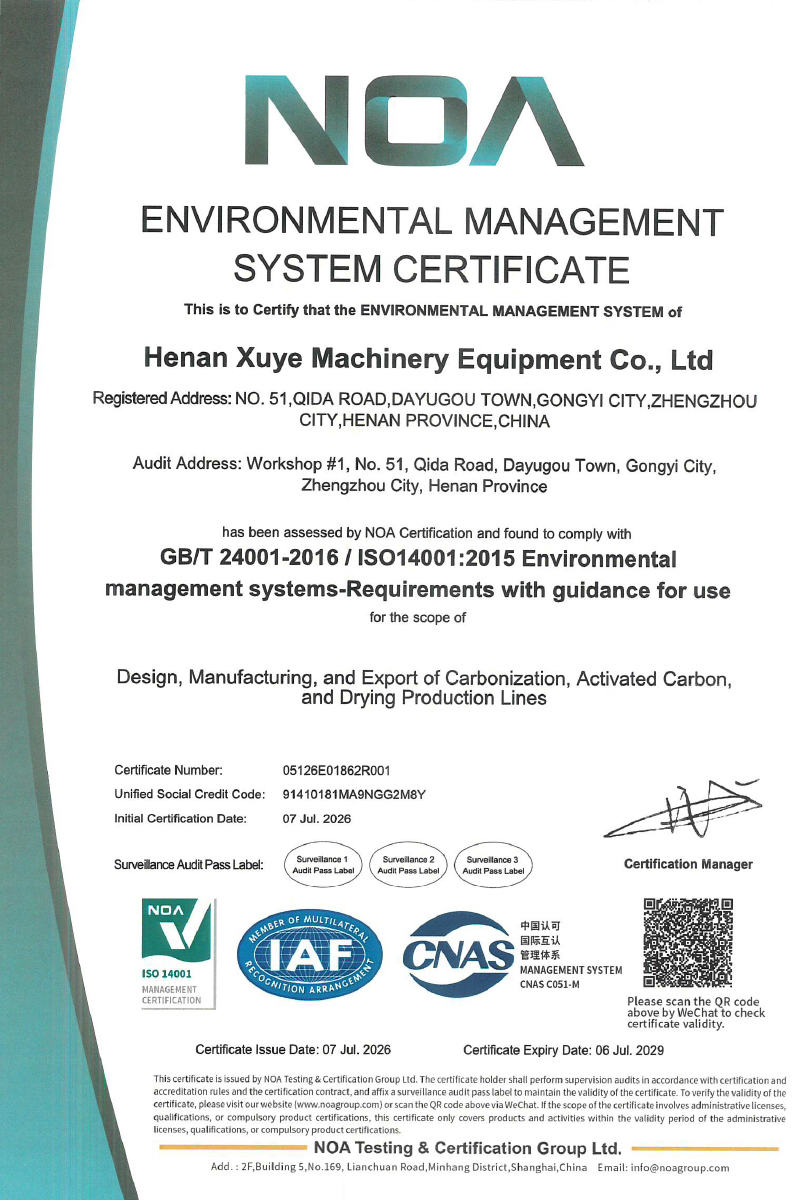
ISO Environmental Management Certificate
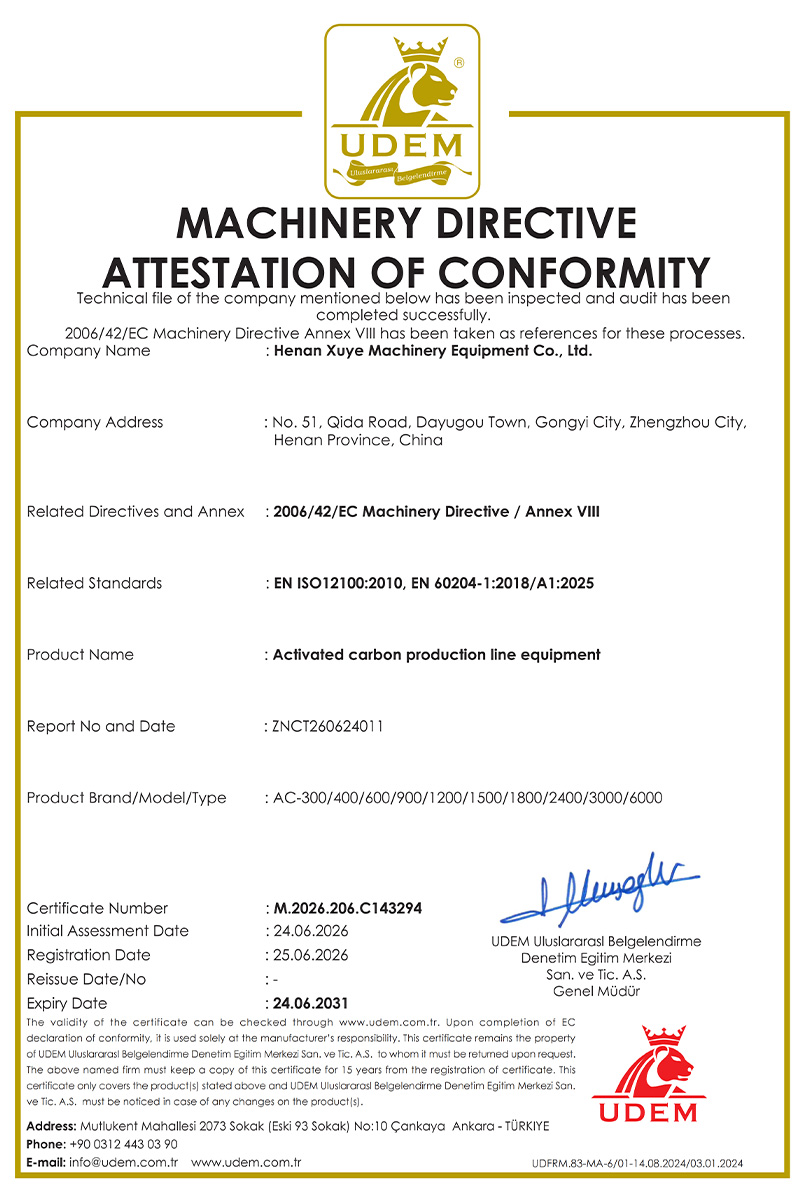
CE Certification
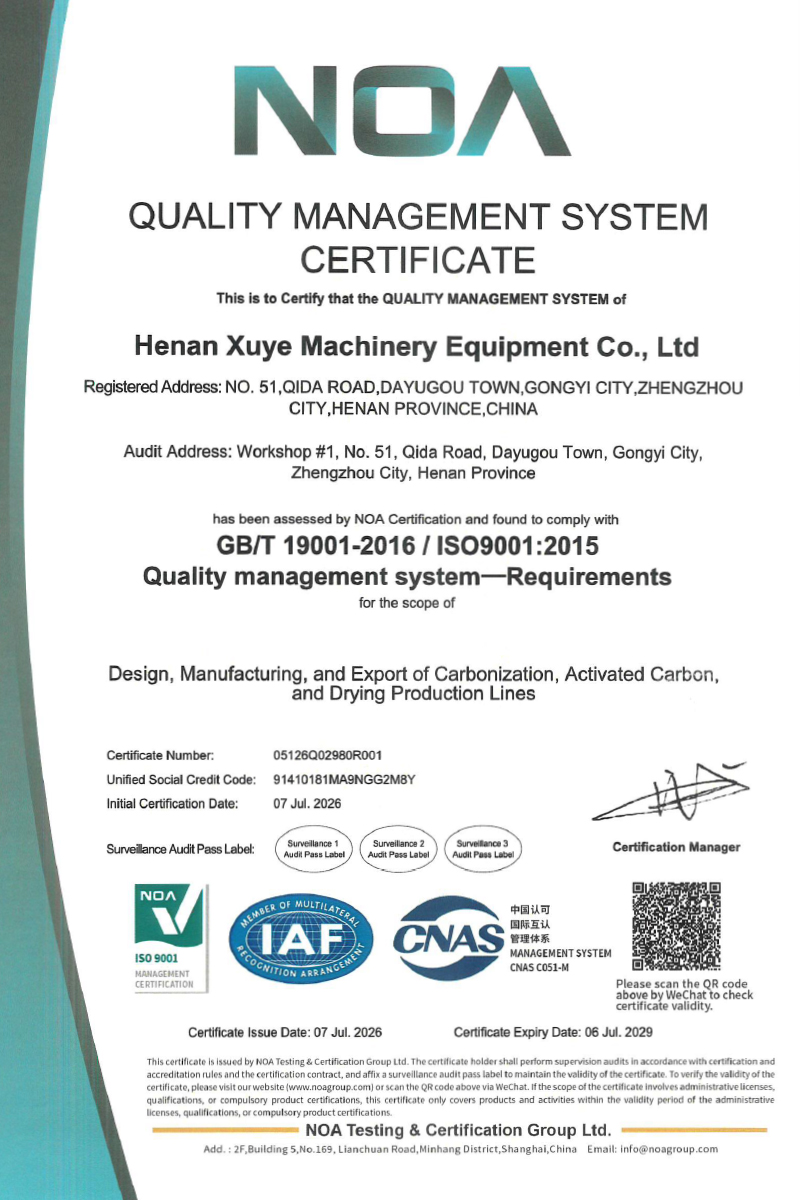
ISO Quality Management Certification
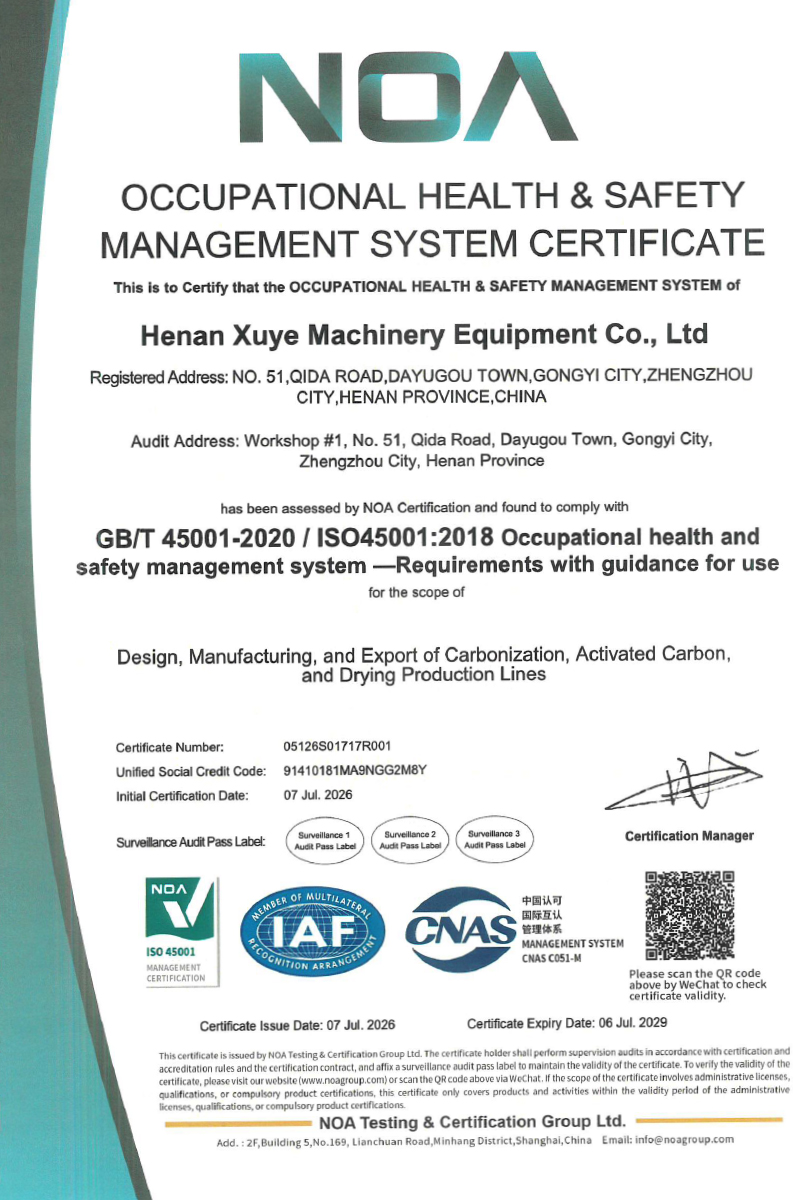
ISO Occupational Health Management Certification
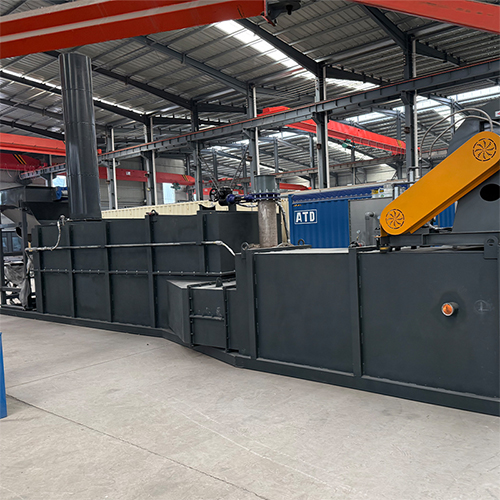
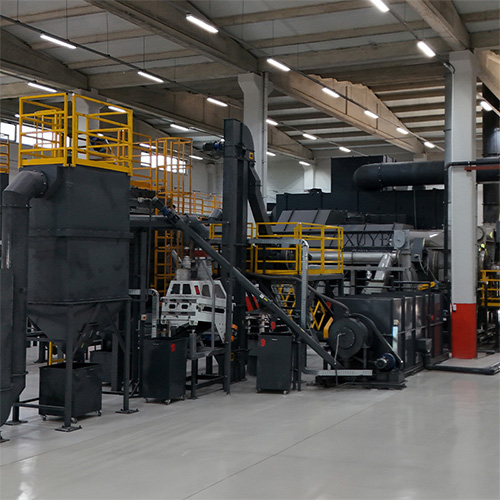
Continuous Carbonization Furnace Project in Spain
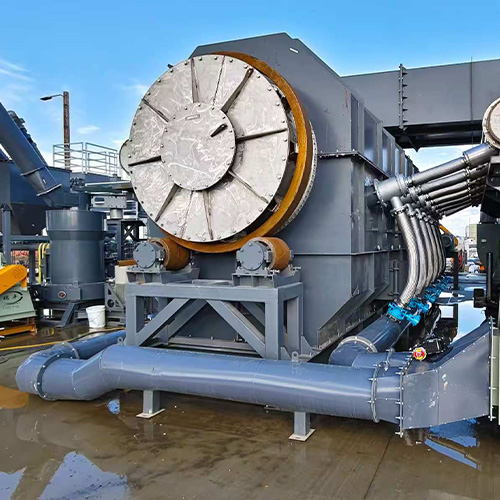
Turkish Hazelnut Shell Activated Carbon Project
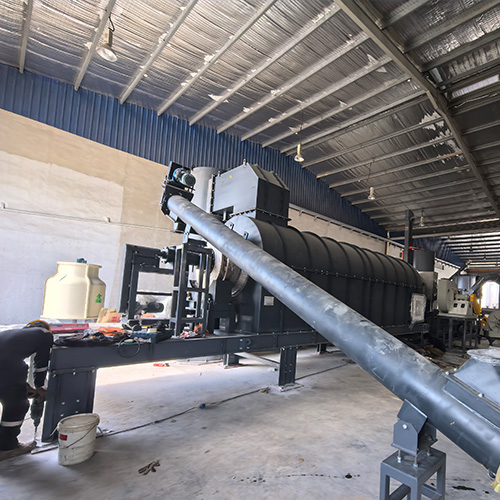
US Almond Shell Activated Carbon Project
Malaysia Coconut Shell Activated Carbon Project
| capacity | 5-8t/d | 8-10t/d | 10-12t/d | 12-15t/d | 15-20t/d |
| Dryer model | HG-800 | HG-1000 | HG-1200 | HG-1500 | HG-1800 |
| Dryer power | 3kw | 4kw | 7.5kw | 15kw | 22kw |
| continuous carbonization furnace model | TH-1500 | TH-1500 | TH-1800 | TH-2000 | TH-2000 |
| Carbonization temperature | 600-850℃ | ||||
| Fixed carbon content after carbonization | 70-80% | ||||
| Carbonization furnace drum material | 309S/310S | 309S/310S | 309S/310S | 309S/310S | 309S/310S |
| Activation furnace model | HN-5 | HN-8 | HN-10 | HN-12 | HN-15 |
| Activation furnace power | 15kw | 22kw | 30kw | 37kw | 37kw |
| Activation furnace chamber material | QQ345+nano thermal insulation board+refractory | ||||
| Activation temperature | 850-950℃ | ||||
| Activator | Water vapor or Phosphoric acid (customized according to customer requirements, equipment design will be updated) | ||||
| Activation time | 1-2h | ||||
| Cooling machine model | GTL-1004 | GTL-1204 | GTL-1206 | GTL-1504 | GTL-1506 |
| Temperature after cooling | ≤40℃ | ||||
| Activated carbon crusher model | SGP-400 | SGP-400 | SGP-600 | SGP-800 | SGP-800 |
| Activated carbon finished product size | 4-60mesh | ||||
| Activated carbon iodine value | 800-1300mg/g | ||||
| Activated carbon specific surface area | 800-1500m²/g | ||||
| Activated carbon strength | ≥95 | ||||
| CTC | ≥60% | ||||
| Filling density | 0.45-0.55g/cm3 | ||||
| Activated carbon ash | ≤3% | ||||
Frequently asked questions
Here are answers to some frequently asked questions about skid-mounted carbonization furnaces. If you have any other questions, please feel free to contact our customer service team directly, and we will be happy to provide you with a detailed explanation.
Approximately 6–7tons of dry shells, depending on shell quality, moisture, and the iodine value you target. Higher activation levels consume more carbon mass but sell at higher prices.
Yes. All dense nut shells and fruit pits are compatible. Only temperature profiles and residence times need adjustment — our engineers provide parameter sets for each feedstock.
Startup uses diesel, natural gas, LPG. Once running, the recovered pyrolysis gas supplies most of the heat demand, making the process largely self-fueling.
Civil foundation work typically takes 3–4 weeks (can run parallel to manufacturing). Mechanical installation and commissioning of a mid-size line takes another 8–10weeks with our engineers on site.Q6: Is chemical activation available?
ISO 9001 manufacturing, optional CE marking, full manuals in English, foundation and layout drawings, packing lists, and remote video support after commissioning.