 Henan Xuye Machinery Equipment Co., Ltd.
SEARCH WHAT YOU WANT
Search allProductNews
SEARCH
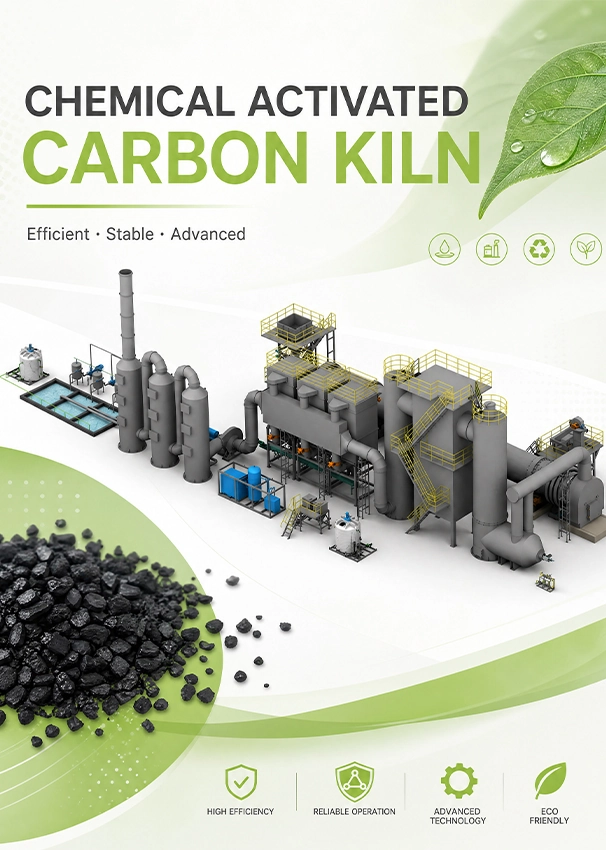
A chemical process activated carbon making machine is designed to produce high-quality activated carbon through chemical activation technology. Compared with physical activation methods, chemical activation usually operates at lower activation temperatures and can create a well-developed porous structure with high adsorption capacity. Among different chemical activating agents, phosphoric acid is widely used for producing activated carbon from biomass materials such as wood chips, sawdust, coconut shell, bamboo, fruit shells, and agricultural residues.
Our chemical activated carbon production system is mainly designed for phosphoric acid activation. The complete production line can include raw material crushing, phosphoric acid impregnation, mixing, drying, carbonization and activation, washing, neutralization, secondary drying, crushing, screening, and packing. According to the raw material type, production capacity, final iodine value, particle size, and environmental requirements, the system can be customized for laboratory testing, pilot production, or industrial-scale activated carbon manufacturing.
This activated carbon making machine is suitable for manufacturers who want to produce activated carbon for water treatment, air purification, solvent recovery, food processing, chemical purification, gold recovery, gas adsorption, and industrial filtration applications.
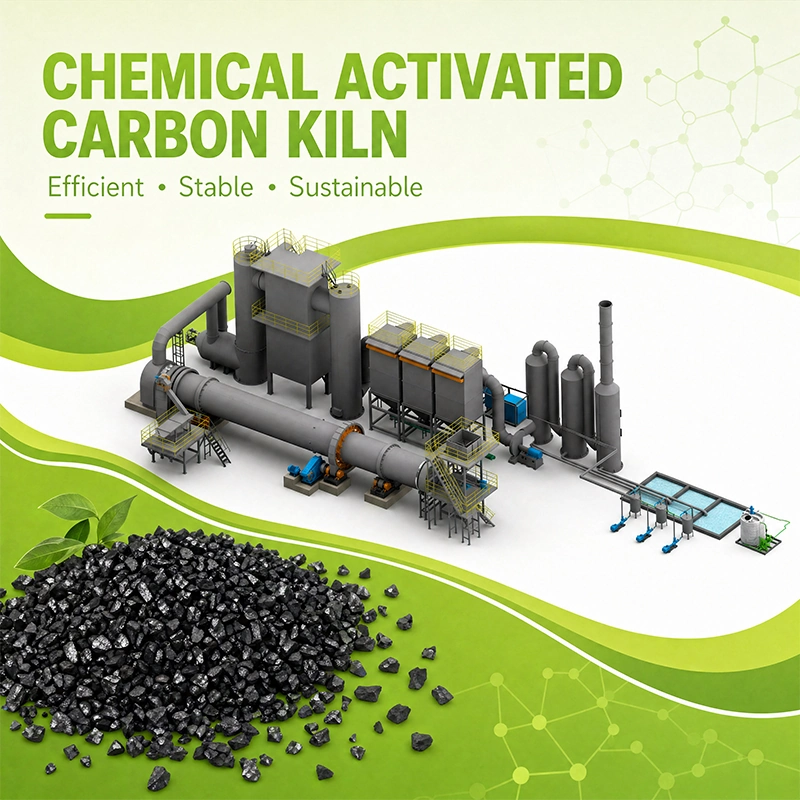
A chemical activated carbon kiln, also called a chemical activation furnace, activated carbon rotary kiln, or chemical activation carbonization furnace, is used to thermally treat carbon-rich materials after chemical impregnation. During this process, the chemical agent reacts with the organic structure of the raw material, promotes dehydration and carbonization, and helps form micropores, mesopores, and adsorption channels inside the carbon matrix.
The kiln provides a controlled high-temperature environment where the material can complete carbonization and activation under specific process conditions. The heating temperature, residence time, material movement, internal atmosphere, and sealing performance all directly influence the final quality of the activated carbon.
A well-designed kiln can help improve:
For chemical activation, the kiln must not only handle high temperatures but also resist corrosive gases, acidic vapors, sticky materials, and chemical residues. This makes equipment design especially important.
Our chemical activated carbon kiln can process many carbon-containing raw materials, including:
Different raw materials have different fiber structures, ash levels, volatile matter, fixed carbon content, particle size, and moisture content. These differences influence the chemical dosage, impregnation time, drying method, activation temperature, and final activated carbon index.
For example, wood-based raw materials are commonly used for powdered activated carbon and decolorizing carbon. Coconut shell and fruit shell materials are often used for granular activated carbon with higher hardness. Bamboo-based raw materials are suitable for certain water treatment and air purification applications. Coal-based materials may be selected for specific industrial adsorption requirements.
Before designing the equipment, we can evaluate your raw material characteristics and recommend a suitable kiln structure, heating method, temperature range, residence time, and production line configuration.
The chemical activated carbon kiln can be customized for different activation processes.
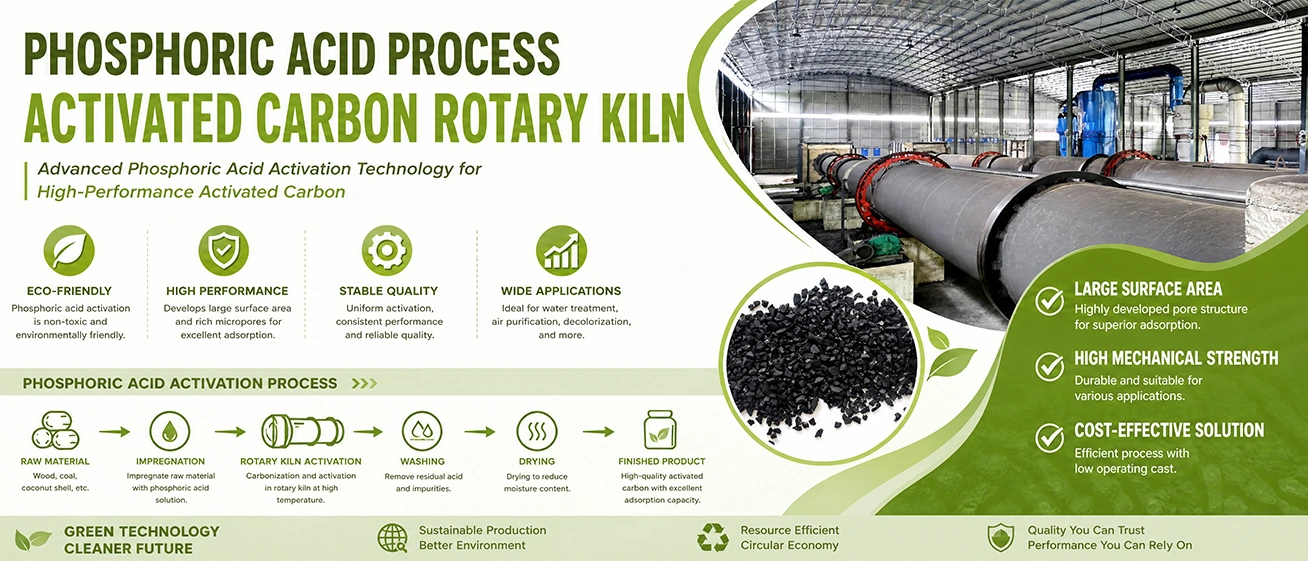
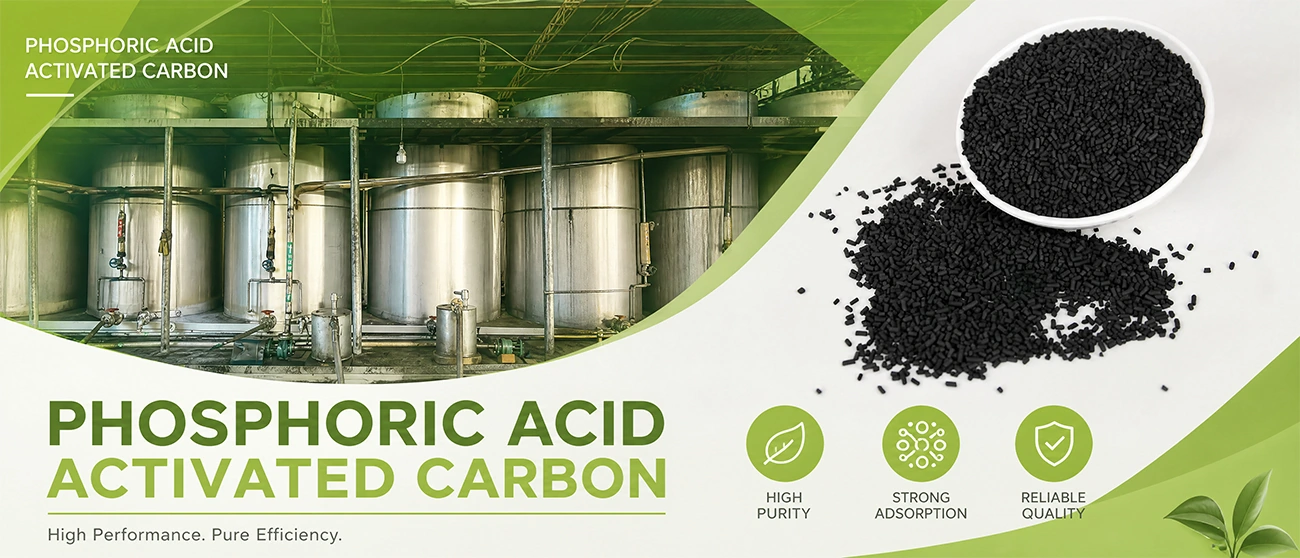
Phosphoric acid activation is one of the most widely used chemical activation methods, especially for wood-based activated carbon. It is suitable for producing powdered activated carbon, decolorizing carbon, food processing carbon, pharmaceutical refining carbon, and water treatment activated carbon.
In this process, the raw material is impregnated with phosphoric acid solution, then dried and heated in the kiln. The phosphoric acid promotes dehydration, inhibits tar formation, and helps develop a porous carbon structure. After activation, the product is washed to remove residual acid and soluble compounds.
A kiln used for phosphoric acid activation should have strong corrosion resistance, reliable sealing, stable temperature control, and suitable exhaust gas collection.
Zinc chloride activation is another chemical activation route that can produce activated carbon with developed pores and strong adsorption capacity. The process requires careful control of temperature, chemical recovery, washing, and environmental treatment.
For this application, the kiln can be designed with corrosion-resistant materials, special sealing structures, and exhaust handling interfaces to reduce leakage and improve process safety.
In addition to phosphoric acid and zinc chloride, the kiln can also be adapted for other chemical activation agents or combined activation processes. Depending on the product target, the process can be optimized to adjust pore size distribution, adsorption performance, yield, and final product properties.
Temperature control is one of the most important factors in activated carbon production. Our chemical activated carbon kiln can be designed with multiple heating zones, allowing the carbonization zone, activation zone, and holding zone to be controlled separately.
This helps maintain a stable temperature curve and reduces problems such as under-carbonization, over-burning, uneven activation, or local material agglomeration.
The kiln structure promotes continuous material movement and uniform heat exchange. For rotary kiln designs, the rotating cylinder allows the material to tumble and mix during heating, improving contact with the heated surface and internal hot atmosphere.
Uniform heating helps improve product consistency and reduce quality variation between batches.
Chemical activation requires controlled oxygen exposure. Excess air entering the kiln may cause oxidation loss, reduce product yield, and increase safety risks. Our kiln can be equipped with sealed feeding and discharging systems to reduce air leakage and gas escape.
Good sealing also helps collect exhaust gas more efficiently for further treatment.
Chemical activation may generate acidic vapor, corrosive gas, and chemical residues. Key parts of the kiln can be designed with corrosion-resistant steel, protective lining, special coatings, or replaceable wear-resistant structures.
This improves equipment durability and reduces maintenance costs.
The material residence time inside the kiln can be adjusted by changing the rotation speed, feeding rate, kiln inclination, and internal structure. This allows the process to match different raw materials and activation targets.
For continuous production lines, stable residence time is essential for consistent product quality.
The kiln can be designed for different energy sources, including:
The heating method can be selected based on local energy availability, operating cost, environmental requirements, and process needs.
| Item | Model | Capacity | Size |
| Rotary activationFurnace(internal heat type) | Φ1.5m×12m | 1-2t/d | 16000*2300*4000mm |
| Φ1.5m×15m | 2-3t/d | 20000*2700*4500mm | |
| Φ2.0m×18m | 4-5t/d | 22000*3000*4500mm | |
| Φ2.6m×20m | 5-8t/d | 26000*3600*5000mm |
Frequently asked questions
Here are answers to some frequently asked questions about skid-mounted carbonization furnaces. If you have any other questions, please feel free to contact our customer service team directly, and we will be happy to provide you with a detailed explanation.
A chemical activated carbon kiln is specialized equipment used to produce activated carbon through chemical activation. Raw materials are impregnated with activating agents such as phosphoric acid (H₃PO₄), zinc chloride (ZnCl₂), or potassium hydroxide (KOH) before being carbonized and activated at controlled temperatures to develop a highly porous structure.
The kiln can process a wide range of biomass materials, including coconut shells, bamboo, wood chips, sawdust, nut shells, fruit shells, palm shells, agricultural residues, and other carbon-rich materials suitable for chemical activation.
The operating temperature generally ranges from 400°C to 900°C, depending on the raw material and activating agent. The kiln provides precise temperature control to ensure consistent activation quality.
Natural gas
LPG
Diesel
Biomass fuel
Coal (where permitted)
Yes. The production line can be equipped with gas purification and emission control systems such as acid gas scrubbers, dust collectors, and waste gas treatment equipment to comply with local environmental standards.