 Henan Xuye Machinery Equipment Co., Ltd.
SEARCH WHAT YOU WANT
Search allProductNews
SEARCH
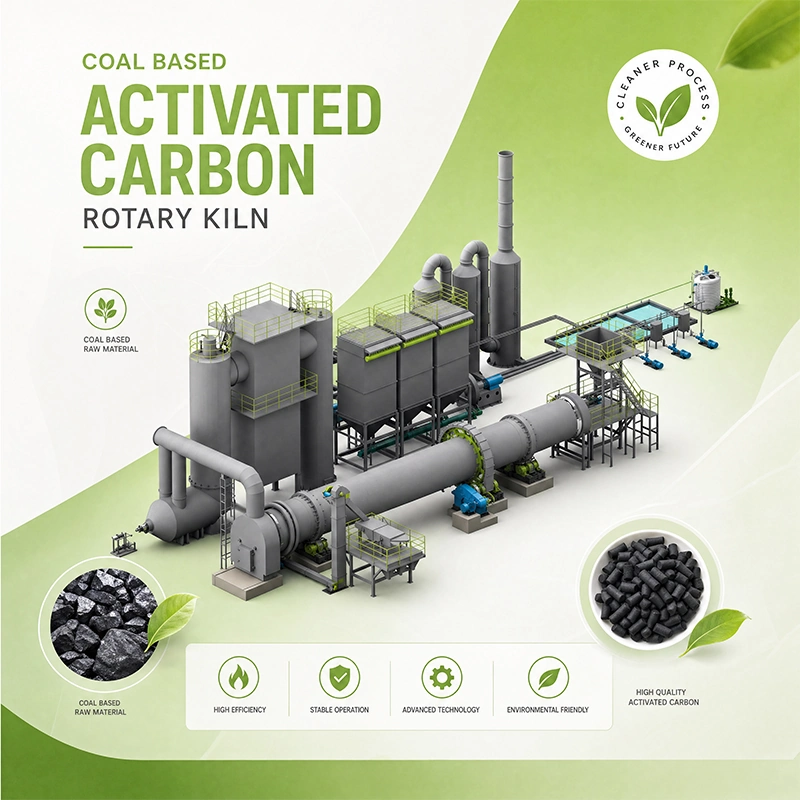
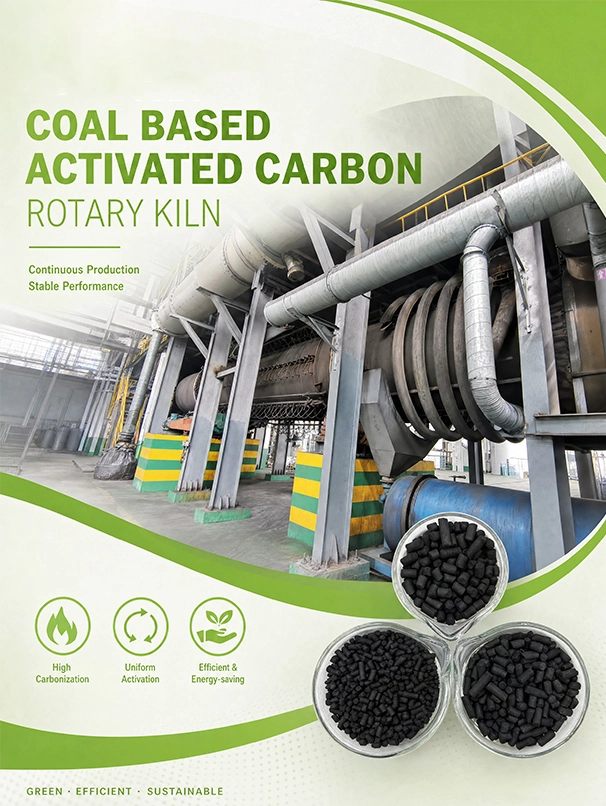
The Coal Based Granular Activated Carbon Rotary Kiln is a specialized industrial furnace engineered for the large-scale production of high performance coal-based granular activated carbon (GAC) through controlled high temperature carbonization and steam activation processes. This advanced thermal processing equipment transforms raw coal materials—primarily anthracite, bituminous coal, and lignite into a premium porous adsorbent material with exceptional surface area, mechanical strength, and adsorption capacity.
As the preferred production equipment for granular activated carbon in the water treatment, air purification, chemical processing, and environmental protection industries, the coal based activated carbon rotary kiln delivers continuous operation, precise temperature control, and outstanding production efficiency. The rotary kiln design ensures uniform heating and consistent material rotation, resulting in superior product quality with enhanced adsorption properties.
The finished product typically 2-4 mm granular activated carbon achieves a specific surface area of 800-1,200 m²/g and a mechanical strength of ≥90%, making it ideal for demanding purification applications. With an iodine value ranging from 800-1,300 mg/g and CTC values exceeding 60%, coal-based granular activated carbon produced in these rotary kilns delivers industry leading adsorption performance.
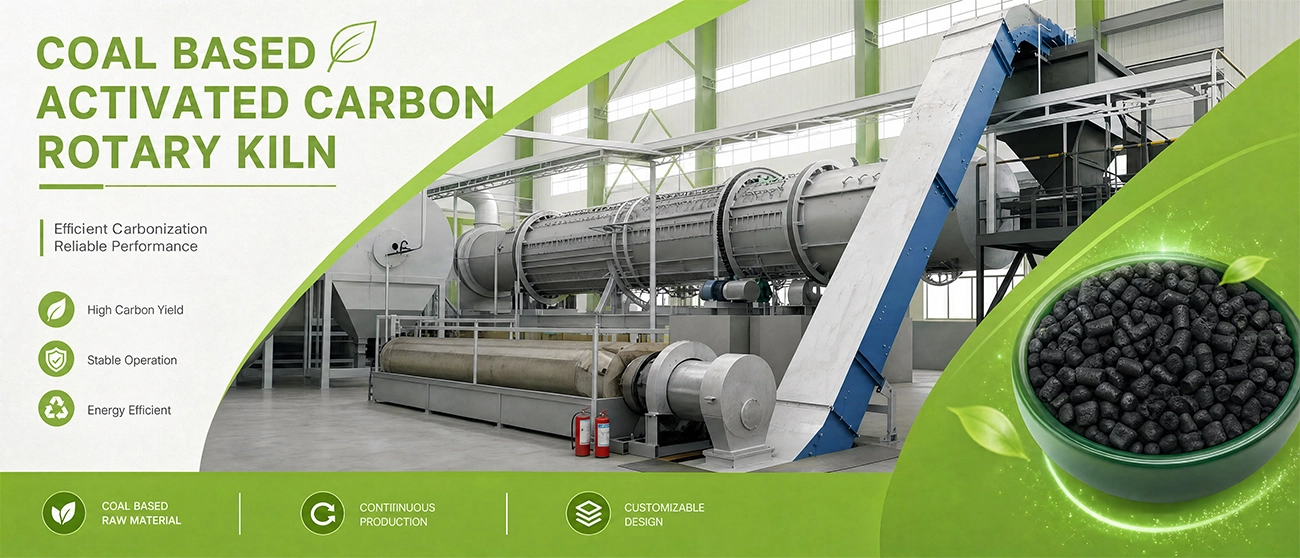
A coal based granular activated carbon rotary kiln is an industrial furnace system designed specifically to convert coal-based raw materials into high-quality granular activated carbon through a two-stage thermal process: carbonization and activation.
The equipment consists of a cylindrical, slightly inclined rotating shell that slowly rotates about its longitudinal axis-. Raw coal material is continuously fed into the elevated end of the kiln and gradually moves toward the discharge end as the kiln rotates. During this transit, the material passes through precisely controlled temperature zones where carbonization and activation reactions occur.
A complete coal based granular activated carbon rotary kiln production line includes:
The kiln body itself comprises:
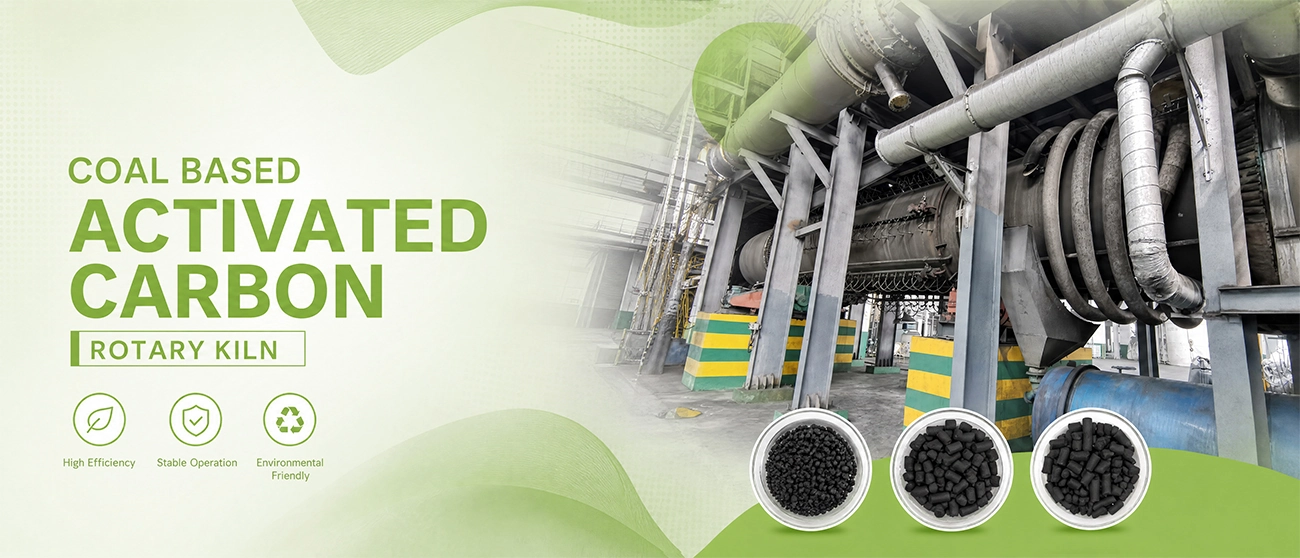
The rotary design allows continuous material rotation and processing, significantly reducing carbonization and activation time compared to batch processes. This enables industrial-scale production with high output capacity—single units can process several thousand tons per year-.
The rotary kiln ensures uniform heating and consistent pore structure development. Coal-based activated carbon produced in these kilns offers-:
Advanced heat recovery and flue gas recycling systems reduce fuel consumption. With thermal efficiency reaching up to 85%, the coal based activated carbon rotary kiln delivers exceptional energy economy.
Modern rotary kiln systems are equipped with advanced dust collection and gas treatment systems that minimize the release of volatile compounds and meet stringent emission standards. Pulse bag filters ensure emission concentrations remain below national standards.
The equipment demonstrates strong adaptability to various raw materials and fuels. Process parameters—including temperature, rotation speed, and residence time—can be precisely controlled via PLC automation to optimize pore development for specific end-use applications.
The robust design includes features such as removable refractory panels and accessible internal components, streamlining upkeep operations and minimizing equipment downtime. Advanced contact-type graphite block sealing devices and hydraulic catch wheel devices ensure stable kiln operation.
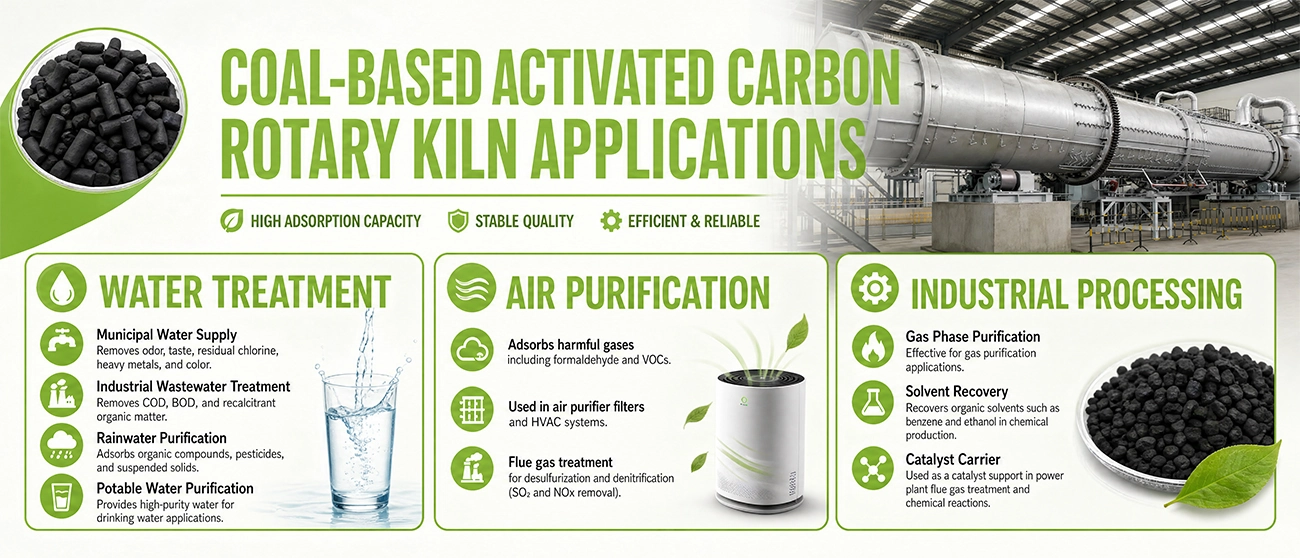
Coal-based granular activated carbon produced in rotary kilns is ideal for water treatment applications due to its well-developed pore structure and high adsorption efficiency:
Gas Phase Purification – Effective for gas purification applicationstype graphite block sealing devices and hydraulic catch wheel devices ensure stable kiln operation.
Solvent Recovery – Recovers organic solvents such as benzene and ethanol in chemical production, reducing raw material consumption.
Catalyst Carrier – Used as a catalyst support in power plant flue gas treatment and chemical reactions.
| Item | Model | Capacity | Size |
| Rotary activationFurnace(internal heat type) | Φ1.5m×12m | 1-2t/d | 16000*2300*4000mm |
| Φ1.5m×15m | 2-3t/d | 20000*2700*4500mm | |
| Φ2.0m×18m | 4-5t/d | 22000*3000*4500mm | |
| Φ2.6m×20m | 5-8t/d | 26000*3600*5000mm |
Frequently asked questions
Here are answers to some frequently asked questions about skid-mounted carbonization furnaces. If you have any other questions, please feel free to contact our customer service team directly, and we will be happy to provide you with a detailed explanation.
The kiln is specifically designed for coal-based feedstocks, including:
The raw coal must be crushed, screened, and dried to a moisture content of 10–15% before feeding into the kiln to ensure optimal thermal efficiency and uniform processing.
Carbonization is the first stage, conducted at 400–600°C in an oxygen-limited atmosphere. During this step, volatile compounds are driven off through pyrolysis, leaving behind a carbon-rich char with a nascent pore structure.
Activation is the second stage, conducted at 800–1100°C. High-temperature steam (or CO₂) is introduced to react with the carbon, selectively etching the internal surfaces to develop a highly developed micropore and mesopore network, dramatically increasing the specific surface area to 800–1200 m²/g.
The most widely used activating agent is high-temperature steam (H₂O) , which reacts with carbon according to the reaction:
C + H₂O → CO + H₂ (at 800–1100°C)
Alternatively, carbon dioxide (CO₂) can also be used. Steam is preferred for coal-based activated carbon production because it produces a more uniform pore structure and is more cost-effective in industrial-scale operations.
The refractory lining serves multiple critical functions:
Thermal insulation – minimizes heat loss to improve energy efficiency
Shell protection – prevents the steel shell from being exposed to extreme temperatures (800–1100°C)
Thermal stability – maintains uniform internal temperature profiles
The lining typically consists of 200–300 mm thick refractory bricks, backed by 50–100 mm of ceramic fiber insulation for optimal thermal performance.
Coal-based granular activated carbon produced in these rotary kilns typically achieves a specific surface area (BET) of 800–1200 m²/g, with premium grades reaching up to 1,500 m²/g. This high surface area is directly correlated with superior adsorption capacity for both liquid and gaseous phase applications.