 Henan Xuye Machinery Equipment Co., Ltd.
SEARCH WHAT YOU WANT
Search allProductNews
SEARCH
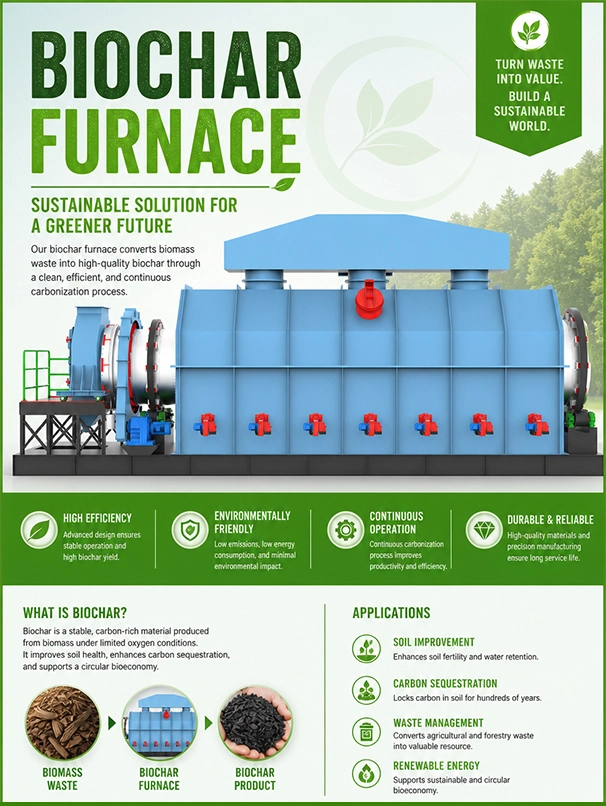
The global demand for coconut shell charcoal has grown steadily over the past decade, driven by expanding markets for barbecue charcoal, shisha (hookah) charcoal, activated carbon, and industrial fuel. As demand rises, charcoal producers are moving away from slow, labor-intensive traditional kilns toward automated equipment capable of delivering consistent quality at scale. At the center of this shift is the coconut shell continuous carbonization furnace — a piece of biomass processing equipment engineered to convert raw coconut shells into high-carbon, smokeless charcoal through a non-stop, automated production cycle.
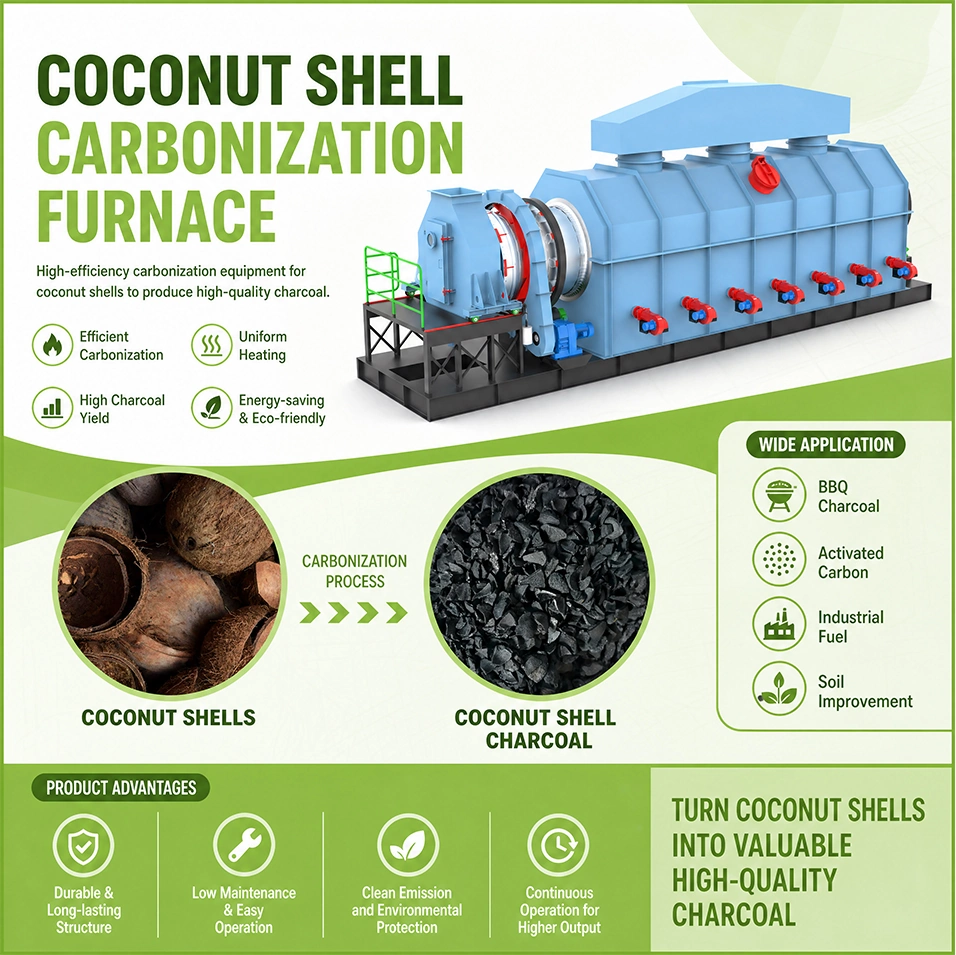
Unlike traditional earth pits or batch-type kilns that require manual loading, prolonged cooling, and repeated reloading, a continuous carbonization furnace processes raw material around the clock. Coconut shells enter at one end of the machine and finished charcoal is discharged at the other, with no interruption between cycles. This design not only multiplies output but also improves product consistency, reduces labor costs, and helps producers meet increasingly strict environmental regulations.
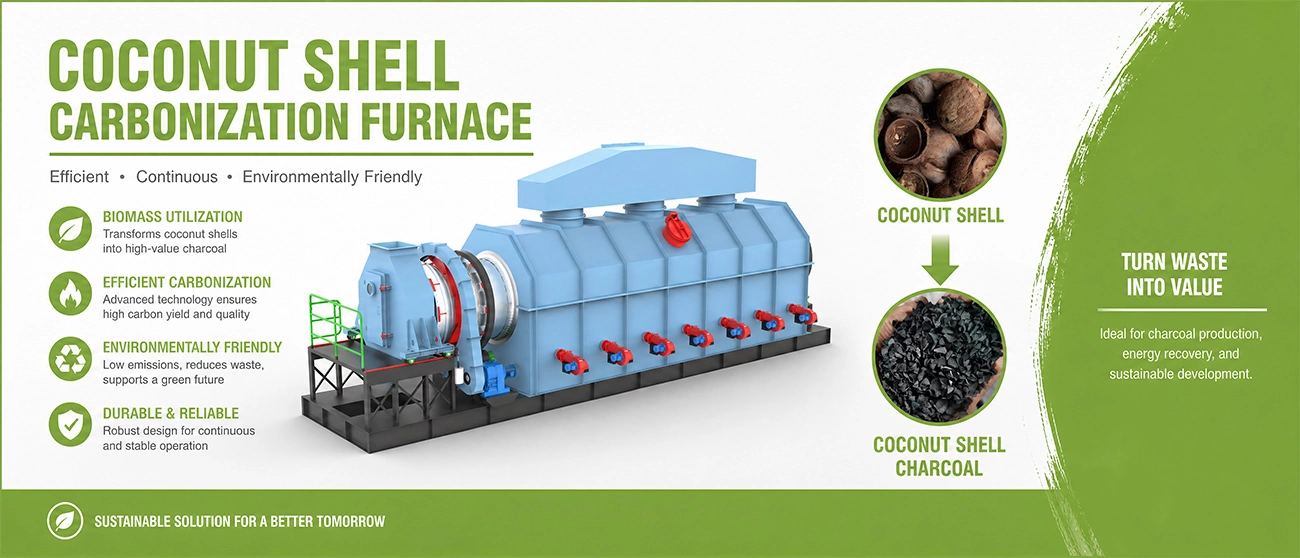
The coconut shell continuous carbonization furnace works by feeding prepared coconut shells into the carbonization chamber at a steady rate, where they are heated under low-oxygen or oxygen-free conditions. As the temperature rises, moisture and volatile matter are released, and the coconut shells gradually decompose into charcoal. The combustible gas generated during carbonization can be collected and reused as a heat source for the furnace, helping to reduce fuel consumption. Through continuous feeding, controlled heating, and automatic discharging, the system maintains stable carbonization conditions and produces uniform coconut shell charcoal with high efficiency.
A coconut shell continuous carbonization furnace is a piece of industrial equipment that thermally decomposes coconut shells in a low-oxygen environment, converting the organic material into fixed carbon (charcoal) while driving off volatile compounds as combustible gas. The term “continuous” distinguishes it from batch or hoist-type carbonization furnaces, which must be fully loaded, sealed, heated, cooled, and unloaded before the next cycle can begin.
In a continuous system, raw coconut shells are fed steadily into the furnace chamber through a screw conveyor or similar feeding mechanism. As the material moves through the internal rotary chamber, it passes through progressively hotter carbonization zones. By the time it reaches the discharge end, the shells have been fully converted into charcoal. Because the feeding, carbonization, and discharge happen simultaneously at different points along the furnace, the machine can operate 24 hours a day with minimal downtime, dramatically increasing throughput compared to older technologies.
This type of furnace is widely used not only for coconut shells but also for a range of biomass and agricultural waste materials, including wood chips, rice husk, palm kernel shells, walnut shells, bamboo scraps, peanut shells, and coffee husks. Its versatility makes it an attractive investment for producers who want to diversify their raw material sources depending on seasonal availability and cost.
Before coconut shells enter the furnace, they typically need to be crushed and dried to meet the machine’s input specifications. Most continuous carbonization furnaces perform best with feedstock pieces smaller than 50 millimeters and moisture content below 15–20%. Producers who work with fresh, wet shells generally pair the furnace with a crusher and a rotary dryer to bring the raw material within these parameters, since oversized or overly moist feedstock reduces carbonization efficiency and can lower charcoal quality.
A screw feeder or similar mechanical conveyor moves crushed coconut shells into the furnace at a controlled, steady rate. This continuous feeding is what allows the system to maintain a stable internal temperature and consistent residence time for the material, both of which are critical for producing uniform charcoal.
Inside the main furnace body, coconut shells move through a sealed, oxygen-limited chamber. Heat is applied externally, typically through a combustion chamber positioned beneath or around the carbonization drum. As the temperature rises — commonly in the range of roughly 450°C to 650°C depending on the desired charcoal grade — the organic material breaks down. Cellulose, lignin, and other volatile components are released as combustible gas, while the solid carbon skeleton remains behind as charcoal.
The sealed, low-oxygen design is essential: if too much air enters the chamber, the coconut shells will combust into ash rather than carbonize into charcoal. Reputable manufacturers design their furnaces with airtight seals, pressure balancing, and monitoring systems to maintain the correct atmosphere throughout the process.
One of the defining features of modern continuous carbonization furnaces is the smoke recycling system. The combustible gas produced during carbonization is not released into the atmosphere as smoke. Instead, it is collected, and redirected back into the furnace’s combustion chamber, where it is burned as fuel to sustain the carbonization heat. This creates a largely self-sustaining energy loop: after the initial ignition (usually done with a small amount of external fuel), the furnace can continue running using the syngas it generates internally.
This design delivers two major benefits. First, it substantially reduces or eliminates operating fuel costs, since the furnace essentially fuels itself using byproduct gas. Second, it minimizes air pollution, since the smoke is combusted rather than vented, helping producers meet environmental compliance requirements in regions with strict emissions standards.
Once carbonization is complete, finished charcoal exits the furnace through an enclosed discharge system, often a screw discharge or water-jacketed cooling mechanism. Because hot charcoal is prone to spontaneous combustion if exposed to oxygen while still hot, the discharge system is designed to cool the material in a sealed environment before it reaches open air. This protects both the finished product and worker safety.
When comparing different manufacturers and models, several features consistently distinguish higher-quality continuous carbonization furnaces from lower-end alternatives:
Continuous, automated operation. The ability to feed and discharge material simultaneously, without stopping the process, is the core value proposition of this equipment category. It supports uninterrupted 24/7 production, which is important for producers fulfilling large or recurring export orders.
Smoke recycling and eco-friendly design. Advanced models capture and reuse combustible gas as heating fuel, eliminating visible black smoke and reducing dependence on external fuel sources such as coal, wood, or diesel. This is especially relevant as more countries tighten environmental regulations on industrial biomass processing.
Precise temperature control. Automated or PLC-based control systems allow operators to hold the carbonization chamber within a specific temperature band, which directly affects fixed carbon content, volatile matter, and ash levels in the final charcoal. Precise control also reduces the risk of under-carbonized or over-burned material, both of which reduce product value.
High carbonization yield. Well-designed systems can achieve carbonization yield efficiencies reported by manufacturers in the range of roughly 4:1 or 3:1, meaning a very high proportion of usable carbon is retained rather than lost as ash or incompletely converted material.
Sealed, low-emission design. A properly sealed chamber prevents oxygen infiltration during carbonization and prevents smoke, dust, and wastewater from escaping into the surrounding environment during normal operation.
Versatile raw material compatibility. Beyond coconut shells, the same equipment can typically process palm kernel shells, walnut shells, wood chips, sawdust, rice husk, bamboo scraps, and other agricultural residues, giving producers flexibility to adapt to local feedstock availability.
Scalable capacity. Continuous carbonization furnaces are manufactured in a range of sizes, from smaller units suited to medium-scale operations processing several hundred kilograms per hour, up to large industrial systems rated at several thousand kilograms per hour for high-volume commercial charcoal plants.
The shift toward continuous carbonization technology is driven by several concrete advantages over older approaches such as earth-pit kilns, brick kilns, and batch-type hoist furnaces:
Higher throughput. Traditional batch kilns require a full cycle of loading, sealing, heating, cooling, and unloading before starting again, often taking many hours or even days per batch. A continuous furnace eliminates this downtime, enabling dramatically higher output over the same time period.
More consistent product quality. Batch processes are prone to uneven heating, where material near the heat source may be over-carbonized while material further away remains under-processed. Continuous systems maintain more uniform temperature exposure as material moves steadily through the chamber, resulting in more consistent fixed carbon content batch to batch.
Lower labor requirements. Automated feeding and discharge systems reduce the manual labor needed compared to traditional kilns, which often require workers to physically load and unload material in hot, smoky conditions.
Reduced environmental impact. The combination of a sealed chamber and smoke recycling system means continuous carbonization furnaces produce far less visible smoke and airborne pollution than open-pit or traditional kiln methods, helping operations comply with local environmental standards and avoid community complaints or regulatory shutdowns.
Lower operating costs over time. Because combustible gas generated during carbonization is recycled as furnace fuel, ongoing fuel costs are significantly reduced after the initial startup phase, improving the long-term economics of the operation.
Better working environment and safety. Reduced smoke and dust exposure, combined with automated material handling, creates a safer and more comfortable working environment for plant staff compared to manual, open-flame carbonization methods.
Charcoal produced by a coconut shell continuous carbonization furnace serves multiple commercial and industrial markets, which is part of why this equipment has become popular among charcoal exporters:
Hookah and shisha charcoal. Coconut shell charcoal is widely regarded as a premium raw material for shisha charcoal because of its high density, long burn time, low ash content, and minimal odor compared to charcoal made from other biomass sources.
Barbecue (BBQ) charcoal and briquettes. The dense, high-carbon structure of coconut shell charcoal makes it well suited for BBQ charcoal and pressed briquette products, which are in strong demand across North America, Europe, and the Middle East.
Activated carbon feedstock. Coconut shell charcoal is a preferred raw material for producing activated carbon, used in water filtration, air purification, and various industrial adsorption applications, due to its favorable pore structure and low ash content.
Industrial and household fuel. In many regions, coconut shell charcoal serves as an efficient, relatively clean-burning fuel source for cooking, heating, and small-scale industrial processes.
Agricultural and horticultural use. Charcoal (and biochar produced through similar carbonization processes) can be used as a soil amendment to improve aeration, water retention, and overall soil quality in farming and horticulture applications.
Selecting the right equipment involves more than comparing price tags. Buyers should consider the following factors:
Production capacity needs. Match the furnace’s rated processing capacity (kilograms or tons per hour) to your actual raw material supply and target output volume. Oversized equipment increases upfront investment unnecessarily, while undersized equipment limits growth potential and may bottleneck an otherwise efficient production line.
Raw material characteristics. Confirm that the furnace is designed to handle coconut shells specifically, including any pre-treatment equipment (crushers, dryers) needed to bring your local raw material within the machine’s input specifications.
Environmental compliance features. Verify that the system includes an effective smoke recycling and purification system, particularly if you operate in a region with strict air quality regulations or near residential areas.
Automation level. PLC-based automated control systems reduce the need for constant manual monitoring and help maintain consistent carbonization temperature, which directly affects product quality and yield.
After-sales support and spare parts availability. Continuous operation puts more wear on certain components (feeders, seals, refractory linings) than batch equipment. Confirm the manufacturer offers accessible spare parts and responsive technical support, especially if you are importing equipment internationally.
Manufacturer track record. Request case studies, client references, or factory visit opportunities. Established manufacturers with a track record of successful installations — particularly with clients processing coconut shells specifically — are generally a lower-risk choice than newer or unproven suppliers.
Total cost of ownership. Evaluate not just the purchase price but also expected fuel savings from gas recycling, labor cost reductions from automation, maintenance requirements, and expected equipment lifespan when calculating return on investment.
| Factor | Continuous Carbonization Furnace | Batch / Hoist-Type Furnace |
|---|---|---|
| Operation cycle | Non-stop feeding and discharge | Load, heat, cool, unload per batch |
| Throughput | High, suited to commercial/industrial scale | Lower, suited to small or startup operations |
| Labor requirement | Lower, largely automated | Higher, more manual handling |
| Temperature consistency | Generally more uniform | Can vary across the load |
| Fuel cost | Reduced through gas recycling | Often relies more heavily on external fuel |
| Smoke/emissions | Minimized with recycling systems | Can be higher without added purification |
| Upfront investment | Higher | Lower |
| Model | XY-800 | XY-1000 | XY-1200 | XY-1500 | XY-1800 | XY-2000 |
| Number of cylinder layers | Single | Single | Double | Double | Double | Double |
| Cylinder diameter | 800mm | 1000mm | 1200/700mm | 1500/900mm | 1800/1200mm | 2000/1500mm |
| Capacity | 200-300kg/h | 300-400kg/h | 450-600kg/h | 600-800kg/h | 800-1000kg/h | 1000-1200kg/h |
| Cylinder material | 309S/310S/316L | 309S/310S/316L | 309S/310S/316L | 309S/310S/316L | 309S/310S/316L | 309S/310S/316L |
| Temerature | 500-800ºC | 500-800ºC | 500-800ºC | 500-800ºC | 500-800ºC | 500-800ºC |
| Carbonization time | 20-60min | 20-60min | 20-60min | 20-60min | 20-60min | 20-60min |
| Raw material particle size | ≤4cm | ≤4cm | ≤4cm | ≤4cm | ≤4cm | ≤4cm |
| Heating method | indirect heating | indirect heating | indirect heating | indirect heating | indirect heating | indirect heating |
| Operation mode | continuously working | continuously working | continuously working | continuously working | continuously working | continuously working |
| Control method | PLC control | PLC control | PLC control | PLC control | PLC control | PLC control |
Frequently asked questions
Here are answers to some frequently asked questions about skid-mounted carbonization furnaces. If you have any other questions, please feel free to contact our customer service team directly, and we will be happy to provide you with a detailed explanation.
Yes. Most continuous carbonization furnaces are designed to handle a variety of biomass feedstocks, including wood chips, rice husk, palm kernel shells, walnut shells, bamboo, sawdust, and other agricultural residues, giving operators flexibility to adjust based on feedstock availability and pricing.
While continuous systems are generally associated with medium to large-scale production due to their higher throughput, smaller-capacity continuous models exist for growing businesses that have outgrown batch or hoist-type furnaces but are not yet ready for the largest industrial systems.
Modern continuous carbonization furnaces with smoke recycling and purification systems are designed to minimize emissions significantly compared to traditional open kilns, since combustible gas is captured and burned as fuel rather than released as smoke. However, actual emissions performance depends on the specific equipment design.
The exact ratio varies by furnace design, feedstock moisture, and shell density, but as a general industry rule of thumb, producers often need roughly 3 to 4 tons of dried coconut shells to yield about 1 ton of finished charcoal, since a significant portion of the raw material’s mass is released as volatile gas during carbonization.
Rather than comparing price alone, request a detailed breakdown covering rated capacity, guaranteed carbonization yield, fuel consumption during startup, warranty terms, included.