 Henan Xuye Machinery Equipment Co., Ltd.
SEARCH WHAT YOU WANT
Search allProductNews
SEARCH

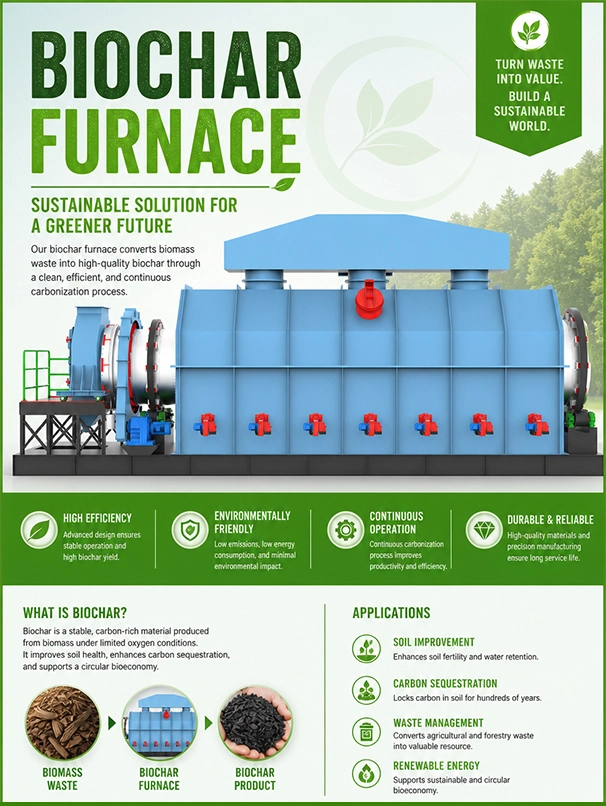
Biochar furnace is a kind of thermal conversion equipment designed for the carbonization of biomass materials into high-value biochar. It is widely used for wood chips, sawdust, rice husk, coconut shell, bamboo, straw, palm shell, and other agricultural or forestry residues. By controlling temperature and oxygen supply, the furnace converts raw biomass into stable biochar, while recyclable combustible gas can be reused to reduce fuel consumption.
Our biochar furnace is suitable for small-scale and industrial biochar production projects. It helps customers turn waste biomass into useful carbon materials for soil improvement, carbon sequestration, fertilizer production, and environmental recycling.
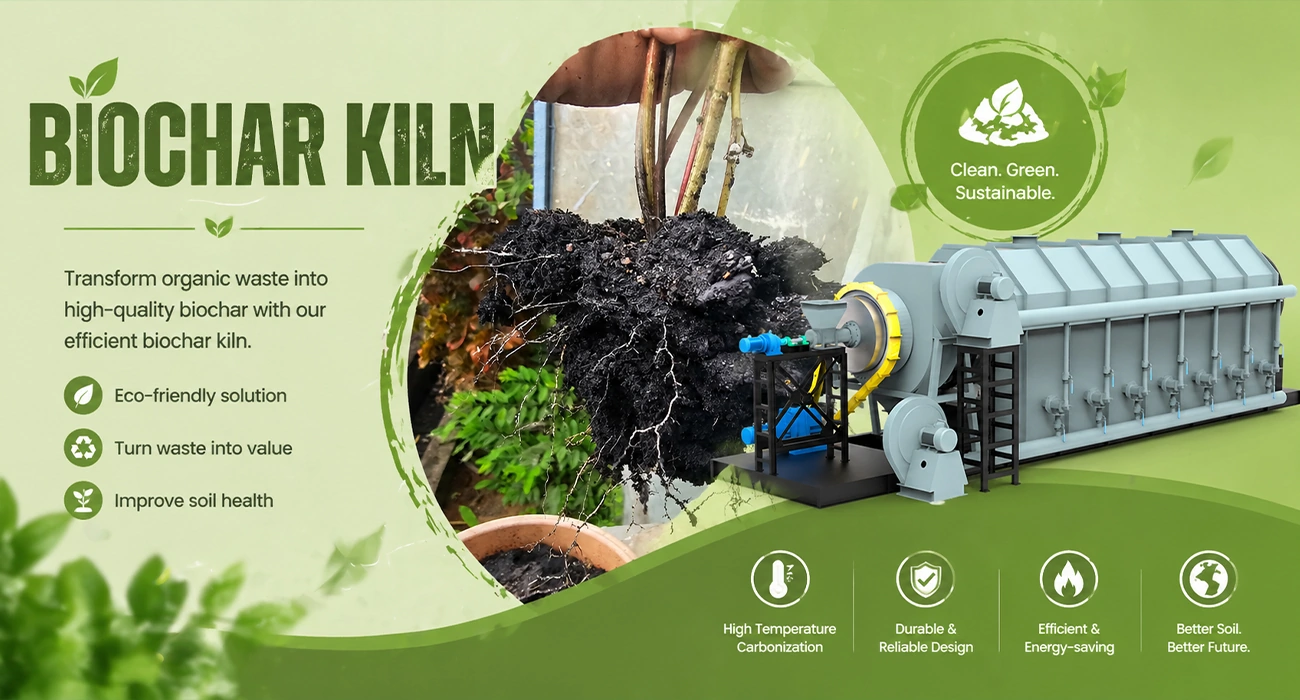
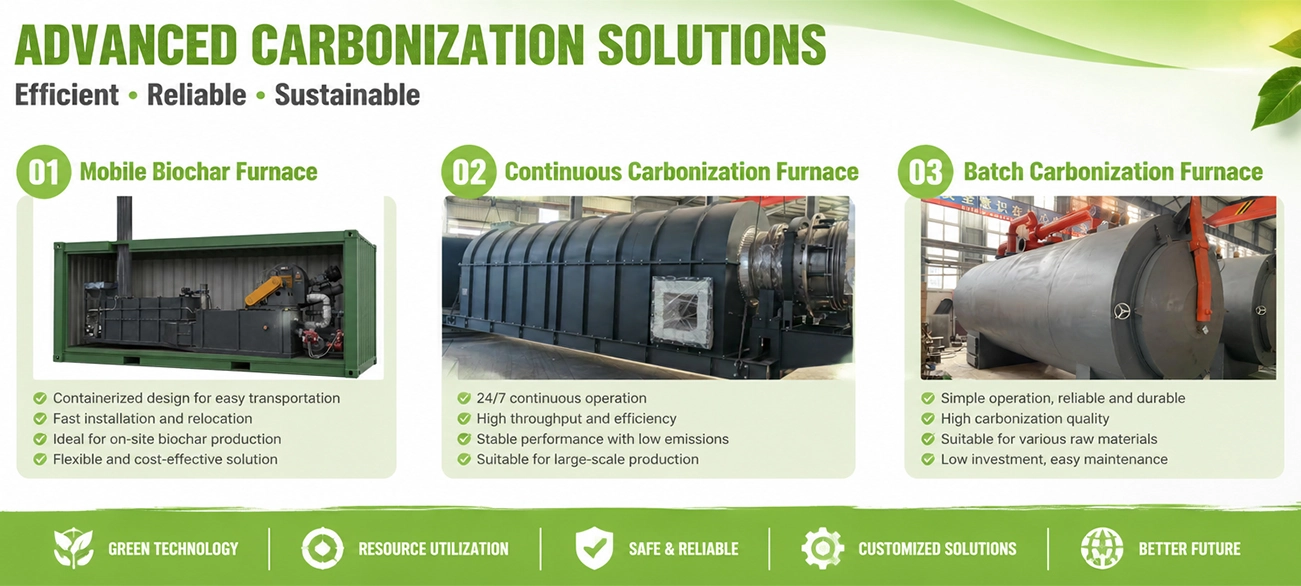
A biochar furnace is a carbonization system that heats biomass under limited oxygen conditions. During the pyrolysis process, volatile compounds are released, and the remaining solid material becomes biochar. Depending on the project requirement, the equipment can be designed as batch type, continuous type, or mobile type.
Compared with traditional charcoal production equipment, a biochar furnace is more focused on stable output, cleaner emission control, and better biochar quality for agricultural and environmental applications.
Biochar furnace works by heating biomass materials such as wood chips, sawdust, rice husks, coconut shells, or agricultural waste under a low-oxygen environment. During the carbonization process, the raw materials are thermally decomposed at high temperatures, usually between 300°C and 800°C, to produce biochar, combustible gas, and a small amount of tar. The generated combustible gas can be recycled back into the furnace as a heat source, reducing fuel consumption and improving energy efficiency. The continuous heating process removes moisture and volatile components from the biomass while retaining stable carbon content, resulting in high-quality biochar with a porous structure. Modern biochar furnaces are often equipped with automatic feeding, temperature control, smoke purification, and continuous discharge systems, which help improve production efficiency and environmental performance.
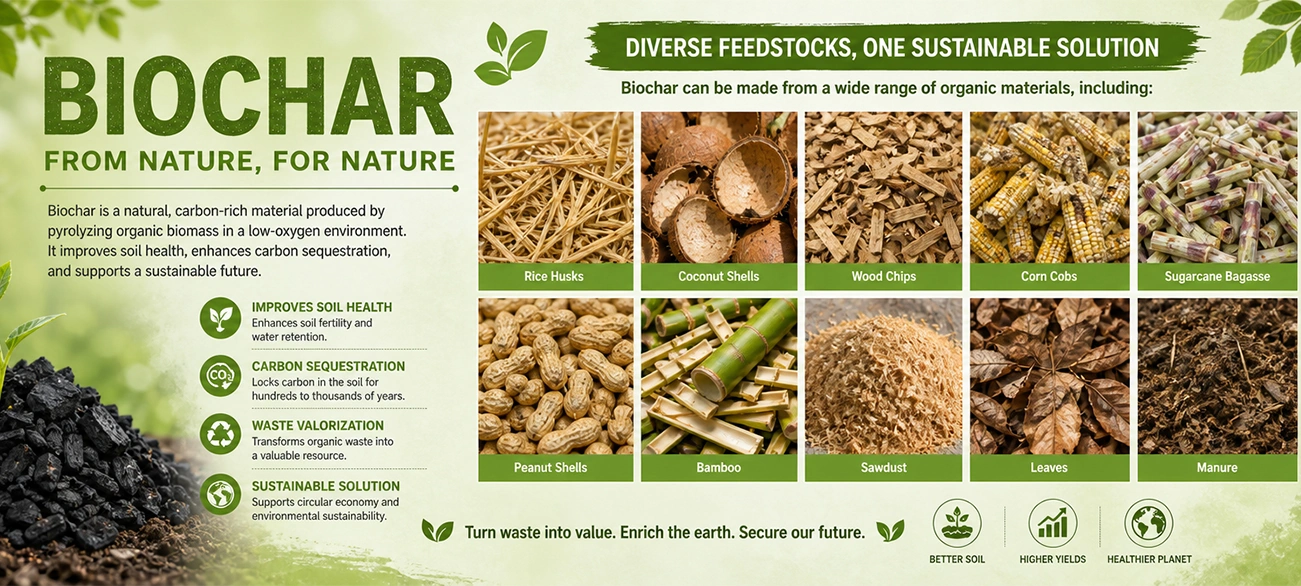
Biochar can be produced from a wide variety of biomass materials, making it a sustainable and environmentally friendly product. Common feedstocks include agricultural residues such as rice husks, wheat straw, corn stalks, corn cobs, peanut shells, and sugarcane bagasse. Forestry waste, including sawdust, wood chips, tree branches, bamboo waste, and bark, is also widely used for biochar production. In addition, various nut shells and fruit pits, such as coconut shells, palm kernel shells, walnut shells, almond shells, and hazelnut shells, are excellent raw materials due to their high carbon content and low ash levels.
These biomass materials are converted into biochar through a pyrolysis process in an oxygen-limited environment. During carbonization, volatile compounds are released while carbon is retained in a stable form. The resulting biochar can be applied to agriculture, environmental protection, and industrial sectors. It is widely used as a soil amendment to improve soil fertility, increase water retention, and promote plant growth. Biochar also plays an important role in carbon sequestration, helping reduce greenhouse gas emissions. Furthermore, high-quality biochar produced from coconut shells, palm shells, and hardwood materials can serve as a valuable precursor for activated carbon manufacturing, creating additional economic value from biomass waste.
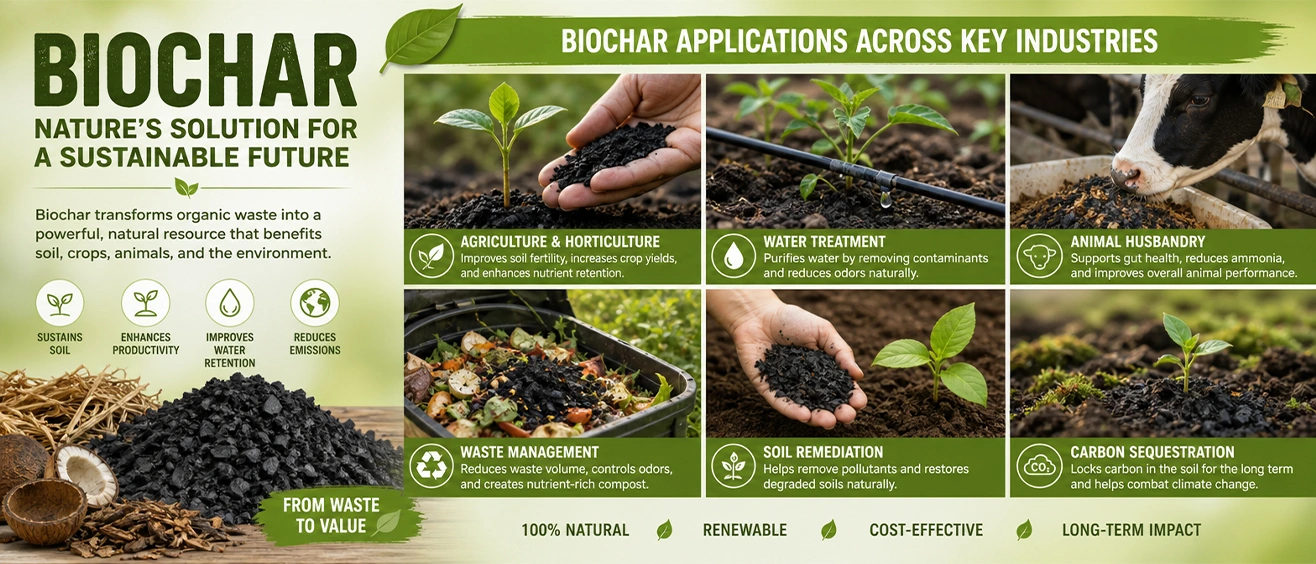
Biochar has a wide range of applications due to its porous structure, stable carbon content, and strong adsorption capacity. It is widely used across multiple industries, mainly including the following areas:
In the agricultural sector, biochar is used to improve soil structure, enhance water and nutrient retention, regulate soil pH, and promote microbial activity. These functions help increase crop yields and improve long-term soil fertility. It also reduces nutrient leaching and improves fertilizer efficiency, making it an effective soil amendment material.
In livestock and animal husbandry, biochar can be used as a feed additive, bedding material, and manure treatment agent. It helps absorb odors and harmful gases, improves the farming environment, reduces intestinal toxins in animals, enhances gut health, and supports the resource utilization of animal waste.
In the environmental protection field, biochar is commonly applied in wastewater treatment and air purification. It effectively adsorbs heavy metals, organic pollutants, and harmful gases, making it suitable for industrial wastewater treatment, stormwater purification, and soil remediation projects.
In the energy and materials industry, biochar can be used as a solid fuel or energy carrier. It is also a valuable raw material for producing activated carbon, composite materials, and electrode materials, which are widely applied in new energy batteries, energy storage systems, and advanced functional materials.
In addition, in the carbon reduction and climate change mitigation field, biochar is considered an important carbon sequestration material. Due to its stable carbon structure, it can lock carbon in soil for long periods, helping reduce carbon dioxide levels in the atmosphere and supporting carbon neutrality goals.
Overall, biochar has evolved from traditional agricultural use to a multifunctional material widely applied in environmental protection, energy, and industrial sectors, demonstrating strong economic value and sustainability potential.

| Model | XY-800 | XY-1000 | XY-1200 | XY-1500 | XY-1800 | XY-2000 |
| Number of cylinder layers | Single | Single | Double | Double | Double | Double |
| Cylinder diameter | 800mm | 1000mm | 1200/700mm | 1500/900mm | 1800/1200mm | 2000/1500mm |
| Capacity | 200-300kg/h | 300-400kg/h | 450-600kg/h | 600-800kg/h | 800-1000kg/h | 1000-1200kg/h |
| Cylinder material | 309S/310S/316L | 309S/310S/316L | 309S/310S/316L | 309S/310S/316L | 309S/310S/316L | 309S/310S/316L |
| Temerature | 500-800ºC | 500-800ºC | 500-800ºC | 500-800ºC | 500-800ºC | 500-800ºC |
| Carbonization time | 20-60min | 20-60min | 20-60min | 20-60min | 20-60min | 20-60min |
| Raw material particle size | ≤4cm | ≤4cm | ≤4cm | ≤4cm | ≤4cm | ≤4cm |
| Heating method | indirect heating | indirect heating | indirect heating | indirect heating | indirect heating | indirect heating |
| Operation mode | continuously working | continuously working | continuously working | continuously working | continuously working | continuously working |
| Control method | PLC control | PLC control | PLC control | PLC control | PLC control | PLC control |
Frequently asked questions
Here are answers to some frequently asked questions about skid-mounted carbonization furnaces. If you have any other questions, please feel free to contact our customer service team directly, and we will be happy to provide you with a detailed explanation.
Please share your feedstock type, moisture content, target capacity, operating hours, project location, and expected biochar quality. If available, include particle size, utility conditions, and local emission requirements so we can prepare a more accurate proposal.
Our biochar furnace can be configured for a wide range of biomass materials, including wood chips, sawdust, rice husk, coconut shell, straw, bamboo, and other agricultural or forestry residues. The final design depends on feedstock size, moisture, and ash content.
Capacity is selected based on feedstock condition, target output, and operating mode. When submitting an RFQ, buyers are encouraged to specify required throughput in tons per hour or tons per day, along with moisture basis, to ensure correct equipment sizing.
Yes. The system can be tailored for different end-use goals such as soil amendment, carbon sequestration, fuel applications, or industrial carbon products. Pyrolysis temperature, residence time, and process configuration can be adjusted accordingly.
The furnace is typically supplied with a PLC-based control system with HMI for temperature control, process monitoring, alarms, and safety interlocks. Remote monitoring and additional automation functions can also be offered based on project requirements.