 Henan Xuye Machinery Equipment Co., Ltd.
SEARCH WHAT YOU WANT
Search allProductNews
SEARCH
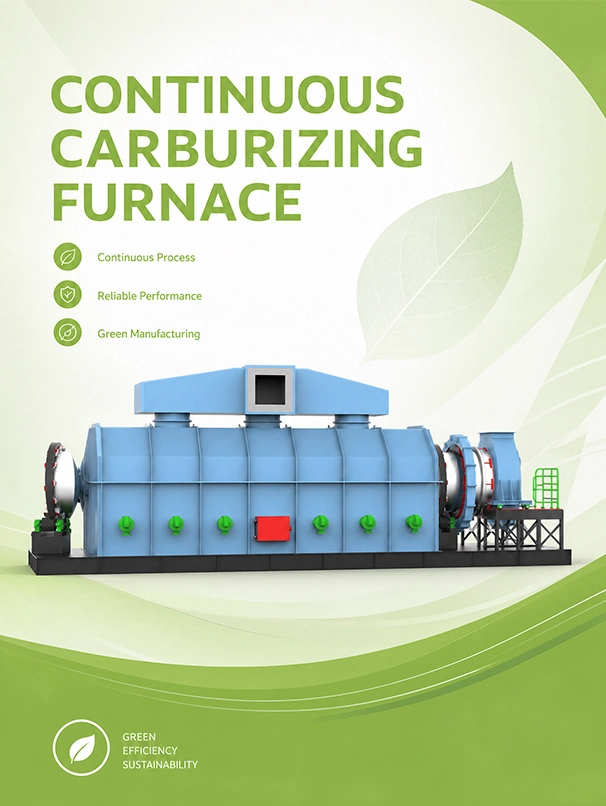
A continuous carbonization furnace is an industrial charcoal maker machine designed to convert biomass materials into high-quality charcoal through controlled heating, oxygen-limited carbonization, and continuous discharge. Compared with traditional batch-type carbonization equipment, a continuous system allows raw materials to be fed, carbonized, cooled, and discharged in a steady production flow, making it suitable for commercial charcoal manufacturing plants, biomass recycling projects, activated carbon pre-treatment, agricultural waste utilization, and renewable energy applications.
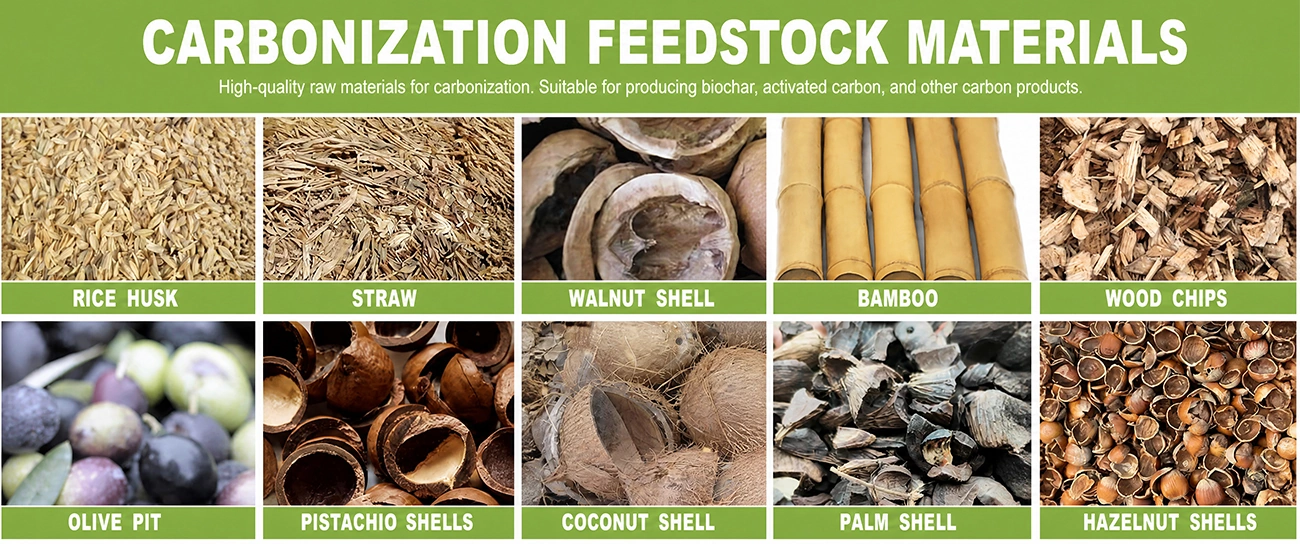
For companies looking for a reliable charcoal manufacturing machine, the continuous carbonization furnace offers higher productivity, better energy efficiency, lower labor cost, and more stable charcoal quality. It can process many kinds of biomass materials, including sawdust, wood chips, rice husk, coconut shell, palm kernel shell, bamboo, straw, peanut shell, walnut shell, sludge after drying, and other organic carbon-containing materials.
As a professional charcoal production machine, this equipment is widely used by customers who want to build a complete charcoal making line. It can be matched with crushing equipment, drying equipment, feeding systems, cooling systems, screening machines, briquette machines, dust collectors, and gas purification systems. Whether you need a single continuous carbonization furnace or a complete charcoal making equipment solution, the system can be customized according to your raw material, moisture content, required capacity, heating source, final charcoal application, and plant layout.
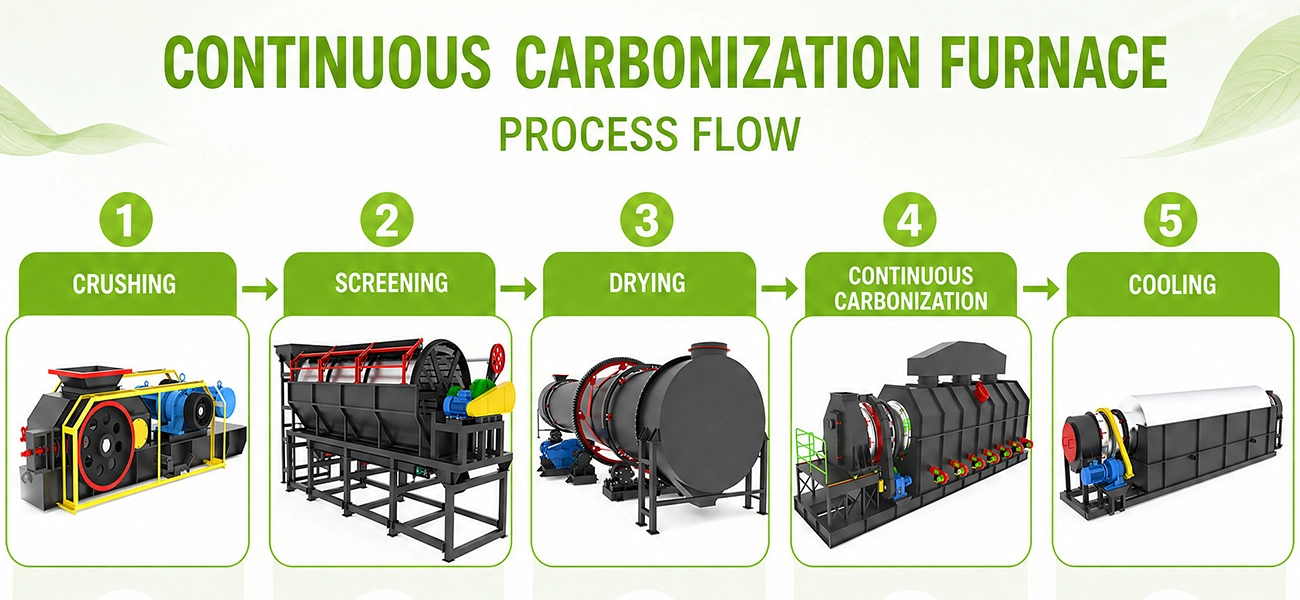
The continuous carbonization furnace is designed for the continuous treatment of biomass materials such as wood chips, sawdust, coconut shell, rice husk, palm shell, bamboo chips and agricultural waste. The whole process usually includes feeding, drying, carbonization, cooling and discharging.
First, the raw material is sent into the feeding system by conveyor. If the moisture content is high, a dryer can be used before carbonization to reduce moisture and improve carbon yield. Then the material enters the sealed carbonization furnace. Under a high-temperature and oxygen-limited environment, the biomass is gradually decomposed and converted into charcoal or biochar.
During carbonization, combustible gas is generated from the material. After dust removal and purification, part of this gas can be recycled back to the heating system as fuel, which helps reduce energy consumption and operating cost. The furnace temperature can be controlled according to different raw materials and final product requirements.
After carbonization, the hot charcoal is discharged into a cooling system to prevent burning when it contacts air. Finally, the cooled charcoal can be collected, packed, crushed, or further processed into briquettes or activated carbon raw material.
With continuous feeding and discharging, the continuous carbonization furnace offers stable operation, high efficiency, lower labor cost and better environmental performance. It is widely used in biomass recycling, charcoal production, biochar production and industrial carbon material processing.
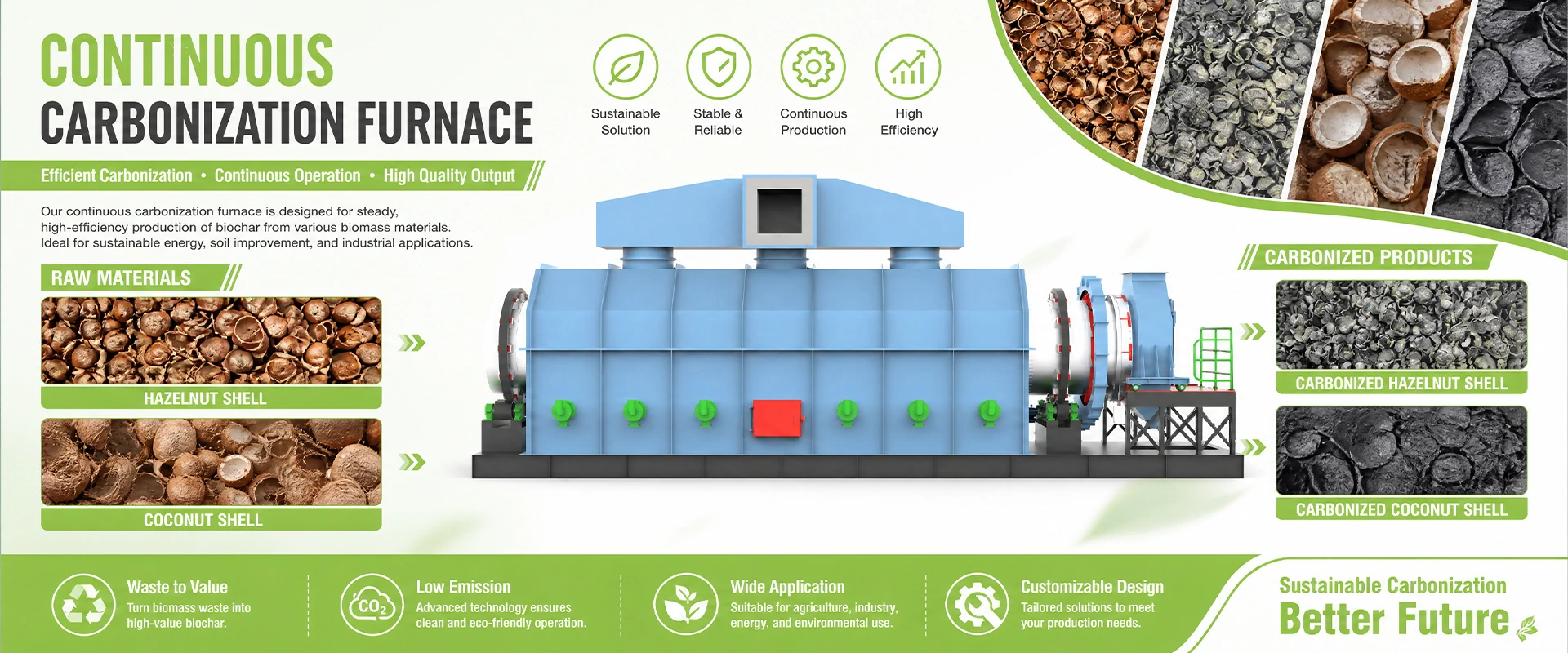
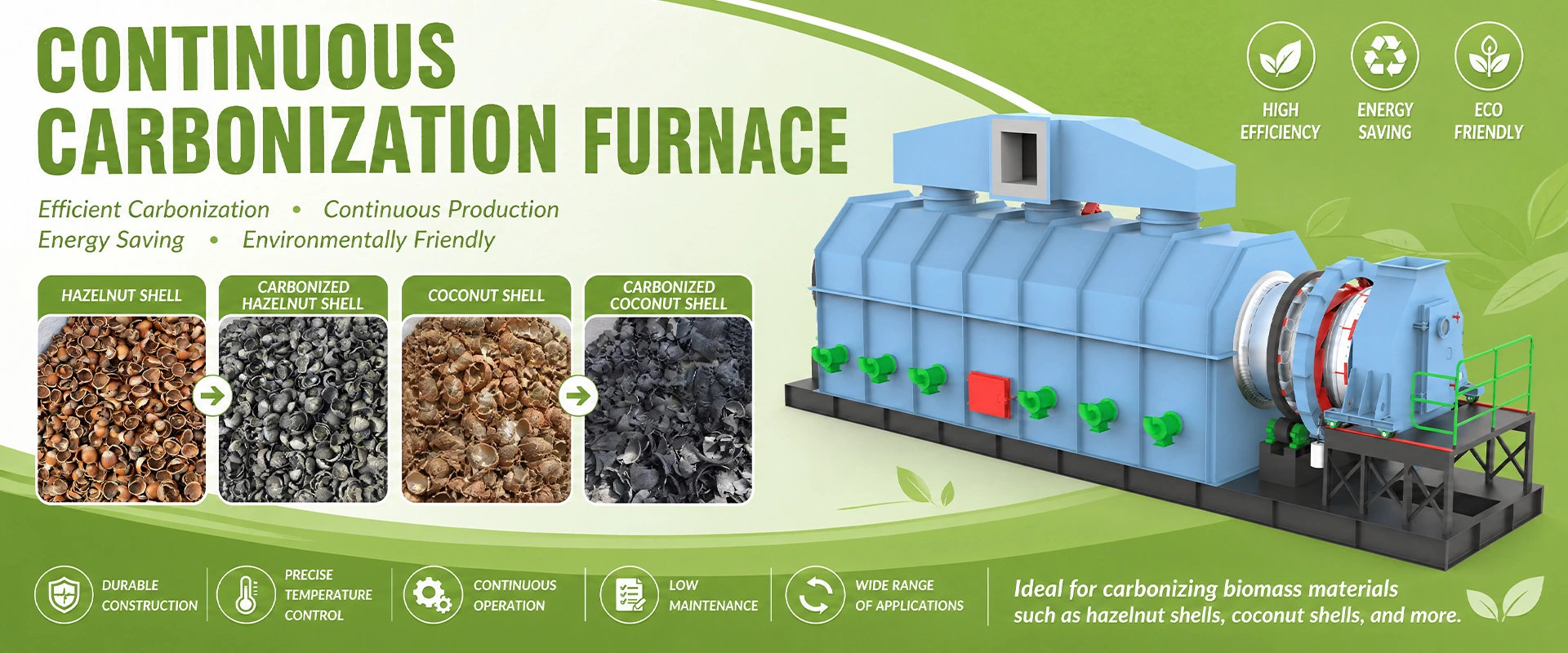
A continuous carbonization furnace can be used to carbonize a wide range of biomass and organic waste materials. Common raw materials include coconut shells, almond shells, hazelnut shells, walnut shells, palm kernel shells, rice husks, sawdust, wood chips, bamboo, straw, corn cobs, peanut shells, coffee grounds, fruit shells, and other agricultural residues. It is also suitable for processing forestry waste, biomass pellets, sewage sludge, and certain organic industrial wastes, depending on the moisture content, particle size, and material composition. Through high-temperature oxygen-limited carbonization, these raw materials can be converted into charcoal, biochar, activated carbon precursor, or carbonized fuel. The continuous design allows stable feeding, uniform heating, efficient carbonization, and continuous discharge, making it suitable for large-scale production. Different raw materials can produce carbon products with different fixed carbon content, ash content, hardness, and adsorption performance. For example, coconut shells and nut shells are ideal for producing high-quality activated carbon raw material, while sawdust, wood chips, and straw are widely used for biochar and biomass fuel production. This equipment helps turn low-value waste into useful carbon products.
Because the process never stops to load or unload, a continuous carbonization furnace can produce far more charcoal per day than a batch kiln of comparable size. Many commercial operators report 3–5 times the daily output when switching from batch to continuous systems.
The self-fueling gas recycling system means that, after initial startup, the machine draws its heating energy from its own pyrolysis gas rather than continuously burning external fuel. This can cut fuel costs by 60–80% compared with traditional kilns.
Because every unit of material follows the same controlled path through the furnace — the same temperature zones, the same retention time — output quality is far more uniform than in a batch kiln, where material near the kiln wall often carbonizes differently than material at the center.
A continuous charcoal making machine requires far less manual labor than batch systems, since feeding, carbonizing, cooling, and discharging are all automated. One or two operators can typically manage an entire production line.
With integrated gas recovery and exhaust purification, continuous carbonization equipment produces significantly less smoke and pollution than open kilns, helping producers meet environmental regulations in most countries.
Despite higher output, a continuous furnace system generally occupies less land area than the equivalent number of batch kilns needed to match its production capacity.
The sealed, automated design reduces the risk of burns, smoke inhalation, and fire hazards associated with manually operated kilns.
High and consistent throughput makes continuous carbonization equipment ideal for producers supplying BBQ charcoal, shisha/hookah charcoal, and restaurant-grade charcoal to domestic and export markets.
Biochar produced from a continuous carbonization furnace is widely used as a soil amendment to improve soil structure, water retention, and carbon sequestration — an increasingly important application as demand for sustainable agricultural inputs grows.
Coconut shell and wood-based charcoal produced through continuous carbonization is frequently used as a precursor material for activated carbon production.
Charcoal produced at scale can serve as a solid fuel substitute for coal in metallurgical, boiler, and industrial heating applications.
Sawmills, palm oil processors, rice mills, and agricultural operations use continuous charcoal making machines to convert biomass waste that would otherwise be disposed of into a profitable, sellable product.
| Model | XY-800 | XY-1000 | XY-1200 | XY-1500 | XY-1800 | XY-2000 |
| Number of cylinder layers | Single | Single | Double | Double | Double | Double |
| Cylinder diameter | 800mm | 1000mm | 1200/700mm | 1500/900mm | 1800/1200mm | 2000/1500mm |
| Capacity | 200-300kg/h | 300-400kg/h | 450-600kg/h | 600-800kg/h | 800-1000kg/h | 1000-1200kg/h |
| Cylinder material | 309S/310S/316L | 309S/310S/316L | 309S/310S/316L | 309S/310S/316L | 309S/310S/316L | 309S/310S/316L |
| Temerature | 500-800ºC | 500-800ºC | 500-800ºC | 500-800ºC | 500-800ºC | 500-800ºC |
| Carbonization time | 20-60min | 20-60min | 20-60min | 20-60min | 20-60min | 20-60min |
| Raw material particle size | ≤4cm | ≤4cm | ≤4cm | ≤4cm | ≤4cm | ≤4cm |
| Heating method | indirect heating | indirect heating | indirect heating | indirect heating | indirect heating | indirect heating |
| Operation mode | continuously working | continuously working | continuously working | continuously working | continuously working | continuously working |
| Control method | PLC control | PLC control | PLC control | PLC control | PLC control | PLC control |
Frequently asked questions
Here are answers to some frequently asked questions about skid-mounted carbonization furnaces. If you have any other questions, please feel free to contact our customer service team directly, and we will be happy to provide you with a detailed explanation.
This depends on the model you choose. Entry-level continuous carbonization furnaces can process around 500 kg/hour, while larger industrial models handle 3,000–4,000 kg/hour or more. We recommend starting with an assessment of your available raw material supply before selecting a model.
Yes, initial heating using natural gas or diesel is required.After startup, the continuous carbonization furnace recycles the combustible gas generated during pyrolysis to sustain its own heating process, drastically reducing the need for external fuel under normal operating conditions.
The continuous carbonization furnace performs best with raw material at 15–20% moisture or lower. For wetter material, we recommend pairing the furnace with a rotary dryer as part of your production line.
Yes. We offer a range of models from smaller entry-level continuous carbonization furnaces to large industrial systems, so you can select a capacity that matches your budget and expected growth.
Yes. Our engineering team routinely customizes furnace dimensions, retention time, and feeding systems based on the specific raw material and target charcoal specification you require.