 Henan Xuye Machinery Equipment Co., Ltd.
SEARCH WHAT YOU WANT
Search allProductNews
SEARCH
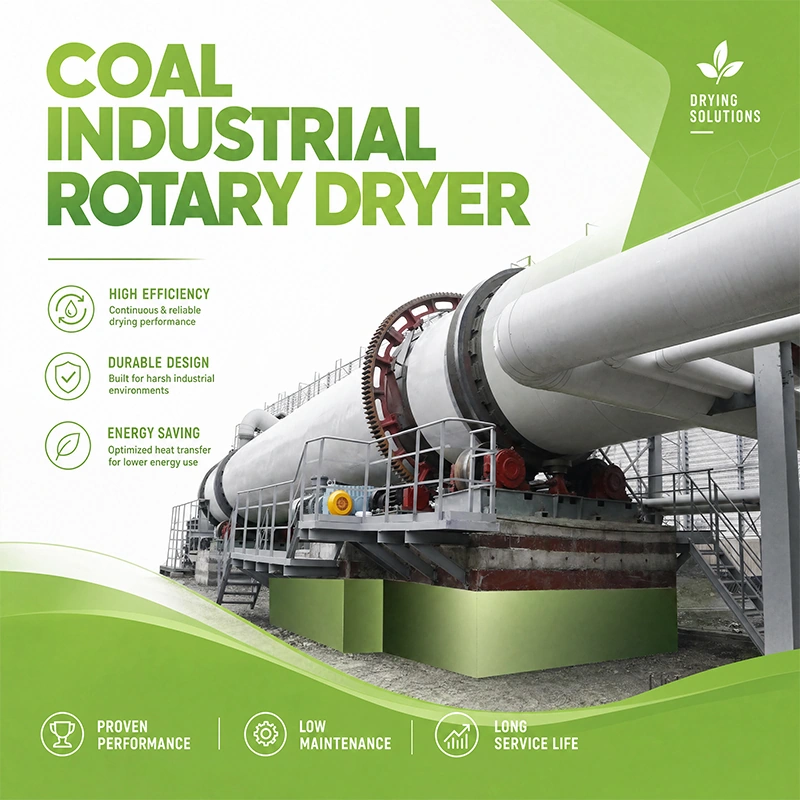
The Coal Rotary Dryer is a continuous, high-capacity thermal drying system engineered to reduce the surface and inherent moisture content of raw coal — including bituminous coal, sub-bituminous coal, lignite, and coal fines/slurry — to the moisture specification required for efficient combustion, coking, briquetting, transportation, or coal-water slurry preparation. Because coal drying involves handling a combustible material at elevated temperature, the coal rotary dryer is one of the more demanding equipment categories in industrial drying, requiring careful engineering attention to fire and explosion safety alongside the core thermal and mechanical drying performance.
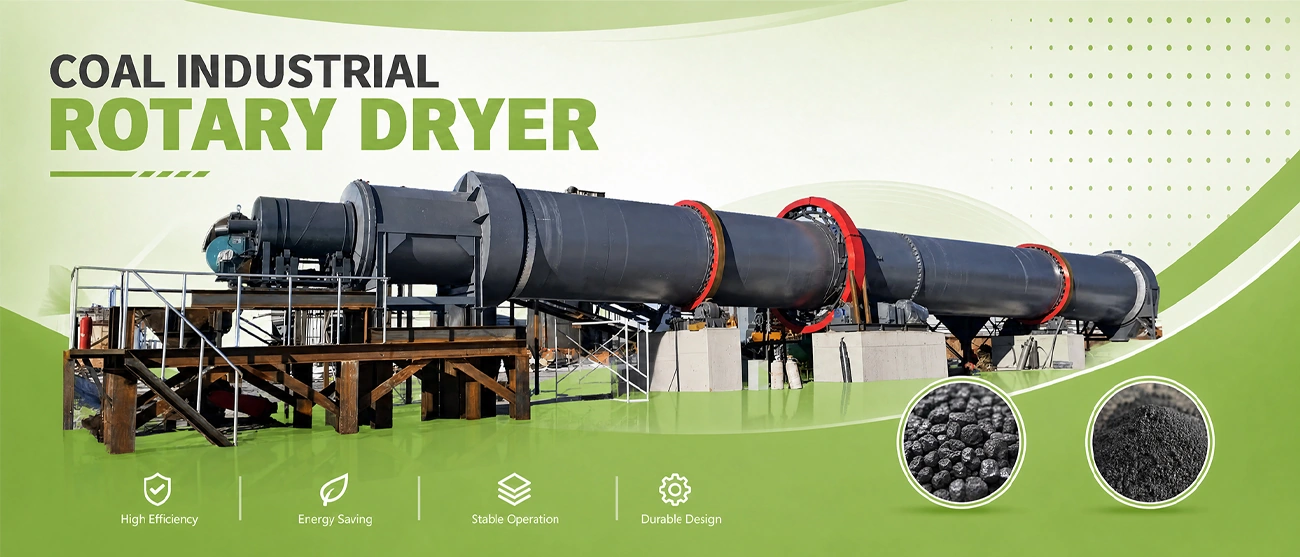
Raw coal, as mined or as received at a preparation plant, typically carries surface moisture from mining, washing, and outdoor stockpile exposure, in addition to the inherent (bound) moisture that varies significantly depending on coal rank — from relatively low-moisture bituminous coal to high-moisture lignite and sub-bituminous coals that can carry 30-60% moisture content or more as mined. This moisture content creates several significant operational, economic, and process challenges:
A properly sized and safety-engineered coal rotary dryer addresses these challenges directly, reducing coal moisture content to the target specification in a continuous process while managing the fire and explosion risks inherent to drying a combustible material at elevated temperature.
A coal rotary dryer consists of a slightly inclined, rotating cylindrical drum fitted with internal lifting flights, through which raw coal is continuously fed at one end and dried coal is discharged at the other, with a controlled-temperature drying gas stream flowing through the drum to evaporate surface and, depending on drying severity, some inherent moisture from the coal.
1. Coal Feed and Sizing — Raw coal, typically pre-sized through crushing or screening to a relatively uniform particle size range appropriate for rotary drying, is fed into the drum’s inlet housing via a belt conveyor or vibrating feeder providing a steady, metered material feed rate. Feed size consistency is an important design consideration, since oversized lumps dry more slowly and unevenly than fines, while excessive fines can be prone to entrainment and carryover into the exhaust gas stream.
2. Tumbling and Lifting Action — As the drum rotates, internal lifting flights lift and shower the coal through the passing hot gas stream, maximizing the contact surface area between the coal particles and the drying medium. Flight design is engineered around the specific coal type’s particle size distribution, moisture content, and handling characteristics — sticky, high-moisture lignite behaves quite differently from drier, more free-flowing bituminous coal, and flight geometry should be matched accordingly.
3. Heat and Moisture Transfer — The drying gas — which may be direct combustion flue gas, air heated indirectly, or, in inert-atmosphere designs, a recirculated low-oxygen gas stream — passes through the drum and evaporates moisture from the tumbling coal as it travels the drum’s length. Drying gas inlet temperature, residence time, and airflow configuration (co-current or counter-current) are all controlled to achieve the target moisture reduction while managing coal surface temperature within safe limits to avoid self-heating or ignition risk.
4. Discharge and Air Handling — Dried coal exits the drum’s discharge end and proceeds to downstream handling — storage, blending, briquetting, pulverizing for boiler feed, or coking coal blend preparation — while exhaust gas, carrying evaporated moisture and entrained coal fines, passes through cyclone separators and typically a bag filter or wet scrubber dust collection system before release, both recovering valuable coal fines and meeting particulate emission requirements.
Coal rotary dryers can be configured with different drying medium approaches, each with distinct fire safety and process implications:
The appropriate drying medium selection depends heavily on your specific coal type’s self-heating and explosibility characteristics, target drying severity, and your facility’s risk tolerance and regulatory requirements — this is one of the most important early decisions in coal dryer system design and should be evaluated with input from experienced coal handling safety engineering resources.
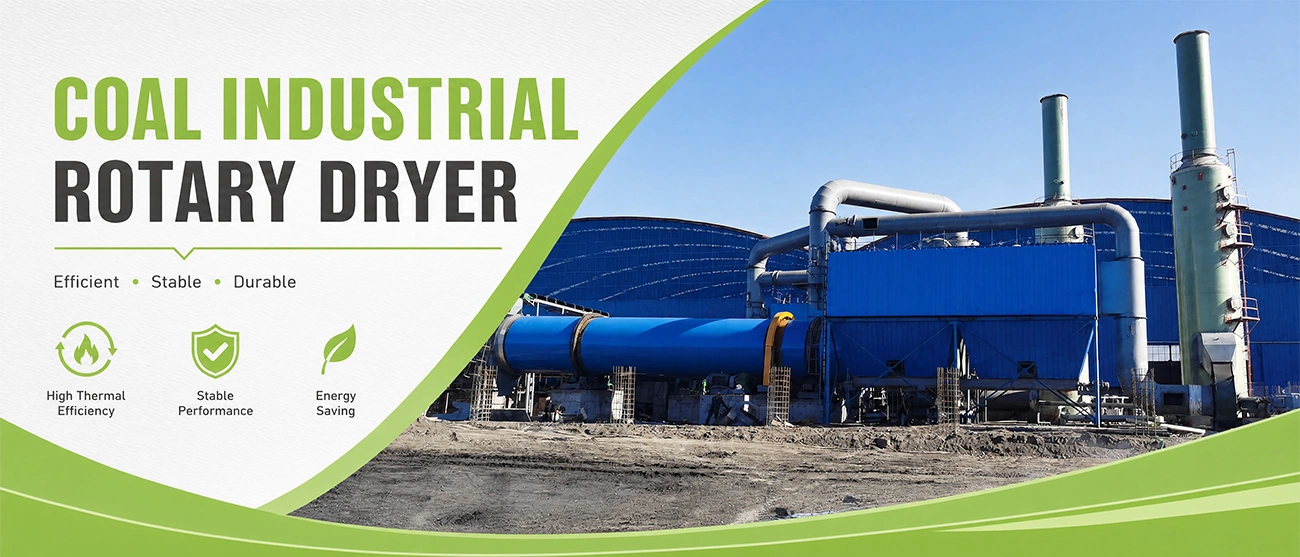
Unlike many other bulk materials processed in rotary dryers, coal — particularly coal fines and certain low-rank coal types — presents genuine fire and dust explosion hazards that must be addressed comprehensively throughout the dryer system design, not treated as an add-on safety feature. Key safety design elements include:
Continuous temperature monitoring at multiple points through the drum and exhaust gas path, with automatic control response (reduced firing rate, increased airflow, or emergency shutdown) if temperatures approach levels associated with coal self-heating or ignition risk for the specific coal type being processed.
Where an inert or low-oxygen drying atmosphere is used, continuous oxygen analysis with automatic corrective action or shutdown interlocks if oxygen concentration rises above the safe threshold for the coal type and process conditions involved.
Spark detection systems positioned at critical points in the process gas path — particularly ahead of dust collection equipment, where accumulated fine coal dust presents elevated fire and explosion risk — paired with automatic spark extinguishing or isolation systems.
Explosion venting panels and, where appropriate based on risk assessment, chemical explosion suppression systems on the dryer drum, ductwork, and dust collection equipment, engineered in accordance with applicable dust explosion protection standards (such as NFPA 69/68/85 guidance in jurisdictions where these apply, or equivalent local standards).
Carbon monoxide monitoring within the drying system and exhaust gas path serves as an early warning indicator of coal self-heating or smoldering combustion, often detectable before temperature rise alone would trigger an alarm, providing operators additional response time to address a developing hot spot before it escalates.
Rapid emergency discharge capability to clear the drum of material in the event of a developing fire condition, along with fixed fire suppression systems (water spray, inert gas flooding, or other systems appropriate to the specific installation) integrated into the overall safety system design.
System design that minimizes ledges, dead zones, and other areas prone to fine coal dust accumulation throughout ductwork and equipment, since accumulated dust layers represent a significant secondary explosion risk if disturbed and ignited during a primary event.
Given the safety-critical nature of these systems, coal rotary dryer design should always be developed in consultation with experienced combustible dust and coal handling safety engineering resources, and in full compliance with applicable local fire codes, dust explosion protection standards, and jurisdiction-specific regulatory requirements — the specific combination of safety systems appropriate for your installation depends on your coal type’s specific self-heating and explosibility characteristics as determined through appropriate testing and risk assessment.n your specific coal type’s self-heating and explosibility characteristics, target drying severity, and your facility’s risk tolerance and regulatory requirements — this is one of the most important early decisions in coal dryer system design and should be evaluated with input from experienced coal handling safety engineering resources.
The rotating drum shell is fabricated from heavy-gauge carbon steel plate, reinforced as needed to withstand the mechanical loading of the coal bed, internal flighting, and continuous rotational operation, with wear-resistant lining options available for high-abrasion inlet zones where coarse coal particles contact the drum surface most aggressively.
Flight geometry, spacing, and configuration are engineered around the specific coal type’s particle size distribution, moisture content, and handling characteristics — high-moisture, sticky lignite and sub-bituminous coals require different flight design considerations than drier, more free-flowing bituminous coal to achieve effective tumbling and showering action without excessive material buildup or flight blinding.
The loaded drum rests on precision-machined riding rings supported by roller assemblies distributed along the drum’s length, enabling smooth, low-friction rotation while evenly distributing the substantial rotating weight across the support structure.
The drum is rotated via a girth gear and pinion arrangement or friction drive configuration, sized to the torque requirements of the specific drum diameter, length, and loaded material weight, with variable-speed drive control allowing operators to adjust rotational speed and residence time in response to varying coal moisture content and feed characteristics.
Sealed housings at the drum’s inlet and discharge points minimize false air infiltration, which both reduces drying efficiency and can introduce uncontrolled oxygen into the process atmosphere in inert-gas drying system designs, as well as minimizing coal dust escape at these transition points.
Comprehensive instrumentation — including the temperature, oxygen, CO, and spark detection systems described above, alongside standard process parameters like drum rotational speed and feed rate — is integrated into facility-level PLC/SCADA automation systems, supporting centralized monitoring, automated safety interlocks, and the detailed operational data logging typically required for regulatory compliance and safety management systems in coal handling facilities.
Power generation facilities burning lower-rank coals or coal blends use rotary drying to reduce fuel moisture content ahead of combustion, improving boiler thermal efficiency, reducing fuel consumption per unit of power generated, and improving combustion stability compared to burning high-moisture as-received coal directly.
Lignite and sub-bituminous coal, often available at lower cost due to their high inherent moisture content and correspondingly lower heating value, become significantly more valuable and transportable once dried, supporting coal upgrading operations that process low-value, high-moisture coal into a higher-heating-value, more marketable fuel product — an application where drying economics and coal value uplift are central to the business case for the drying investment.
Metallurgical coking plants use rotary drying to achieve controlled, consistent moisture content across coking coal blends, supporting stable coke oven charging density, consistent oven performance, and reliable coke quality output.
Coal briquetting operations, producing compressed fuel briquettes from coal fines and coal blend feedstock, require feedstock dried to a controlled moisture range to achieve proper binding and briquette durability, making rotary drying a standard upstream processing step.
Certain advanced coal utilization processes — including coal-water slurry fuel preparation and coal-to-liquids/gasification feedstock processing — require coal dried and processed to a specific moisture and particle size profile as part of the overall feedstock preparation sequence ahead of slurrying or gasification.
Fine coal recovered from coal preparation plant tailings, slurry ponds, or thickener underflow — often a lower-value byproduct stream — can be dried and recovered as a saleable fuel product, converting what would otherwise be a disposal cost or stranded resource into additional recovered value.
| Model | Cylinder diameter(mm) | Cylinder length(mm) | Cylinder volume(m3) | Cylinder rotary speed (r/min) | Power(kW) | Weight(t) |
| 0.6×5.8 | 600 | 5800 | 1.7 | 1-8 | 3 | 2.9 |
| 0.8×8 | 800 | 8000 | 4 | 1-8 | 4 | 3.5 |
| 1×10 | 1000 | 10000 | 7.9 | 1-8 | 5.5 | 6.8 |
| 1.2×5.8 | 1200 | 5800 | 6.8 | 1-6 | 5.5 | 6.7 |
| 1.2×8 | 1200 | 8000 | 9 | 1-6 | 5.5 | 8.5 |
| 1.2×10 | 1200 | 10000 | 11 | 1-6 | 7.5 | 10.7 |
| 1.2×11.8 | 1200 | 11800 | 13 | 1-6 | 7.5 | 12.3 |
| 1.5×8 | 1500 | 8000 | 14 | 1-5 | 11 | 14.8 |
| 1.5×10 | 1500 | 10000 | 17.7 | 1-5 | 11 | 16 |
| 1.5×11.8 | 1500 | 11800 | 21 | 1-5 | 15 | 17.5 |
| 1.5×15 | 1500 | 15000 | 26.5 | 1-5 | 15 | 19.2 |
| 1.8×10 | 1800 | 10000 | 25.5 | 1-5 | 15 | 18.1 |
| 1.8×11.8 | 1800 | 11800 | 30 | 1-5 | 18.5 | 20.7 |
| 1.8×15 | 1800 | 15000 | 38 | 1-5 | 18.5 | 26.3 |
| 1.8×18 | 1800 | 18000 | 45.8 | 1-5 | 22 | 31.2 |
| 2×11.8 | 2000 | 11800 | 37 | 1-4 | 18.5 | 28.2 |
| 2×15 | 2000 | 15000 | 47 | 1-4 | 22 | 33.2 |
| 2×18 | 2000 | 18000 | 56.5 | 1-4 | 22 | 39.7 |
| 2×20 | 2000 | 20000 | 62.8 | 1-4 | 22 | 44.9 |
| 2.2×11.8 | 2200 | 11800 | 44.8 | 1-4 | 22 | 30.5 |
| 2.2×15 | 2200 | 15000 | 53 | 1-4 | 30 | 36.2 |
| 2.2×18 | 2200 | 18000 | 68 | 1-4 | 30 | 43.3 |
| 2.2×20 | 2200 | 20000 | 76 | 1-4 | 30 | 48.8 |
| 2.4×15 | 2400 | 15000 | 68 | 1-4 | 30 | 43.7 |
| 2.4×18 | 2400 | 18000 | 81 | 1-4 | 37 | 53 |
| 2.4×20 | 2400 | 20000 | 91 | 1-4 | 37 | 60.5 |
| 2.4×23.6 | 2400 | 23600 | 109 | 1-4 | 45 | 69.8 |
| 2.8×18 | 2800 | 18000 | 111 | 1-3 | 45 | 62 |
| 2.8×20 | 2800 | 20000 | 123 | 1-3 | 55 | 65 |
| 2.8×23.6 | 2800 | 23600 | 148 | 1-3 | 55 | 70 |
| 2.8×28 | 2800 | 28000 | 172 | 1-3 | 75 | 75 |
| 3×20 | 3000 | 20000 | 14 | 1-3 | 55 | 75 |
| 3×23.6 | 3000 | 23600 | 170 | 1-3 | 75 | 85 |
| 3×28 | 3000 | 28000 | 198 | 1-3 | 90 | 91 |
| 3.2×23.6 | 3200 | 23600 | 193 | 1-3 | 90 | 112 |
| 3.2×32 | 3200 | 32000 | 257 | 1-3 | 110 | 129 |
| 3.6×36 | 3600 | 36000 | 366 | 1-3 | 132 | 164 |
| 3.8×36 | 3800 | 36000 | 408 | 1-3 | 160 | 187 |
| 4×36 | 4000 | 36000 | 452 | 1-3 | 160 | 195 |