 Henan Xuye Machinery Equipment Co., Ltd.
SEARCH WHAT YOU WANT
Search allProductNews
SEARCH
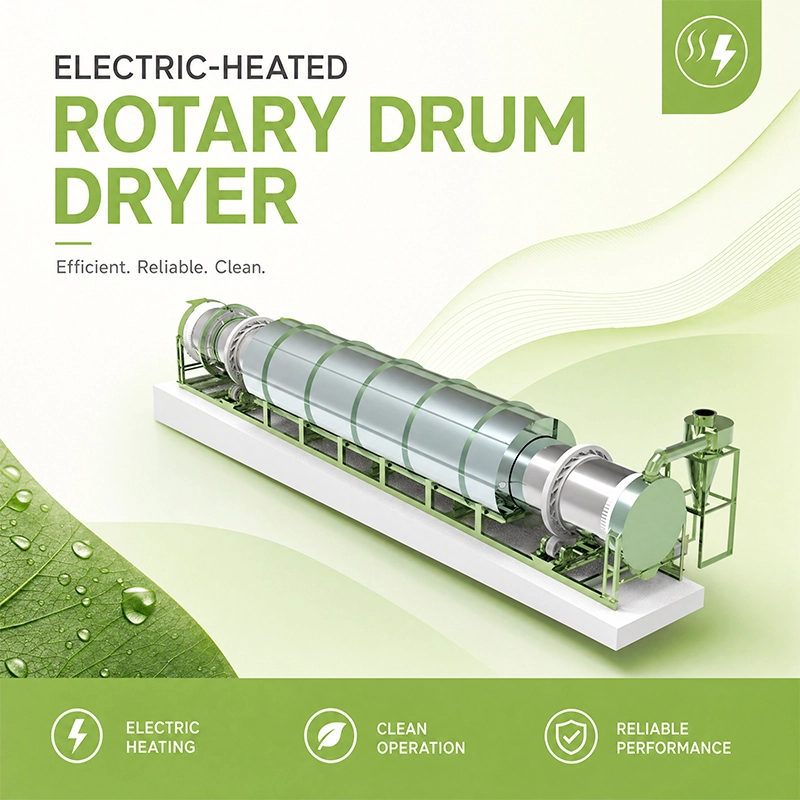
An Electric Rotary Drum Dryer is a continuous industrial drying machine that uses electric energy as the heating source to remove moisture from various materials. Compared with traditional fuel-fired dryers, electric rotary dryers provide cleaner operation, precise temperature control, lower emissions, and easier installation.
The machine is widely used in biomass processing, agricultural waste recycling, chemical production, mineral processing, fertilizer manufacturing, food processing, and environmental protection industries.
With increasing global demand for energy-efficient and environmentally friendly drying solutions, electric rotary drum dryers have become an ideal choice for factories requiring stable drying performance, automatic operation, and reduced environmental impact.
Henan Xuye Machinery Equipment Co., Ltd. designs and manufactures customized electric rotary drum drying systems according to different materials, moisture content requirements, production capacity, and factory conditions.
The working principle of an electric rotary drum dryer is based on heat transfer and moisture evaporation.
The main drying process includes three stages:
Wet materials are transported into the dryer through a screw feeder, belt conveyor, or customized feeding system.
The feeding speed can be adjusted according to:
The electric heating system produces thermal energy, which is transferred into the drying chamber.
When the drum rotates:
This repeated lifting and falling process improves contact between hot air and materials, increasing drying efficiency.
After reaching the required drying level, the dried material moves toward the discharge end.
The exhaust system removes humid air containing evaporated moisture.
A cyclone dust collector or bag filter can be installed to reduce dust emissions and improve environmental performance.
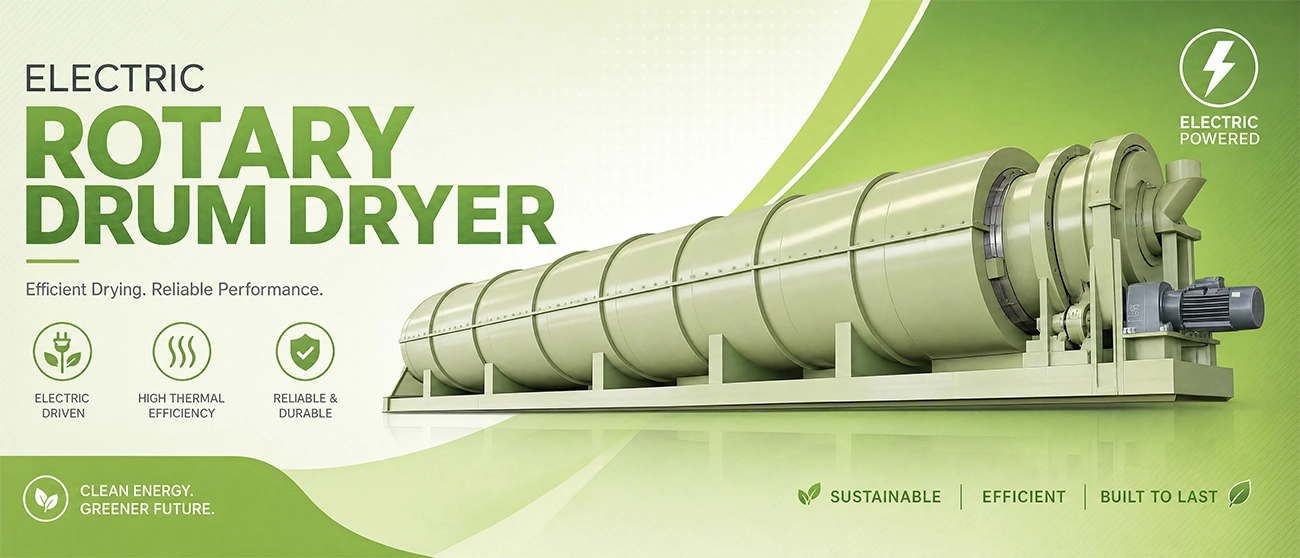
A complete electric rotary drum dryer system usually consists of:
The drum is the core component of the dryer.
Features:
The drum size depends on:
The electric heating unit provides stable thermal energy.
Advantages include:
Temperature controllers allow operators to adjust drying conditions according to different materials.
Specially designed lifting plates are installed inside the drum.
Their functions include:
Different lifting designs can be customized for powder, granular, fibrous, and sticky materials.
The drive system includes:
It provides stable rotation of the drying drum.
The rotation speed can be adjusted according to drying requirements.
During drying, some fine particles may be carried by airflow.
The dust collection system helps:
Available options:
Wet dust collector
Cyclone separator
Bag filter
An electric rotary drum dryer offers numerous advantages over conventional drying systems powered by coal, diesel, natural gas, or biomass. As industries increasingly focus on energy efficiency, automation, and environmental compliance, electric heating technology has become a preferred solution for many manufacturing plants.
One of the biggest advantages of electric heating is accurate temperature regulation.
Unlike combustion heating systems, electric heating elements can maintain a stable temperature throughout the drying process. This helps prevent overheating, material degradation, or uneven drying.
Benefits include:
Modern PLC systems allow operators to set drying temperatures according to different materials, ensuring repeatable production quality.
Electric rotary dryers produce no direct combustion gases.
Compared with coal-fired or biomass-fired dryers, electric dryers offer:
These advantages make electric dryers particularly suitable for regions with strict environmental regulations.
The entire drying process can be automatically controlled.
Typical automatic functions include:
The automation system significantly reduces labor costs while improving production stability.
Electric heating converts electrical energy into thermal energy with very high efficiency.
Advanced insulation materials minimize heat loss, while optimized airflow design ensures maximum utilization of generated heat.
Energy-saving features include:
Unlike fuel-fired dryers, electric rotary drum dryers require no fuel storage tanks, gas pipelines, or combustion chambers.
Installation is therefore much simpler.
Most installations only require:
This reduces construction costs and shortens project implementation time.
Electric heating systems contain fewer mechanical components than combustion systems.
There are:
Routine maintenance mainly involves:
As a result, maintenance costs are generally lower.
Electric rotary dryers are becoming increasingly popular because they combine high efficiency with environmental sustainability.
They are especially suitable for factories that:
Electric heating also eliminates the need to purchase, transport, and store fossil fuels.
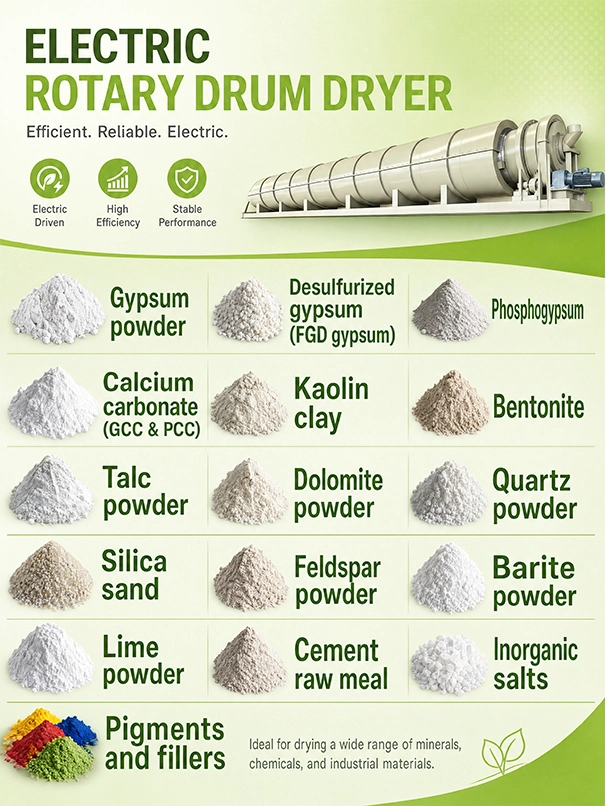
Our Electric Rotary Drum Dryer is specifically designed for drying chemical powders, mineral powders, and fine particulate materials that require precise temperature control and contamination-free processing. Unlike traditional fuel-fired dryers, electric heating provides clean, stable heat without introducing combustion gases, making it ideal for high-value industrial materials.
The machine is widely used in the chemical, building materials, mining, metallurgy, and environmental protection industries, where consistent moisture reduction is essential for improving product quality, storage stability, and downstream processing efficiency.
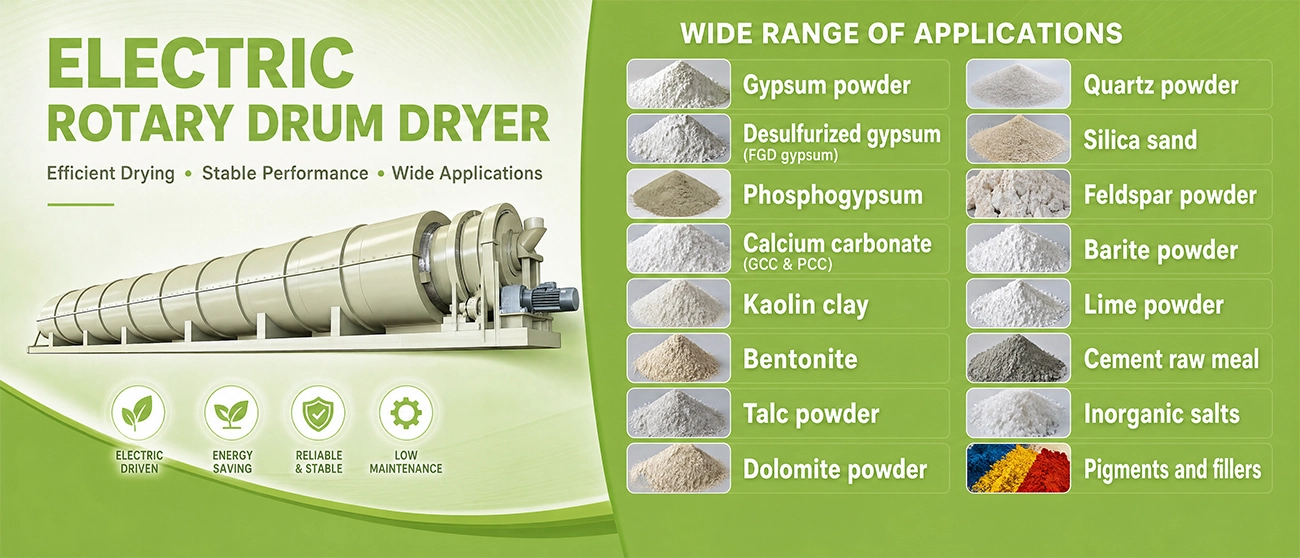
Typical applications include:
The electric heating system delivers uniform heat distribution, ensuring that moisture is removed evenly while preventing overheating, discoloration, or degradation of temperature-sensitive materials. This makes the dryer particularly suitable for products requiring strict quality control and consistent moisture content.
With adjustable drying temperatures, variable drum speed, and an intelligent PLC control system, our electric rotary drum dryer can be customized to meet different material characteristics, production capacities, and final moisture requirements, providing a reliable and energy-efficient drying solution for modern industrial production.
| Model | Cylinder diameter(mm) | Cylinder length(mm) | Cylinder volume(m3) | Cylinder rotary speed (r/min) | Power(kW) | Weight(t) |
| 0.6×5.8 | 600 | 5800 | 1.7 | 1-8 | 3 | 2.9 |
| 0.8×8 | 800 | 8000 | 4 | 1-8 | 4 | 3.5 |
| 1×10 | 1000 | 10000 | 7.9 | 1-8 | 5.5 | 6.8 |
| 1.2×5.8 | 1200 | 5800 | 6.8 | 1-6 | 5.5 | 6.7 |
| 1.2×8 | 1200 | 8000 | 9 | 1-6 | 5.5 | 8.5 |
| 1.2×10 | 1200 | 10000 | 11 | 1-6 | 7.5 | 10.7 |
| 1.2×11.8 | 1200 | 11800 | 13 | 1-6 | 7.5 | 12.3 |
| 1.5×8 | 1500 | 8000 | 14 | 1-5 | 11 | 14.8 |
| 1.5×10 | 1500 | 10000 | 17.7 | 1-5 | 11 | 16 |
| 1.5×11.8 | 1500 | 11800 | 21 | 1-5 | 15 | 17.5 |
| 1.5×15 | 1500 | 15000 | 26.5 | 1-5 | 15 | 19.2 |
| 1.8×10 | 1800 | 10000 | 25.5 | 1-5 | 15 | 18.1 |
| 1.8×11.8 | 1800 | 11800 | 30 | 1-5 | 18.5 | 20.7 |
| 1.8×15 | 1800 | 15000 | 38 | 1-5 | 18.5 | 26.3 |
| 1.8×18 | 1800 | 18000 | 45.8 | 1-5 | 22 | 31.2 |
| 2×11.8 | 2000 | 11800 | 37 | 1-4 | 18.5 | 28.2 |
| 2×15 | 2000 | 15000 | 47 | 1-4 | 22 | 33.2 |
| 2×18 | 2000 | 18000 | 56.5 | 1-4 | 22 | 39.7 |
| 2×20 | 2000 | 20000 | 62.8 | 1-4 | 22 | 44.9 |
| 2.2×11.8 | 2200 | 11800 | 44.8 | 1-4 | 22 | 30.5 |
| 2.2×15 | 2200 | 15000 | 53 | 1-4 | 30 | 36.2 |
| 2.2×18 | 2200 | 18000 | 68 | 1-4 | 30 | 43.3 |
| 2.2×20 | 2200 | 20000 | 76 | 1-4 | 30 | 48.8 |
| 2.4×15 | 2400 | 15000 | 68 | 1-4 | 30 | 43.7 |
| 2.4×18 | 2400 | 18000 | 81 | 1-4 | 37 | 53 |
Frequently asked questions
Here are answers to some frequently asked questions about skid-mounted carbonization furnaces. If you have any other questions, please feel free to contact our customer service team directly, and we will be happy to provide you with a detailed explanation.
An electric rotary drum dryer is suitable for drying a wide range of materials, including gypsum powder, limestone powder, silica sand, mineral powders, clay, fertilizer, chemicals, food additives, and pharmaceutical raw materials. The machine can be customized according to the material characteristics and moisture content.
Electric rotary dryers provide clean, precise, and environmentally friendly heating without combustion gases. They are ideal for indoor installations, laboratories, chemical plants, and areas with strict emission regulations. Temperature control is also more accurate than gas or coal-fired dryers.
The heat is generated by electric heating elements installed inside the heating chamber. The generated heat is transferred evenly into the rotating drum, allowing materials to dry efficiently without direct flame contact.
Yes. Because electric heating offers precise temperature control, it is suitable for drying heat-sensitive chemicals, pharmaceutical materials, catalysts, food ingredients, and specialty powders without overheating.
Industries include chemical processing, mining, building materials, activated carbon production, environmental protection, pharmaceuticals, food processing, fertilizer manufacturing, ceramics, metallurgy, and recycling.