 Henan Xuye Machinery Equipment Co., Ltd.
SEARCH WHAT YOU WANT
Search allProductNews
SEARCH
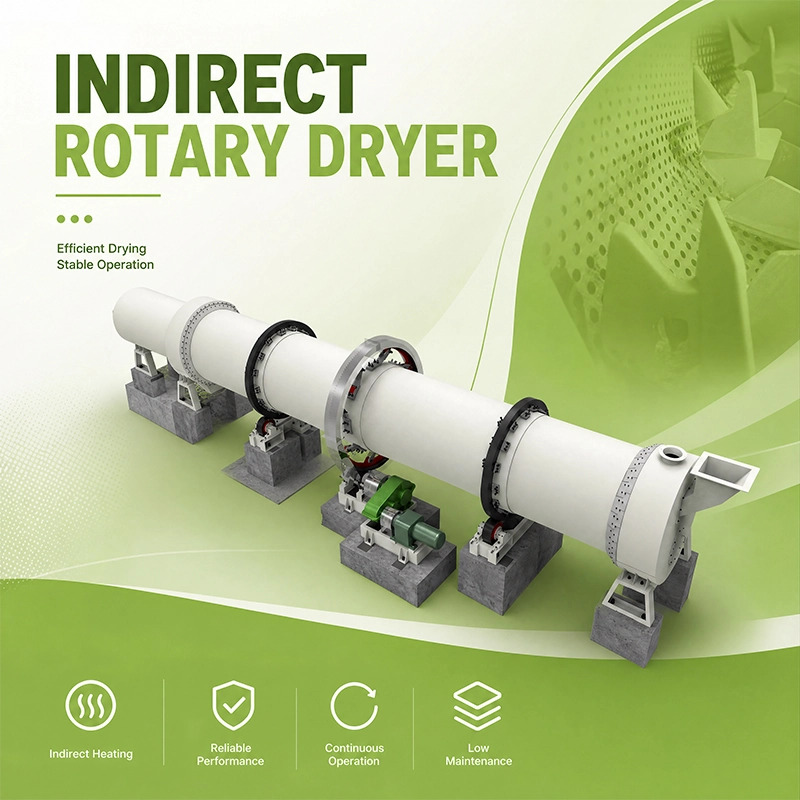
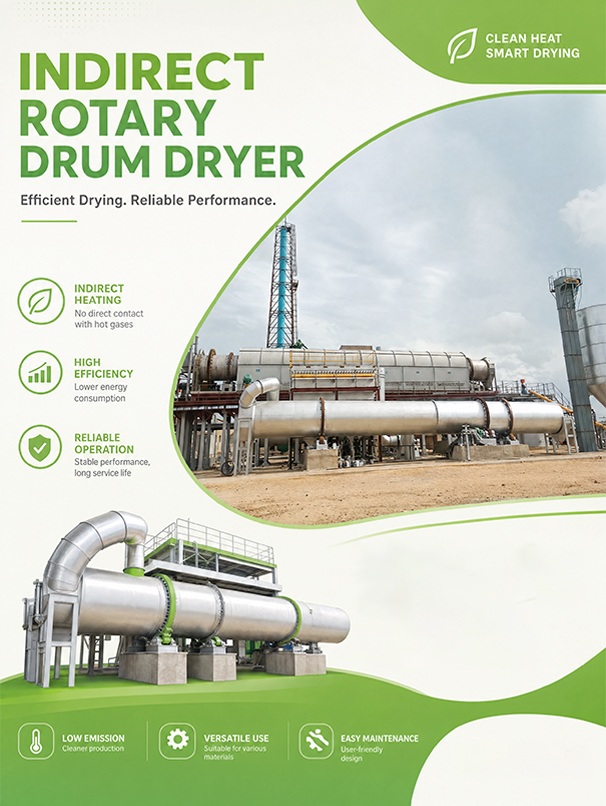
When your process demands absolute product purity, dust-free operation, and the highest level of thermal safety, a direct-fired dryer is not an option. You need a drying solution that physically separates the heat source from your material. Our indirect rotary dryers are engineered precisely for this purpose. We offer two proven configurations that guarantee flames and combustion gases never touch your product: the Externally Heated Single-Drum Dryer and the Double drum Dryer. Both designs transfer heat purely through conduction and radiation from a hot steel wall, allowing you to use cost-effective gas, oil, or even clean electric heating without risking product contamination or creating massive exhaust gas streams.
With hundreds of installations worldwide, we combine heavy-duty mechanical design with intelligent thermal control. Whether you are drying heat-sensitive chemicals, recovering solvents from a wet cake, processing abrasive minerals, or stabilizing sludge, our indirect fired rotary dryer delivers consistent moisture targets while keeping your plant clean, safe, and compliant with the strictest environmental regulations.
Unlike traditional direct rotary dryers that blast 800°C combustion gases directly through the product, an indirect rotary dryer works on a simple but powerful principle: a solid steel wall separates the heating medium from the wet material. Heat travels through the metal by conduction, and the material dries inside a completely controlled environment. This separation eliminates:
We achieve this heat separation in two distinct ways, each optimized for different material characteristics and site utility conditions.
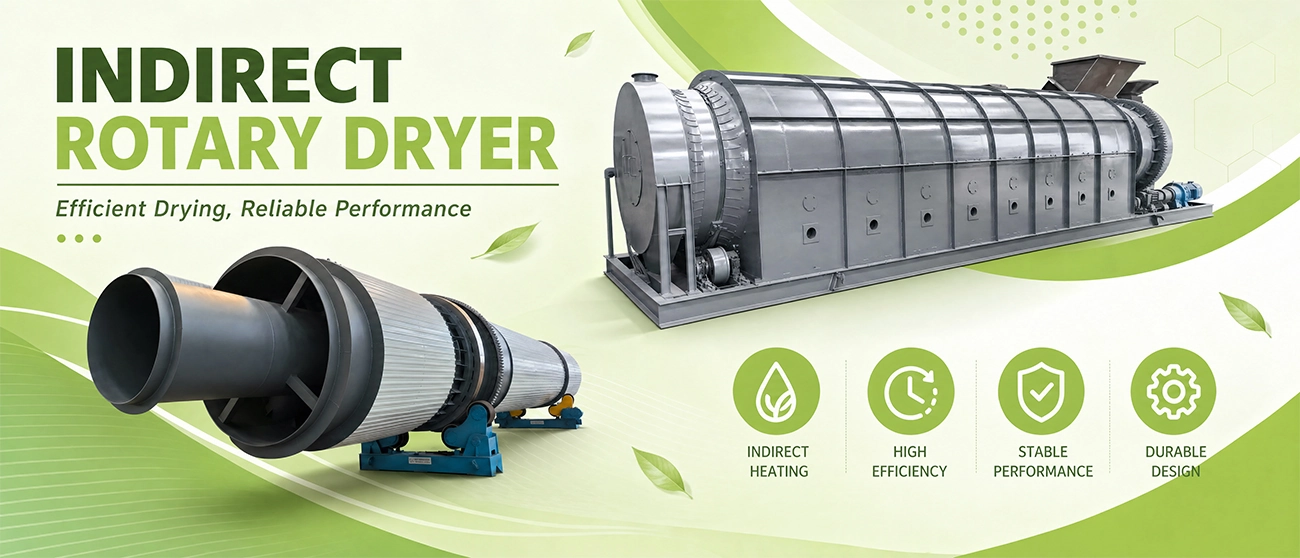
The most straightforward and robust indirect drying method is to heat the rotating drum directly from the outside. Imagine a thick, precision-fabricated steel cylinder rotating slowly on trunnions. The wet material is fed inside. On the outside of this drum, we apply intense heat—but no flame ever enters the material space.
Our single-shell indirect dryer is fitted with an external heating jacket or is housed inside a refractory-lined hot chamber. Depending on your available utilities, the heat source can be:
As the drum rotates, the external heat source continuously heats the steel shell. The internal material is lifted by custom-designed flights and cascaded against the hot inner wall. Heat conducts from the shell into the material bed, evaporating moisture gently and uniformly. A small volume of carrier gas (often air or nitrogen) sweeps the released vapor out of the dryer for condensation or safe venting.
Because the burner flames or electric elements are completely outside the product chamber, there is no contact between combustion gases and the material. The drying atmosphere remains pristine, allowing you to meet pharmaceutical, food-grade, or high-purity chemical standards without extra filtration.
Best Applications for Single Drum Externally Heated Dryers:
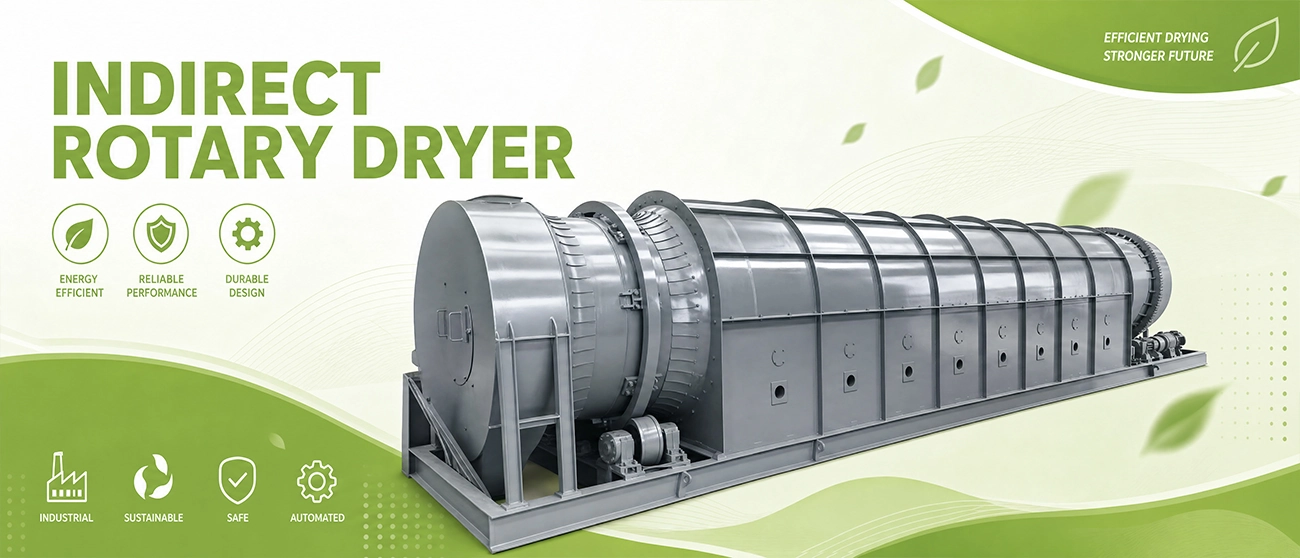
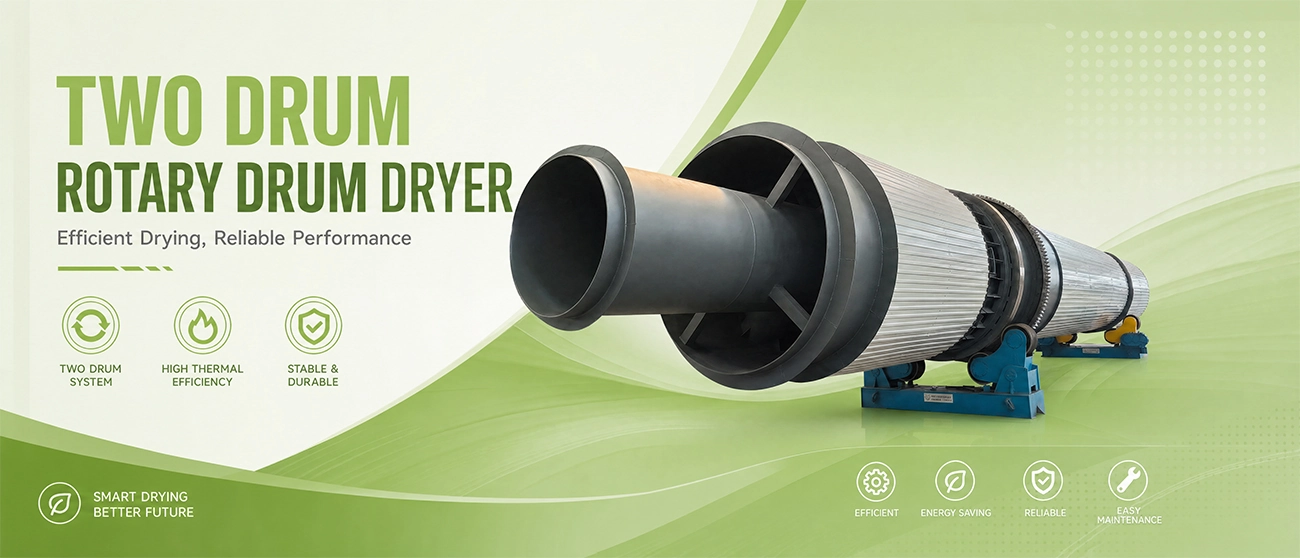
When you need a compact footprint and exceptionally high thermal efficiency, our double-shell indirect rotary dryer is the superior choice. This innovative design uses two concentric cylinders—an inner drum and an outer drum—that rotate together as a single unit.
The hot gas stream (generated by a gas, oil, or even biomass burner) is directed straight through the inner shell. The inner drum acts as a high-temperature heat exchanger, glowing with radiant heat. The wet material, on the other hand, travels through the annular space between the inner and outer shells. It never enters the inner drum where the hot gases flow.
As the double-shell unit rotates, heat radiates from the inner shell wall and conducts directly into the cascading material layer. The outer shell is heavily insulated, trapping the heat inside the annular material space and creating an incredibly efficient thermal environment. The flame is completely confined within the inner drum, and the material stays isolated in the outer annulus.
This configuration effectively doubles the heat transfer surface area relative to the material volume, leading to a very compact machine. Because the inner drum is continuously bathed in hot gas on one side and material on the other, the thermal efficiency can exceed 80%. The double-shell indirect dryer is, in essence, a rotating shell-and-tube heat exchanger optimized for solids.
Key Advantages of the Double-Drum Design:
Best Applications for Double-Drum Indirect Dryers:
Processes requiring a completely sealed, inert atmosphere with minimal purge air.
High-capacity drying of crystalline chemicals and fertilizers.
Mineral concentrates and sand where internal tube maintenance is undesired.
Biomass and wood chips prior to pelletizing.
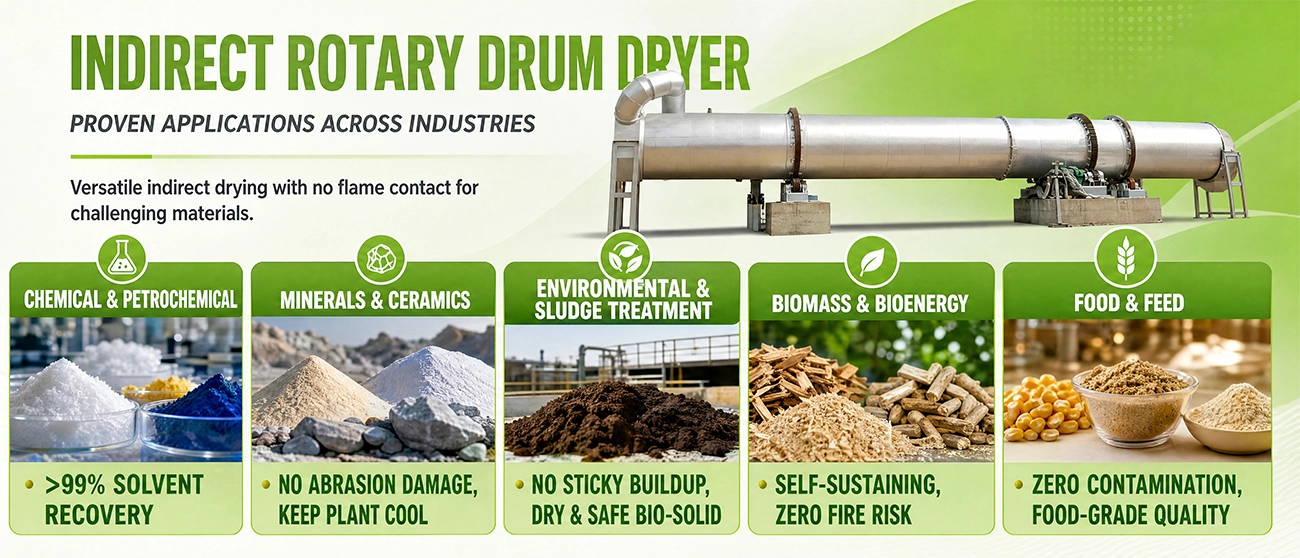
The versatility of indirect drying with no flame contact makes our machines the first choice for challenging materials.
Chemical & Petrochemical
Drying of crystalline powders, pigments, and intermediates where solvent recovery is critical. Our external oil-heated single-shell dryers recover over 99% of valuable solvents via a closed-loop condenser system, with nitrogen purging ensuring safe, oxygen-free operation.
Minerals & Ceramics
Silica sand, kaolin, lithium carbonate, and abrasive mineral concentrates are dried in our double-shell dryers. The absence of internal steam tubes prevents abrasion damage, and the outer insulation keeps the plant environment cool.
Environmental & Sludge Treatment
Municipal sewage sludge and industrial waste sludges are stabilized using direct gas-fired external heating. Our single-shell design incorporates internal knocker bars and heated flights to prevent sticky buildup, transforming a disposal problem into a pathogen-free, dry bio-solid.
Biomass & Bioenergy
Wood chips, sawdust, and bagasse dried in an inert atmosphere before gasification or pelletizing. Our double-shell indirect dryers use the syn-gas or waste heat to power the inner drum, creating a self-sustaining drying loop with zero fire risk.
Food & Feed
Grains, spent distiller’s grain, and protein meals are gently dried with electric-heated or gas-heated single-shell dryers. Zero contamination means product retains its nutritional value and food-grade certification.
| Model | Cylinder diameter(mm) | Cylinder length(mm) | Cylinder volume(m3) | Cylinder rotary speed (r/min) | Power(kW) | Weight(t) |
| 0.6×5.8 | 600 | 5800 | 1.7 | 1-8 | 3 | 2.9 |
| 0.8×8 | 800 | 8000 | 4 | 1-8 | 4 | 3.5 |
| 1×10 | 1000 | 10000 | 7.9 | 1-8 | 5.5 | 6.8 |
| 1.2×5.8 | 1200 | 5800 | 6.8 | 1-6 | 5.5 | 6.7 |
| 1.2×8 | 1200 | 8000 | 9 | 1-6 | 5.5 | 8.5 |
| 1.2×10 | 1200 | 10000 | 11 | 1-6 | 7.5 | 10.7 |
| 1.2×11.8 | 1200 | 11800 | 13 | 1-6 | 7.5 | 12.3 |
| 1.5×8 | 1500 | 8000 | 14 | 1-5 | 11 | 14.8 |
| 1.5×10 | 1500 | 10000 | 17.7 | 1-5 | 11 | 16 |
| 1.5×11.8 | 1500 | 11800 | 21 | 1-5 | 15 | 17.5 |
| 1.5×15 | 1500 | 15000 | 26.5 | 1-5 | 15 | 19.2 |
| 1.8×10 | 1800 | 10000 | 25.5 | 1-5 | 15 | 18.1 |
| 1.8×11.8 | 1800 | 11800 | 30 | 1-5 | 18.5 | 20.7 |
| 1.8×15 | 1800 | 15000 | 38 | 1-5 | 18.5 | 26.3 |
| 1.8×18 | 1800 | 18000 | 45.8 | 1-5 | 22 | 31.2 |
| 2×11.8 | 2000 | 11800 | 37 | 1-4 | 18.5 | 28.2 |
| 2×15 | 2000 | 15000 | 47 | 1-4 | 22 | 33.2 |
| 2×18 | 2000 | 18000 | 56.5 | 1-4 | 22 | 39.7 |
| 2×20 | 2000 | 20000 | 62.8 | 1-4 | 22 | 44.9 |
| 2.2×11.8 | 2200 | 11800 | 44.8 | 1-4 | 22 | 30.5 |
| 2.2×15 | 2200 | 15000 | 53 | 1-4 | 30 | 36.2 |
| 2.2×18 | 2200 | 18000 | 68 | 1-4 | 30 | 43.3 |
| 2.2×20 | 2200 | 20000 | 76 | 1-4 | 30 | 48.8 |
| 2.4×15 | 2400 | 15000 | 68 | 1-4 | 30 | 43.7 |
| 2.4×18 | 2400 | 18000 | 81 | 1-4 | 37 | 53 |
| 2.4×20 | 2400 | 20000 | 91 | 1-4 | 37 | 60.5 |
| 2.4×23.6 | 2400 | 23600 | 109 | 1-4 | 45 | 69.8 |
| 2.8×18 | 2800 | 18000 | 111 | 1-3 | 45 | 62 |
| 2.8×20 | 2800 | 20000 | 123 | 1-3 | 55 | 65 |
| 2.8×23.6 | 2800 | 23600 | 148 | 1-3 | 55 | 70 |
| 2.8×28 | 2800 | 28000 | 172 | 1-3 | 75 | 75 |
| 3×20 | 3000 | 20000 | 14 | 1-3 | 55 | 75 |
| 3×23.6 | 3000 | 23600 | 170 | 1-3 | 75 | 85 |
| 3×28 | 3000 | 28000 | 198 | 1-3 | 90 | 91 |
| 3.2×23.6 | 3200 | 23600 | 193 | 1-3 | 90 | 112 |
| 3.2×32 | 3200 | 32000 | 257 | 1-3 | 110 | 129 |
| 3.6×36 | 3600 | 36000 | 366 | 1-3 | 132 | 164 |
| 3.8×36 | 3800 | 36000 | 408 | 1-3 | 160 | 187 |
| 4×36 | 4000 | 36000 | 452 | 1-3 | 160 | 195 |
Frequently asked questions
Here are answers to some frequently asked questions about skid-mounted carbonization furnaces. If you have any other questions, please feel free to contact our customer service team directly, and we will be happy to provide you with a detailed explanation.
In a direct dryer, a stream of hot combustion gases is blown directly through the cascading material. In our indirect dryers, the material and the heating source are completely separated by a steel wall. This eliminates product contamination from combustion by-products, drastically reduces exhaust gas volume by up to 90%, and allows for the safe drying of solvent-wet or combustible dusts under an inert atmosphere, which is impossible in a direct-fired unit.
Absolutely not. This is the core principle of our design. Whether you choose the externally heated single-shell dryer or the double-shell dryer, the flame and combustion gases are completely isolated from the product. Heat transfers purely by conduction and radiation through the drum wall. This “zero flame contact” guarantee ensures your product remains chemically pure and eliminates any risk of fire or explosion inside the drying chamber.
Our indirect dryers excel with challenging materials that cannot be processed in direct dryers. This includes heat-sensitive powders and crystals, solvent-wet filter cakes, sticky sludges, highly abrasive minerals, combustible dusts like biomass and coal, and food-grade products that require zero combustion contamination. If your material is valuable, dusty, flammable, or prone to thermal shock, indirect drying is the safe and high-yield choice.
Yes. This is a key strength. For sticky feeds, we can equip the drum with internal heated kickers, breaker bars, and specially shaped anti-stick flights. In some cases, a back-mixing system recycles a portion of the dried product into the wet feed to condition it and prevent build-up on the hot wall. The absence of a high-velocity gas stream also means the sticky material isn’t blown into a compacted mass.
Indirect dryers are relatively low-maintenance machines. Without a large combustion chamber, refractory lining, or high-temperature air ductwork, there are fewer components to service. Routine maintenance typically involves inspecting the trunnion wheels and support rollers, checking the integrity of the drum seals, and, for gas or oil-fired units, servicing the external burners. The heavy-duty steel shells are built for decades of trouble-free operation.