 Henan Xuye Machinery Equipment Co., Ltd.

SEARCH WHAT YOU WANT
Search allProductNews
SEARCH
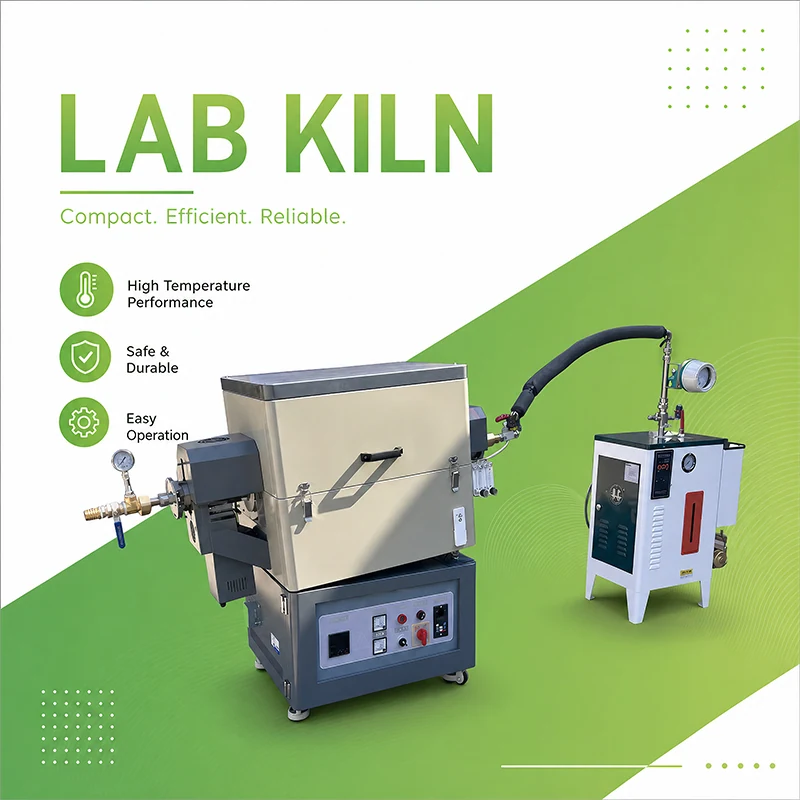
A lab kiln is a specialized high-temperature heating system designed for laboratory research, material testing, thermal processing experiments, and small-scale production. It provides a controlled heating environment for studying the physical and chemical properties of different materials under specific temperature conditions.
Laboratory kilns are widely used in universities, research institutes, material science laboratories, chemical laboratories, battery material research centers, ceramic laboratories, and industrial R&D departments. Compared with industrial kilns, laboratory kilns are generally more compact, flexible, and suitable for processing small quantities of samples. They allow researchers and engineers to conduct controlled experiments before scaling up a process to pilot or industrial production.
Xu Ye Machinery provides laboratory heating and thermal processing equipment for different experimental requirements, including laboratory rotary kilns, lab scale rotary kilns, tube furnaces, and customized laboratory heating systems. Depending on the materials, processing atmosphere, operating temperature, and experimental objectives, different heating structures and configurations can be selected.
Our lab kiln solutions can be designed for various thermal processes, including calcination, sintering, roasting, pyrolysis, oxidation, reduction, thermal decomposition, heat treatment, and material activation.
A laboratory kiln is not simply a small industrial furnace. It is an important research tool that helps users evaluate process parameters, study material characteristics, optimize heating conditions, and establish reliable production processes.
Whether you are researching new battery materials, developing advanced ceramics, testing catalyst performance, studying carbon materials, or conducting thermal treatment experiments, selecting the appropriate laboratory kiln is essential for obtaining consistent and repeatable experimental results.
A laboratory kiln is a high-temperature heating device used to process small batches of materials under controlled thermal conditions. It is designed to heat samples to a specified temperature and maintain the required heating environment for a predetermined period.
The main purpose of a laboratory kiln is to simulate, investigate, and optimize thermal processing conditions. Researchers can adjust temperature, heating rate, holding time, atmosphere, and material feeding conditions according to the requirements of different experiments.
Different laboratory kilns have different structures and working principles.
For example, a laboratory box furnace uses a heating chamber to process samples in a relatively stationary environment. A laboratory tube furnace heats materials inside a cylindrical tube and can be configured for atmospheric control. A laboratory rotary kiln uses a rotating cylindrical drum to continuously move and heat materials during processing.
These configurations serve different experimental purposes.
1. High-temperature heating
A laboratory kiln provides a stable heating environment for materials that require high-temperature treatment. Depending on the selected heating elements, insulation materials, and furnace structure, the equipment can be designed for different temperature ranges.
2. Thermal decomposition
Certain materials release gases or undergo chemical changes when heated. A laboratory kiln can be used to investigate their decomposition behavior and determine suitable processing conditions.
3. Calcination
Calcination involves heating solid materials to a specified temperature to cause chemical or physical changes. Laboratory kilns are commonly used for catalyst preparation, mineral processing research, ceramic materials, and chemical compound development.
4. Sintering
Sintering uses heat to bond particles together without necessarily melting the entire material. Laboratory kilns help researchers investigate the effects of temperature, heating rate, and holding time on the final material structure.
5. Pyrolysis
Pyrolysis is the thermal decomposition of organic materials in an oxygen-free or oxygen-limited environment. Laboratory kilns can be configured to study biomass, plastics, carbon materials, and other feedstocks.
6. Oxidation and reduction
Some experiments require materials to react with oxygen or reducing gases under controlled temperatures. Laboratory tube furnaces and specially configured kilns can provide suitable processing environments.
7. Material performance testing
Laboratory kilns help researchers evaluate changes in material structure, composition, strength, porosity, and thermal stability after heating.
Different experimental processes require different furnace structures. Xu Ye Machinery can provide laboratory thermal processing equipment based on the user’s application, material characteristics, and operating requirements.
The main laboratory kiln configurations include laboratory rotary kilns, tube furnaces, box furnaces, and customized laboratory thermal processing systems.
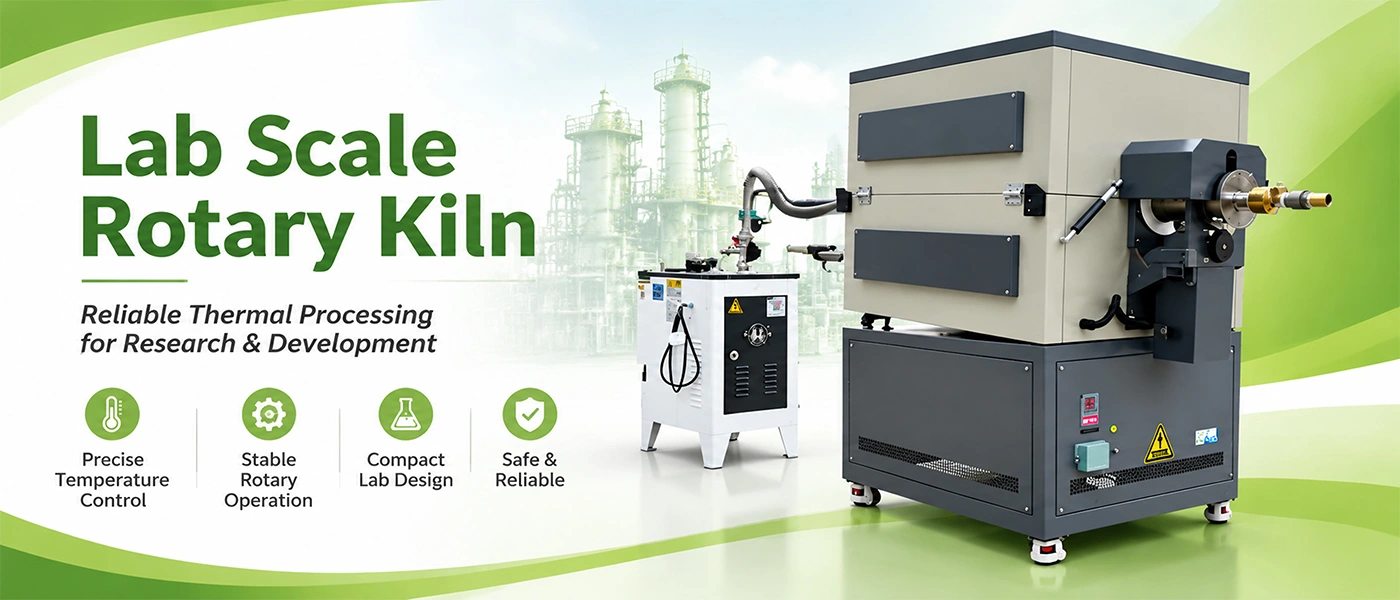
A lab scale rotary kiln is a small rotary thermal processing system designed for laboratory experiments, material development, and small-batch continuous processing.
It generally consists of a rotating cylindrical tube or drum installed at a slight inclination. Materials enter through the feeding end, move forward as the cylinder rotates, and are heated during their movement through the furnace.
The rotation continuously mixes and turns the materials, improving heat transfer and helping achieve more uniform thermal treatment.
Compared with a stationary laboratory furnace, a lab scale rotary kiln provides a more representative simulation of industrial rotary kiln operation.
This makes it particularly valuable for researchers who need to study continuous thermal processing before developing a pilot-scale or industrial production line.
Main Features of a Lab Scale Rotary Kiln
Applications of Lab Scale Rotary Kilns
A laboratory rotary kiln can be used for:
The lab scale rotary kiln is especially suitable for experiments involving granular, powdered, or particulate materials that benefit from continuous movement during heating.
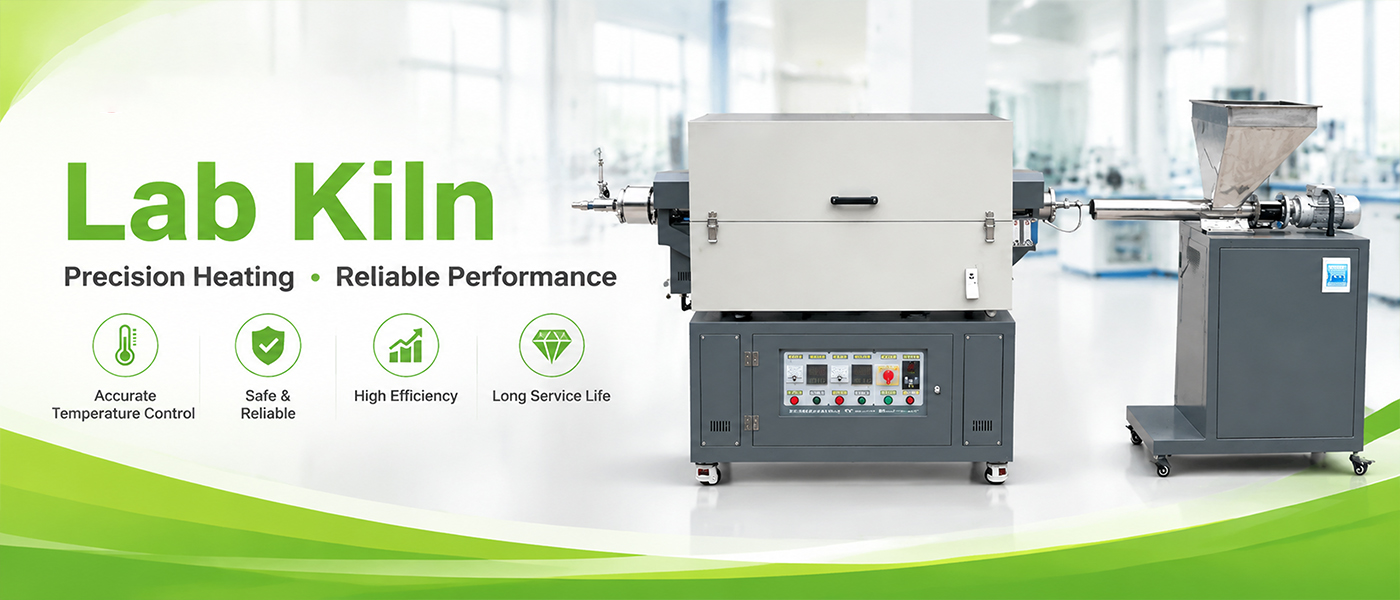
A tube furnace is a laboratory heating device that uses a cylindrical heating chamber and a process tube to provide a controlled thermal environment.
The sample is placed inside the tube, which is surrounded by heating elements and thermal insulation. Heat is transferred through the tube wall to the material being processed.
A laboratory tube furnace is widely used in material science, chemistry, semiconductor research, battery research, and advanced material development.
Unlike a laboratory rotary kiln, a conventional tube furnace usually processes samples in a stationary position. It is therefore particularly suitable for experiments that require precise temperature control and a stable atmosphere around the sample.
Main Features of a Tube Furnace
Common Tube Furnace Applications
Tube furnaces are widely used for:
Depending on the experimental requirements, a tube furnace can be configured with quartz tubes, alumina tubes, or other suitable high-temperature materials.
The selection of the process tube depends on the maximum operating temperature, chemical compatibility, atmosphere, and material characteristics.
A laboratory box furnace is a chamber-type heating system designed for batch thermal processing.
Samples are placed inside a rectangular heating chamber and heated according to a programmed temperature curve.
It is commonly used for ceramic firing, material annealing, heat treatment, ash testing, and general laboratory heating applications.
The chamber structure makes it convenient to load and unload samples, especially when processing multiple specimens at the same time.
Typical features include:
Some experiments require special equipment structures that cannot be achieved with conventional laboratory furnaces.
For example, certain materials require continuous feeding, rotary movement, multiple heating zones, inert gas protection, or specialized discharge structures.
For these applications, customized laboratory kilns can be designed according to the experimental process.
Possible configurations include:
The equipment configuration should be determined by the actual processing requirements rather than selecting a furnace based only on its maximum temperature.
A laboratory rotary kiln works by combining controlled heating with continuous or intermittent material movement.
The main heating chamber is a cylindrical tube installed on a supporting frame. A driving system rotates the cylinder at a controlled speed.
Materials enter through the feeding end and gradually move toward the discharge end.
During rotation, the materials are lifted and turned by the movement of the cylinder. Depending on the drum structure and internal configuration, the materials may move through different heating zones while receiving heat from the furnace.
The heating process can be divided into several stages.
The raw material is introduced into the rotary kiln through a feeding hopper, screw feeder, or other feeding device.
The feeding method depends on the material’s particle size, flowability, moisture content, and processing capacity.
For laboratory experiments, the feeding system can be designed for manual or automatic operation.
After entering the rotary chamber, the material is exposed to the required heating conditions.
The heating system raises the temperature according to the programmed heating curve.
Depending on the furnace configuration, heating can be achieved through electric resistance heating, external heating, or another suitable heating method.
The rotating cylinder continuously turns the material.
This movement improves material mixing and promotes more consistent exposure to the heating environment.
The rotational speed affects material movement, residence time, and heat transfer.
When the material reaches the required temperature, the desired physical or chemical transformation takes place.
The process may involve drying, calcination, decomposition, pyrolysis, reduction, oxidation, or sintering.
The actual reaction conditions depend on the material and experimental objective.
After thermal processing, the treated material moves toward the discharge end.
The final product can be collected for further analysis.
The discharge system can be configured for batch collection or continuous discharge, depending on the equipment design.
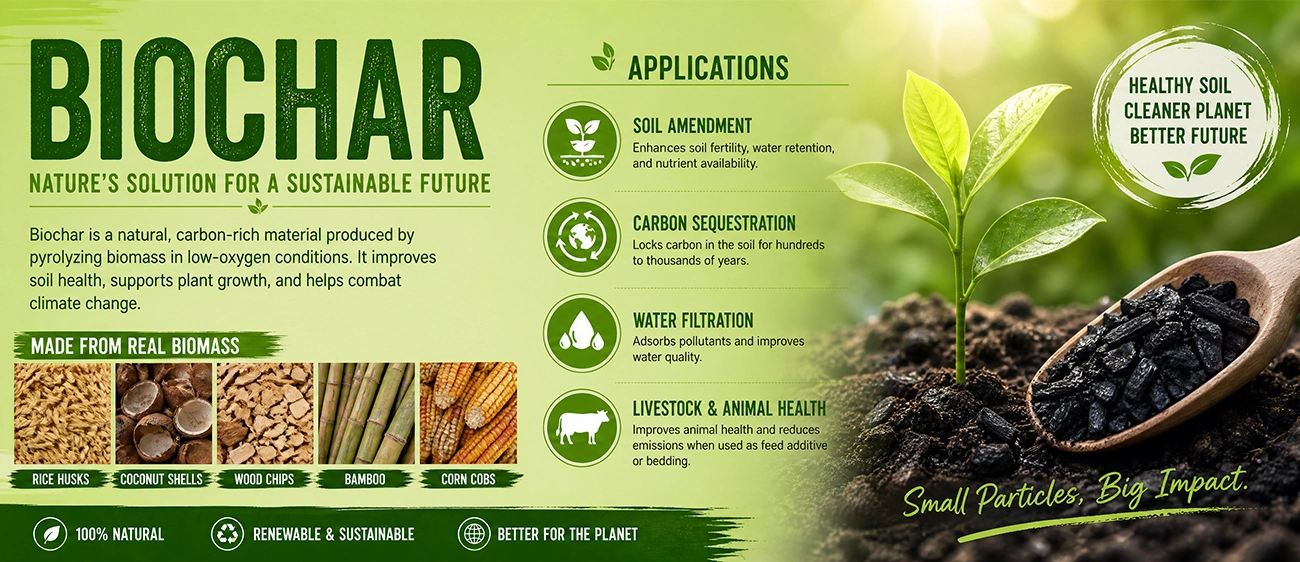
Laboratory kilns are used across a wide range of industries because many materials require thermal treatment during research and development.
The following applications represent common areas where laboratory heating equipment can be used.
Battery material development is one of the important application areas for laboratory kilns.
Many battery materials require calcination, sintering, annealing, carbonization, or other thermal treatments during preparation.
Laboratory furnaces help researchers investigate the effects of temperature, atmosphere, and heating time on material properties.
Potential research applications include:
For example, hard carbon is widely investigated as an anode material for sodium-ion batteries.
Biomass-derived precursors, such as wood, agricultural residues, and other carbon-rich materials, can be thermally treated to prepare hard carbon.
A laboratory rotary kiln may be suitable for experiments involving granular precursors and continuous carbonization.
A tube furnace may be more appropriate for small samples requiring controlled heating under nitrogen or argon.
The choice depends on sample size, experimental atmosphere, and the desired processing method.
Laboratory kilns are important for studying the preparation and thermal behavior of carbon materials.
Applications include:
A lab scale rotary kiln can be used to investigate the thermal processing of granular carbon materials.
A tube furnace can be used for smaller samples and experiments requiring controlled gas environments.
For activated carbon research, the laboratory system may be configured for carbonization or activation studies, depending on the required temperature, atmosphere, and process conditions.
Ceramics require carefully controlled thermal treatment to achieve their desired physical and mechanical properties.
Laboratory kilns are commonly used for:
Temperature, heating rate, and holding time can significantly influence ceramic density, grain growth, shrinkage, and final strength.
Laboratory box furnaces and tube furnaces are commonly selected for these applications.
Catalysts are widely used in chemical processing, environmental protection, energy conversion, and industrial manufacturing.
Many catalysts require thermal treatment during preparation.
Laboratory kilns can be used for:
The required atmosphere may be air, nitrogen, hydrogen, or another process-specific gas.
A laboratory tube furnace is particularly useful for catalyst experiments requiring precise temperature and atmosphere control.
Minerals and inorganic materials often require heating during research and processing.
Laboratory kilns can be used for:
A laboratory rotary kiln can help researchers study how granular minerals behave during continuous heating.
This is particularly valuable when evaluating the feasibility of larger rotary kiln systems.
Many chemical materials undergo physical or chemical changes when heated.
Laboratory furnaces can help investigate:
For experiments involving reactive gases or sensitive samples, the furnace should be configured with suitable materials, seals, and gas handling systems.
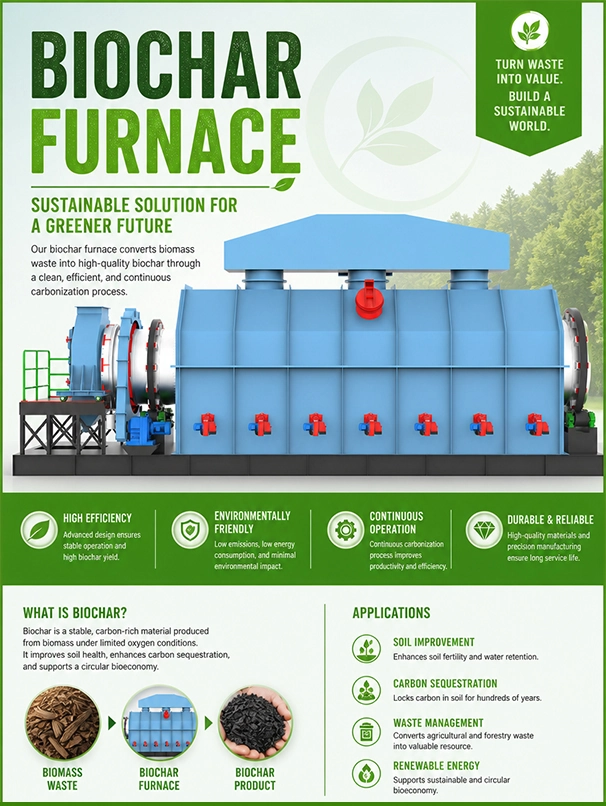
Biomass and certain waste materials can be converted into useful products through thermal processing.
Laboratory rotary kilns are suitable for studying the continuous treatment of various particulate feedstocks.
Research areas include:
A laboratory rotary kiln can help evaluate material feeding behavior, residence time, thermal conditions, and product characteristics.
| Model | XY0.9- 8m | XY1.1-8m | XY1.1-10m | XY1.3-10m |
| Cylinder Wall Thickness | 12 mm | 12 mm | 12 mm | 12 mm |
| Cylinder Material | 310S Stainless Steel | 310S Stainless Steel | 310S Stainless Steel | 310S Stainless Steel |
| Carbonization Time | 20–40 min | 20–40 min | 20–40 min | 20–40 min |
| Carbonization Temperature | 700–900°C | 700–900°C | 700–900°C | 700–900°C |
| Combustible Gas Temperature | 400–550°C | 400–550°C | 400–550°C | 400–550°C |
| Riding Ring Material | Forged No.35 Steel | Forged No.35 Steel | Forged No.35 Steel | Forged No.35 Steel |
| Support Roller Material | Heat-treated No.45 Steel | Heat-treated No.45 Steel | Heat-treated No.45 Steel | Heat-treated No.45 Steel |
| Sprocket Material | Quenched No.45 Steel | Quenched No.45 Steel | Quenched No.45 Steel | Quenched No.45 Steel |
| Reducer Type | Helical Gear Hard Tooth Surface Reducer | Helical Gear Hard Tooth Surface Reducer | Helical Gear Hard Tooth Surface Reducer | Helical Gear Hard Tooth Surface Reducer |
| Motor Power | 4 kW (Variable Frequency) | 5.5 kW (Variable Frequency) | 5.5 kW (Variable Frequency) | 7.5 kW (Variable Frequency) |
| Feed Inlet Seal | Graphite Packing Seal | Graphite Packing Seal | Graphite Packing Seal | Graphite Packing Seal |
| Discharge Hood Seal | Triple-layer Flexible Seal | Triple-layer Flexible Seal | Triple-layer Flexible Seal | Triple-layer Flexible Seal |
| Discharge Hood Insulation | 10 cm Ceramic Fiber Blanket + 0.5 cm Fiber Castable Lining | 10 cm Ceramic Fiber Blanket + 0.5 cm Fiber Castable Lining | 10 cm Ceramic Fiber Blanket + 0.5 cm Fiber Castable Lining | 10 cm Ceramic Fiber Blanket + 0.5 cm Fiber Castable Lining |

Frequently asked questions
Here are answers to some frequently asked questions about skid-mounted carbonization furnaces. If you have any other questions, please feel free to contact our customer service team directly, and we will be happy to provide you with a detailed explanation.
A lab kiln is used for high-temperature material processing and laboratory research. Common applications include calcination, sintering, pyrolysis, carbonization, roasting, oxidation, reduction, and thermal decomposition.
It helps researchers study how different materials behave under controlled temperature and atmosphere conditions.
Lab kiln is a general term for laboratory heating equipment, while a lab scale rotary kiln is a specific type of laboratory kiln with a rotating cylindrical processing chamber.
The rotary structure allows materials to move during heating, making it suitable for continuous or semi-continuous thermal processing experiments.
The maximum temperature depends on the heating elements, insulation materials, process tube, and equipment structure.
Different laboratory kiln models can be designed for different temperature requirements.
Users should confirm both the maximum rated temperature and the recommended continuous operating temperature before purchasing.
Yes. Laboratory rotary kilns can be used for biomass thermal processing experiments, including drying, pyrolysis, and carbonization.
Suitable feeding and atmosphere configurations should be selected according to the biomass characteristics and desired products.
Yes. Laboratory kiln configurations can be customized according to the required temperature, heating method, material characteristics, sample capacity, atmosphere, and operating mode.
Xu Ye Machinery can discuss specific process requirements and provide suitable equipment recommendations.