 Henan Xuye Machinery Equipment Co., Ltd.
SEARCH WHAT YOU WANT
Search allProductNews
SEARCH
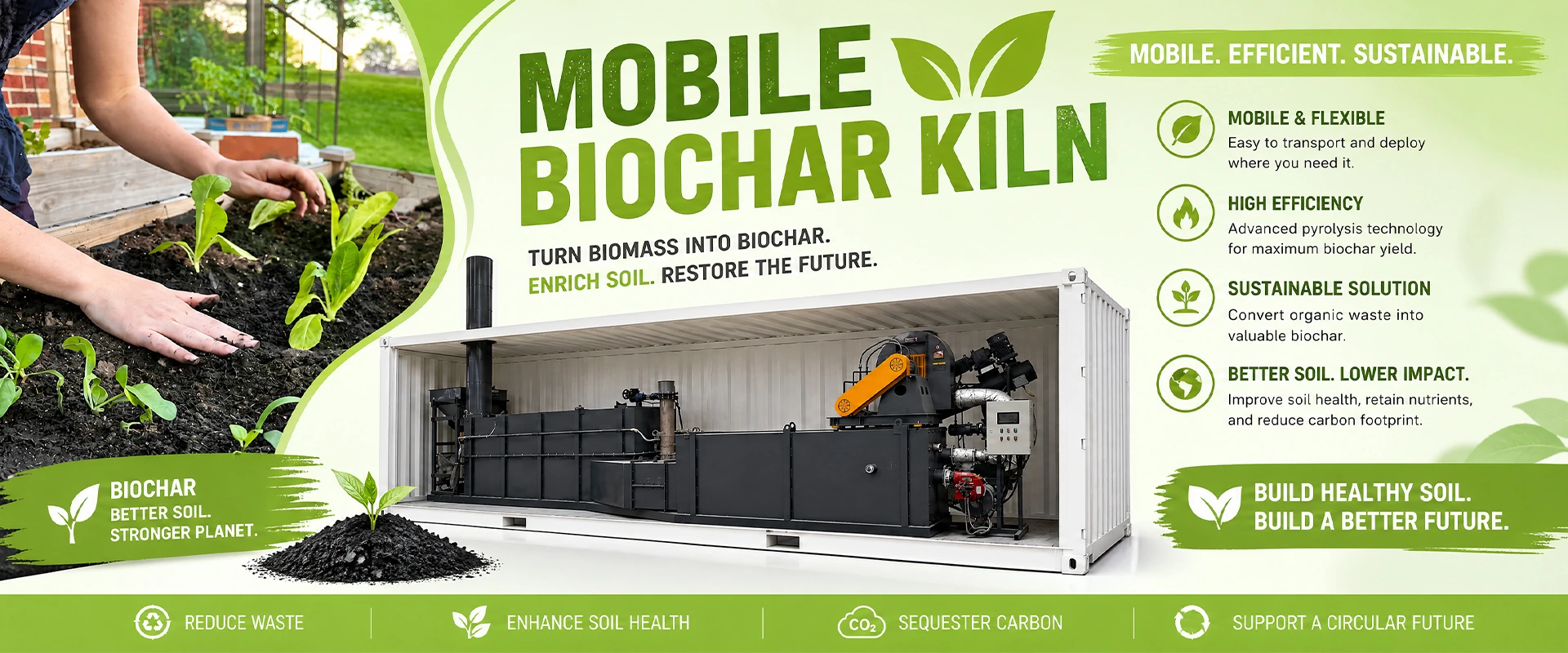
The Mobile Biochar Kiln is a compact and transportable biomass carbonization system designed for converting agricultural and forestry waste into high-quality biochar directly at the source. Compared with traditional stationary equipment, a mobile biochar kiln can be easily transported to farms, forests, plantations, and biomass processing sites, significantly reducing raw material transportation costs.
XUYE Machinery specializes in the design and manufacturing of advanced mobile biochar furnace solutions for customers worldwide. Our equipment is suitable for small-scale biochar production, carbon sequestration projects, and biomass waste recycling.
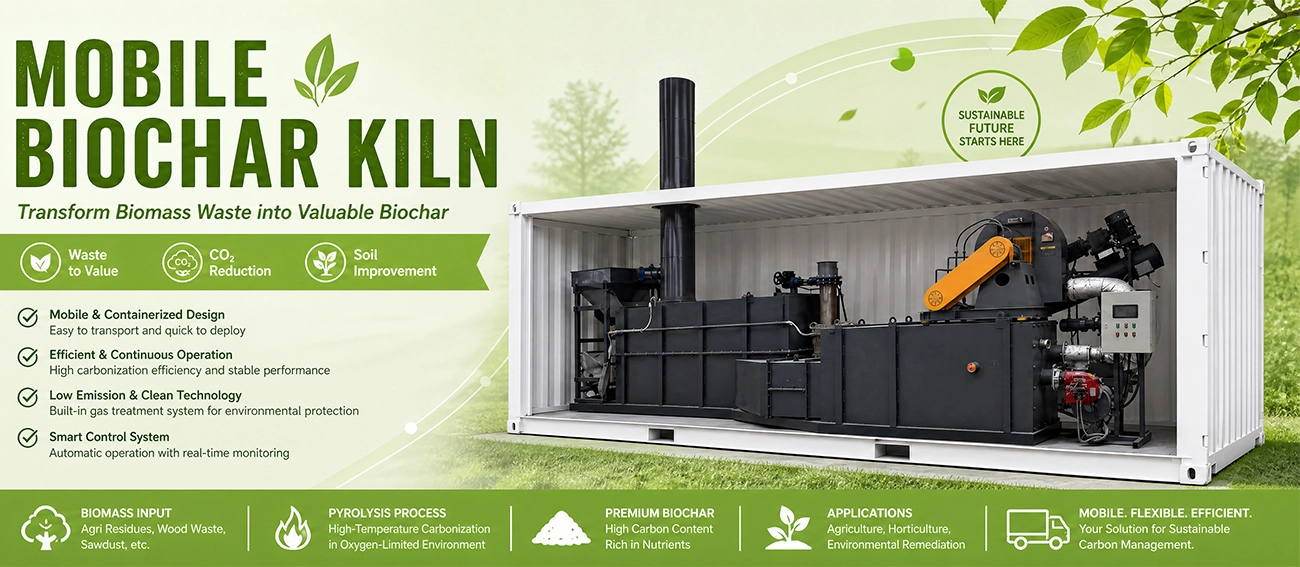
The mobile biochar kiln converts biomass waste into stable biochar through a controlled carbonization process. First, prepared materials such as wood chips, crop residues, coconut shells, bamboo, or forestry waste are fed into the kiln. Inside the system, the biomass is heated in a low-oxygen environment, allowing volatile gases and moisture to be released while the carbon structure is retained.
As the temperature rises, the biomass goes through drying, pyrolysis, and carbonization stages. The generated syngas can be recycled as part of the heat source, helping reduce external fuel consumption and improve energy efficiency. After carbonization, the hot biochar is cooled safely before being discharged and collected for use in soil improvement, carbon storage, composting, or other value-added applications.
With its mobile design, the kiln can be deployed close to the biomass source, reducing transportation costs and making on-site biochar production easier for farms, forestry projects, and distributed waste recycling operations.
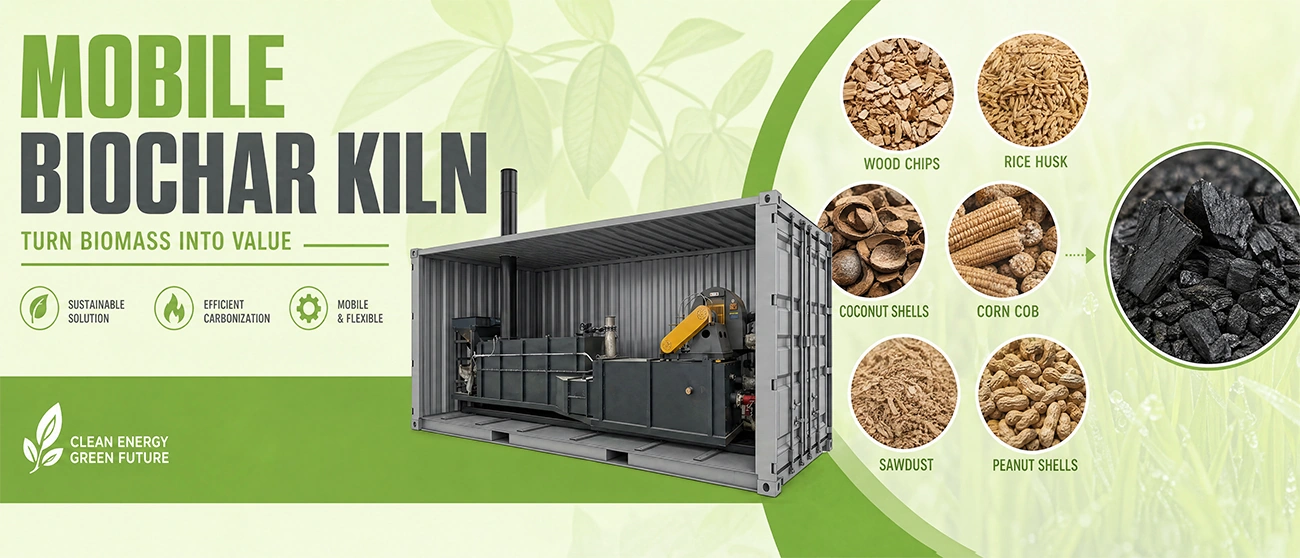
A mobile biochar kiln is widely used in agriculture, forestry, waste recycling, and carbon reduction projects. It can process biomass materials such as wood chips, crop residues, coconut shells, bamboo, rice husk, and forestry waste directly at the source, reducing transportation costs and turning organic waste into valuable biochar.
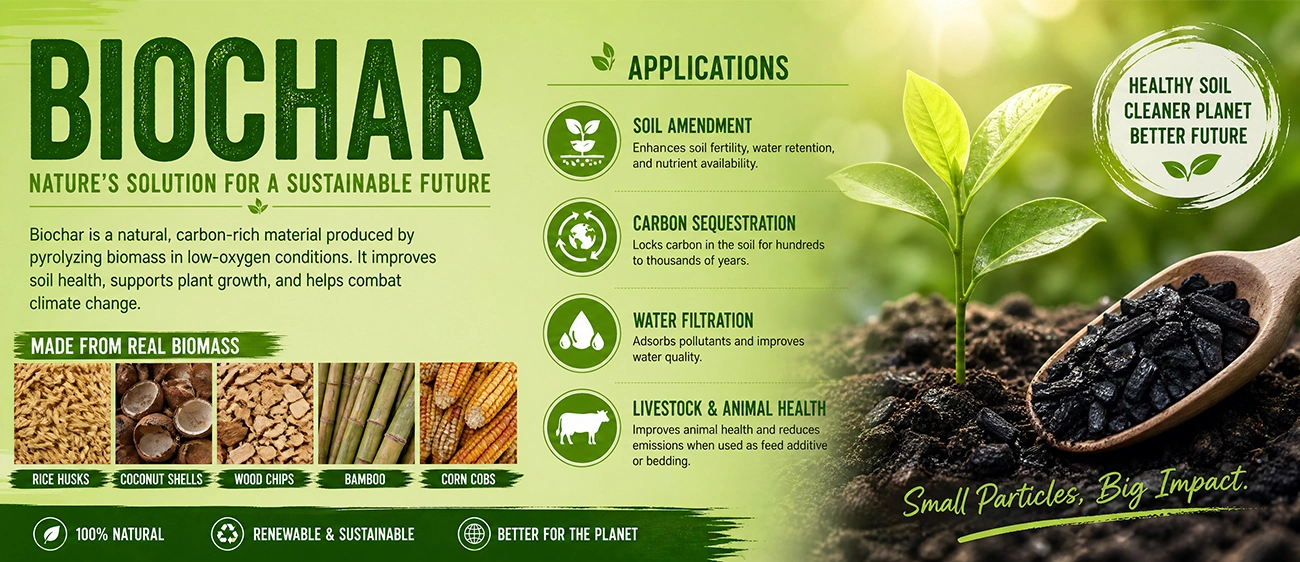
The produced biochar can be applied as a soil amendment to improve soil structure, water retention, and nutrient efficiency. It is also used in composting, livestock bedding, odor control, wastewater treatment, and long-term carbon storage. For farms, plantations, forestry operations, and distributed biomass projects, a mobile biochar kiln provides a flexible solution for on-site waste treatment, resource recovery, and sustainable biochar production.
| Model | XY0.9- 8m | XY1.1-8m | XY1.1-10m | XY1.3-10m |
| Cylinder Wall Thickness | 12 mm | 12 mm | 12 mm | 12 mm |
| Cylinder Material | 310S Stainless Steel | 310S Stainless Steel | 310S Stainless Steel | 310S Stainless Steel |
| Carbonization Time | 20–40 min | 20–40 min | 20–40 min | 20–40 min |
| Carbonization Temperature | 700–900°C | 700–900°C | 700–900°C | 700–900°C |
| Combustible Gas Temperature | 400–550°C | 400–550°C | 400–550°C | 400–550°C |
| Riding Ring Material | Forged No.35 Steel | Forged No.35 Steel | Forged No.35 Steel | Forged No.35 Steel |
| Support Roller Material | Heat-treated No.45 Steel | Heat-treated No.45 Steel | Heat-treated No.45 Steel | Heat-treated No.45 Steel |
| Sprocket Material | Quenched No.45 Steel | Quenched No.45 Steel | Quenched No.45 Steel | Quenched No.45 Steel |
| Reducer Type | Helical Gear Hard Tooth Surface Reducer | Helical Gear Hard Tooth Surface Reducer | Helical Gear Hard Tooth Surface Reducer | Helical Gear Hard Tooth Surface Reducer |
| Motor Power | 4 kW (Variable Frequency) | 5.5 kW (Variable Frequency) | 5.5 kW (Variable Frequency) | 7.5 kW (Variable Frequency) |
| Feed Inlet Seal | Graphite Packing Seal | Graphite Packing Seal | Graphite Packing Seal | Graphite Packing Seal |
| Discharge Hood Seal | Triple-layer Flexible Seal | Triple-layer Flexible Seal | Triple-layer Flexible Seal | Triple-layer Flexible Seal |
| Discharge Hood Insulation | 10 cm Ceramic Fiber Blanket + 0.5 cm Fiber Castable Lining | 10 cm Ceramic Fiber Blanket + 0.5 cm Fiber Castable Lining | 10 cm Ceramic Fiber Blanket + 0.5 cm Fiber Castable Lining | 10 cm Ceramic Fiber Blanket + 0.5 cm Fiber Castable Lining |

Frequently asked questions
Here are answers to some frequently asked questions about skid-mounted carbonization furnaces. If you have any other questions, please feel free to contact our customer service team directly, and we will be happy to provide you with a detailed explanation.
Please share your feedstock type, moisture content, target capacity, operating hours, project location, and expected biochar quality. If available, include particle size, utility conditions, and local emission requirements so we can prepare a more accurate proposal.
Our biochar furnace can be configured for a wide range of biomass materials, including wood chips, sawdust, rice husk, coconut shell, straw, bamboo, and other agricultural or forestry residues. The final design depends on feedstock size, moisture, and ash content.
Capacity is selected based on feedstock condition, target output, and operating mode. When submitting an RFQ, buyers are encouraged to specify required throughput in tons per hour or tons per day, along with moisture basis, to ensure correct equipment sizing.
Yes. The system can be tailored for different end-use goals such as soil amendment, carbon sequestration, fuel applications, or industrial carbon products. Pyrolysis temperature, residence time, and process configuration can be adjusted accordingly.
The furnace is typically supplied with a PLC-based control system with HMI for temperature control, process monitoring, alarms, and safety interlocks. Remote monitoring and additional automation functions can also be offered based on project requirements.