 Henan Xuye Machinery Equipment Co., Ltd.
SEARCH WHAT YOU WANT
Search allProductNews
SEARCH
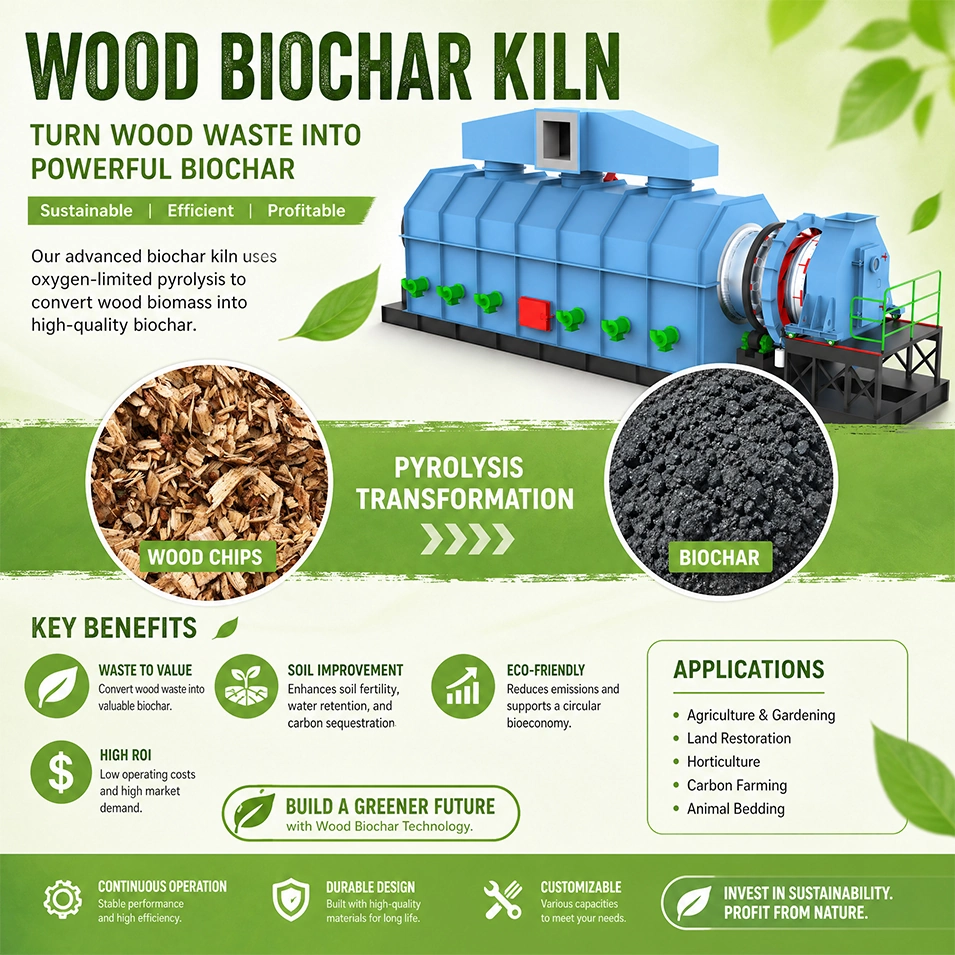
A wood biochar kiln is a specialized device or structure used to convert wood waste (such as branches, sawdust, or agricultural residues) into biochar through pyrolysis. Unlike traditional burning, which releases carbon dioxide (CO₂) into the atmosphere, a biochar kiln minimizes emissions by restricting oxygen, locking carbon in a stable form.
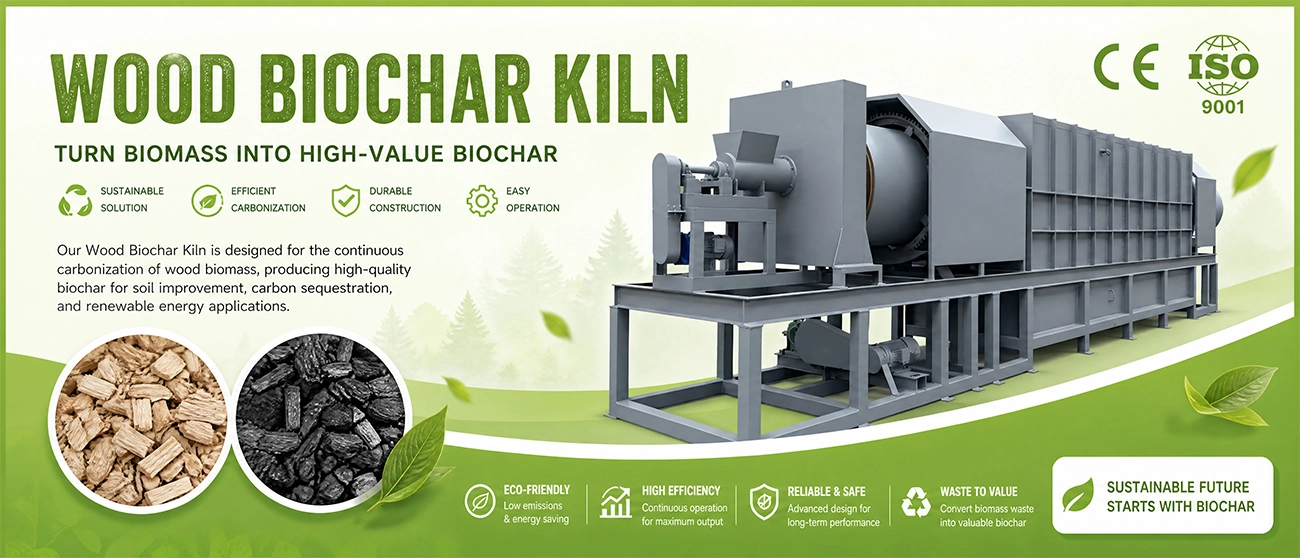
A wood biochar kiln is industrial equipment designed to convert wood waste, sawdust, branches, forestry residue, and other biomass into biochar through a controlled pyrolysis process. Unlike traditional open burning or simple charcoal pits, a modern wood biochar kiln uses a sealed or semi-sealed combustion chamber to carbonize raw material at high temperatures while significantly reducing smoke, particulate emissions, and wasted energy.
For manufacturers, agricultural cooperatives, forestry companies, and environmental engineering firms, a wood biochar kiln represents a practical way to turn waste biomass into a valuable commodity. Biochar produced this way is widely used in soil amendment, carbon sequestration projects, livestock bedding, water filtration, and as a raw material for activated carbon production.
Our wood biochar kilns are built for continuous or batch operation, with capacities ranging from small-scale units suitable for farms and workshops to large industrial systems processing several tons of raw material per hour. Each kiln is engineered to maximize carbon yield, minimize fuel consumption, and meet increasingly strict environmental emission standards.
Whether you’re evaluating equipment for a new biochar production line, replacing outdated carbonization equipment, or scaling up an existing operation, this page walks through everything you need to know: how the kiln works, technical specifications, environmental benefits, real-world applications, and answers to the most common questions buyers ask before purchasing.
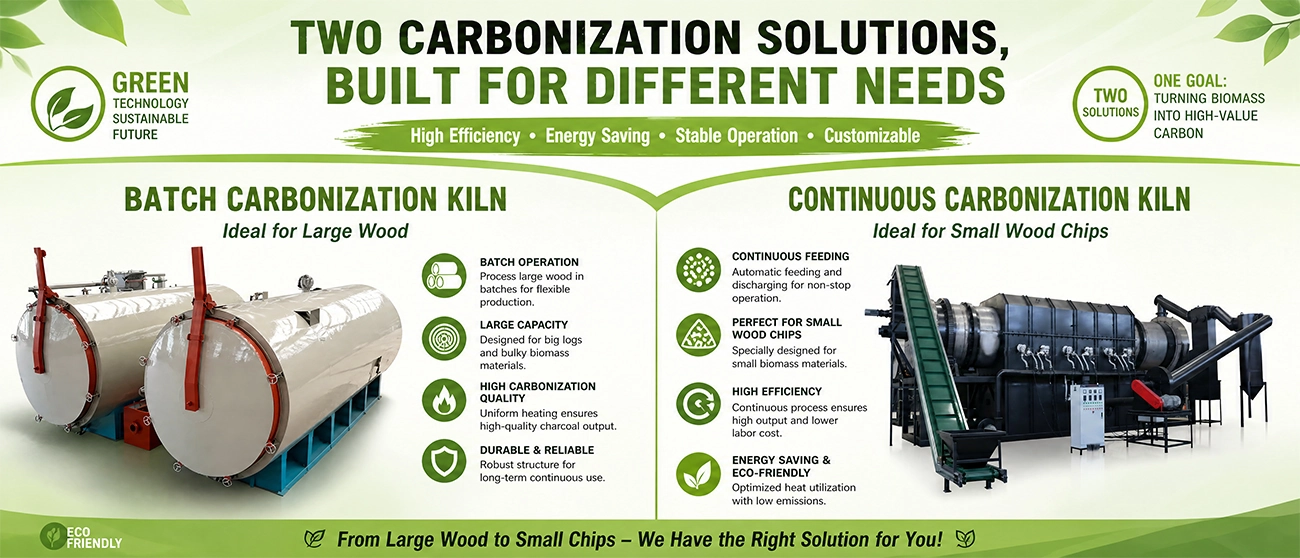
Raw material — wood chips, branches, sawdust, bamboo, coconut shells, rice husks, or other biomass — is prepared to a suitable size and moisture content, typically below 20% moisture for optimal carbonization efficiency. Material is loaded into the kiln either manually (batch systems) or via an automated conveyor and screw-feeder system (continuous systems).
As the kiln heats up, moisture within the feedstock evaporates first. In continuous kilns, this often happens in a dedicated drying zone before the material enters the main carbonization chamber, which improves thermal efficiency and shortens overall cycle time.
Once feedstock reaches the carbonization zone, it is heated in a low-oxygen or oxygen-free environment, typically between 400°C and 700°C depending on the target biochar properties. In this oxygen-limited environment, the biomass breaks down thermally rather than combusting, releasing volatile gases while leaving behind a stable carbon-rich solid: biochar.
One of the most important features of a modern wood biochar kiln is its gas recovery and recycling system. The syngas released during pyrolysis — primarily carbon monoxide, hydrogen, and methane — is captured and redirected back into the combustion chamber as fuel. This self-sustaining heat cycle dramatically reduces or eliminates the need for external fuel once the system reaches operating temperature, cutting operational costs and emissions simultaneously.
After carbonization, biochar passes through a cooling section, typically a water-jacketed or air-cooled screw conveyor, to bring the material down to a safe handling temperature before discharge. Rapid, controlled cooling also helps prevent spontaneous combustion and preserves the biochar’s porous structure.
Step 6: Emission Treatment
Flue gas from the combustion process passes through a purification system — commonly a cyclone dust collector, water scrubber, or spray tower — before release, ensuring compliance with environmental regulations and minimizing visible smoke and odor.
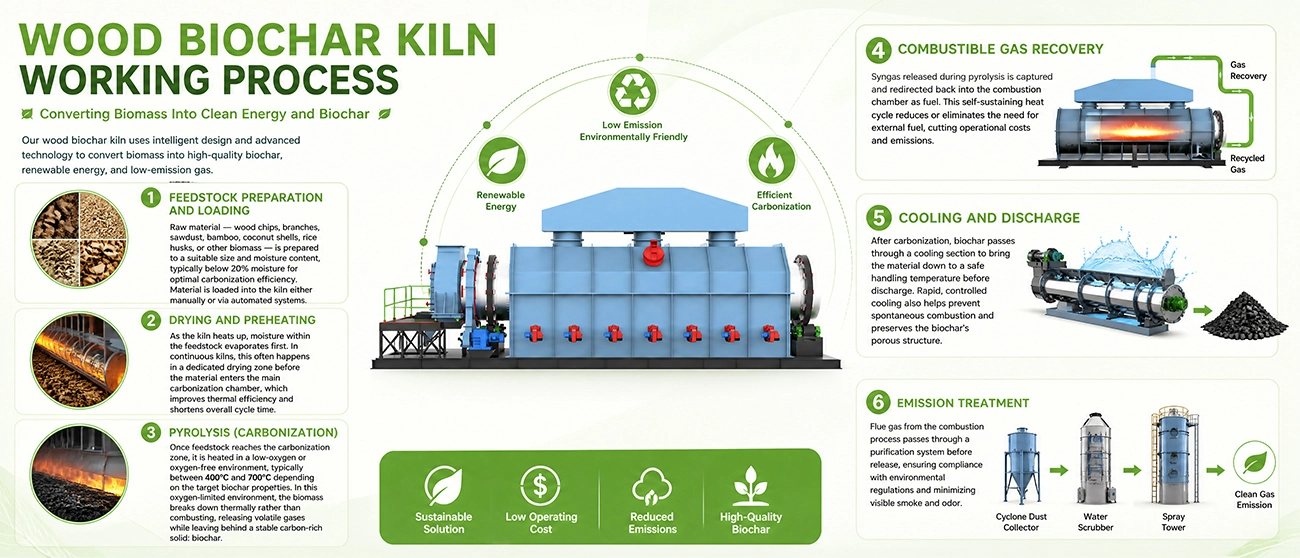
Once the kiln reaches operating temperature, recycled syngas sustains the combustion process, drastically reducing or eliminating ongoing fuel costs compared to conventional carbonization equipment.
Enclosed combustion chambers, gas recovery systems, and integrated purification stages help operators meet environmental standards for particulate matter, smoke density, and odor control — critical for securing operating permits in most regions.
Precise temperature control across the carbonization zone produces biochar with consistent fixed carbon content, porosity, and pH — important for buyers in agriculture, filtration, and carbon credit markets who require reliable, testable specifications.
The system handles a wide range of biomass types, including wood waste, forestry residue, sawdust, agricultural stalks, and shells, making it adaptable as feedstock availability changes seasonally or regionally.
From small batch units suitable for farms and pilot projects to continuous industrial systems processing multiple tons per hour, the product line scales with your business without requiring a complete equipment redesign.
PLC-based control systems monitor temperature, feed rate, and gas flow automatically, reducing the need for constant manual oversight and lowering labor costs over the equipment’s operating life.
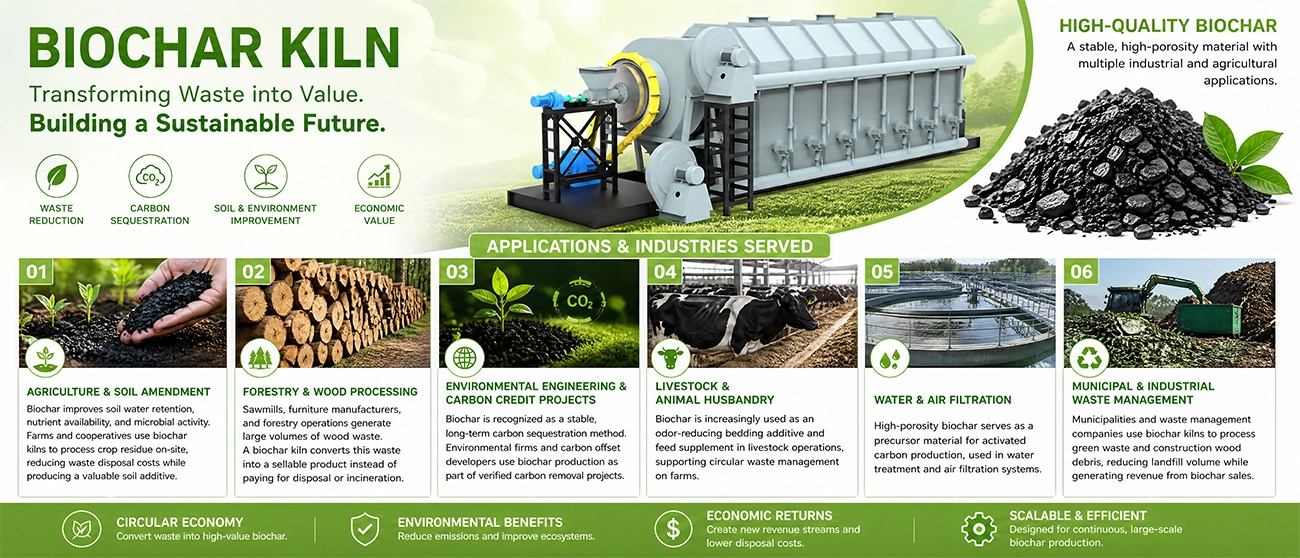
Biochar improves soil water retention, nutrient availability, and microbial activity. Farms and agricultural cooperatives use biochar kilns to process crop residue on-site, reducing waste disposal costs while producing a valuable soil additive.
Sawmills, furniture manufacturers, and forestry operations generate large volumes of wood waste. A biochar kiln converts this waste into a sellable product instead of paying for disposal or incineration.
Biochar is recognized as a stable, long-term carbon sequestration method. Environmental firms and carbon offset developers use biochar production as part of verified carbon removal projects.
Biochar is increasingly used as an odor-reducing bedding additive and feed supplement in livestock operations, supporting circular waste management on farms.
High-porosity biochar serves as a precursor material for activated carbon production, used in water treatment and air filtration systems.
Municipal and Industrial Waste Management
Municipalities and waste management companies use biochar kilns to process green waste and construction wood debris, reducing landfill volume while generating revenue from biochar sales.
Purchasing industrial carbonization equipment is a long-term investment, and support doesn’t end at delivery. Our service package typically includes:
On-site or remote installation guidance to ensure correct setup and commissioning
Operator training covering daily operation, safety protocols, and routine maintenance
Spare parts availability for critical wear components (feed screws, refractory linings, seals)
Technical support via phone, email, or video consultation for troubleshooting
Extended warranty options on core structural and mechanical components
We also assist customers with technical documentation needed for local environmental permitting and equipment financing applications.
Frequently asked questions
Here are answers to some frequently asked questions about skid-mounted carbonization furnaces. If you have any other questions, please feel free to contact our customer service team directly, and we will be happy to provide you with a detailed explanation.
Pricing depends on capacity, automation level, and optional features such as gas purification upgrades or heat recovery systems. Small batch units generally start in the lower price range, while continuous industrial systems represent a larger capital investment. Contact us for a detailed quote based on your production goals and feedstock type.
Common feedstocks include wood chips, sawdust, branches, bamboo, rice husk, coconut shell, and various agricultural residues. Feedstock should generally have moisture content below 20% for optimal efficiency, though drying systems can be added for wetter materials.
Enclosed combustion chambers combined with gas recovery and purification systems significantly reduce visible smoke and odor compared to open burning or basic carbonization pits. Emission levels vary by model and optional purification upgrades.
Yes, installation guidance, operator training, and after-sales technical support are included as part of the standard service package. Details vary by region and equipment model.
Our kilns carry CE certification, ISO quality management certification, and undergo emission compliance testing. Documentation is available to support permitting and financing processes.