 Henan Xuye Machinery Equipment Co., Ltd.
SEARCH WHAT YOU WANT
Search allProductNews
SEARCH
Activated carbon is a cornerstone material in water purification, air filtration, and industrial catalysis. But not all activated carbon is created equal. The production method—whether physical activation or chemical activation—fundamentally shapes the material’s pore structure, surface chemistry, yield, and environmental footprint. This guide breaks down the core differences to help you select the right material for your application.
Activation is the process that transforms a carbon-rich precursor (coconut shell, coal, biomass, petroleum pitch) into a highly porous material. The goal is to develop an extensive internal surface area—often exceeding 1,000 m²/g—where adsorption takes place.
The two dominant commercial routes are physical activation and chemical activation. Each has distinct mechanisms, advantages, and trade-offs.
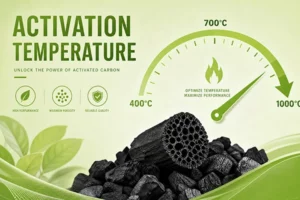
Physical activation uses oxidizing gases—most commonly steam, carbon dioxide, or a combination of both—at high temperatures (typically 800–1,100°C) to selectively gasify portions of the carbon structure.
The process begins with carbonization of the raw material, followed by exposure to the activating gas. The gas diffuses into the carbon matrix and reacts with carbon atoms at active sites, widening existing pores and creating new ones.
A critical distinction: steam preferentially widens micropores into mesopores, while CO₂ favors the formation of new micropores from the early stages of activation .This makes the choice of gas a powerful lever for tailoring pore size distribution.
Steam is more reactive than CO₂ at a given temperature due to its smaller molecular size, which allows faster diffusion into the char structure.
Granular product strength: Physical activation typically preserves the structural integrity of granular carbons, making it suitable for applications requiring mechanical durability.
No chemical residues: The final product requires no acid washing, eliminating a major source of wastewater and secondary pollution.
Established industrial preference: At scale, physical activation is often preferred because it integrates cleanly with pyrolysis and avoids chemical handling costs.
Lower maximum surface areas: Without chemical agents to penetrate deep into the carbon structure, physical activation generally plateaus at lower specific surface areas than chemical activation.
Lower yields: Steam activation causes inhomogeneous gasification, primarily attacking the outer surfaces of carbon particles. This reduces particle and microdomain sizes, resulting in lower carbon yield compared to chemical routes.
Longer activation times: Achieving very high surface areas (above 2,000 m²/g) via physical means can require extended processing.
Chemical activation involves impregnating the precursor with a chemical agent—typically KOH, NaOH, H₃PO₄, or ZnCl₂—followed by carbonization at lower temperatures (450–900°C) .
Tailorable surface chemistry: The choice of activating agent influences surface functional groups, which can enhance adsorption of specific target molecules.
Superior surface area: Chemical activation routinely achieves BET surface areas exceeding 2,000 m²/g, with some KOH-activated materials reaching 3,200 m²/g . Commercial MAXSORB achieves three times the surface area of steam-activated carbon at the same 50% yield.
Higher yields: Because the chemical agent prevents tar formation and promotes uniform pore development, carbon yields are generally higher than physical activation .
Lower activation temperatures and shorter times: Reduced energy demand for the activation step itself .
Higher chemical costs: The activating agents represent a recurring operational expense.
Environmental burden: Residual chemicals must be removed through extensive washing, generating acidic or alkaline wastewater that requires treatment.
Equipment corrosion: Strong acids and bases are aggressive to processing equipment.
Product form constraints: Chemically activated carbons are often powdery, limiting their use in fixed-bed applications where mechanical strength is essential.
| Factor | Physical Activation | Chemical Activation |
|---|---|---|
| Activating Agent | Steam, CO₂, air | KOH, NaOH, H₃PO₄, ZnCl₂ |
| Temperature | 800–1,100°C | 450–900°C |
| Typical Surface Area | 500–1,500 m²/g | 1,000–3,200 m²/g |
| Yield | Lower | Higher |
| Post-Treatment | None required | Acid washing required |
| Environmental Impact | Low (no chemical waste) | Higher (wastewater, chemical handling) |
| Pore Development | Inhomogeneous, surface-outward | Uniform throughout microdomains |
| Product Form | Typically granular | Often powder |
| Primary Cost Driver | Energy (high temperature) | Chemicals + waste treatment |
Choose physical activation when:
Choose chemical activation when:
Activated carbon kiln, activated carbon production equipment, carbonization furnace, activation furnace
View details
Activated carbon kilns designed specifically for coconut shells, wood, coal and other raw materials optimize carbonization and activation processes, improve the adsorption performance of finished products, and provide free raw material testing ser...
View details
Customized activated carbon kiln specifications according to customer needs, providing full technical solutions from laboratory-level small equipment to large production lines, supporting PLC automation control.
View details
Specialized in the production of activated carbon kilns for water treatment, air purification, gold extraction and other fields.
View details