 Henan Xuye Machinery Equipment Co., Ltd.
SEARCH WHAT YOU WANT
Search allProductNews
SEARCH
Activated carbon is a porous carbon material widely used for water purification, air treatment, solvent recovery, gas purification, food processing, and industrial applications. However, carbonized material does not automatically have the high surface area and pore structure required for effective adsorption. Activation is the key thermal process used to develop pores and increase the adsorption capacity of carbon materials.
One of the most important factors in the activation process is temperature.
So, what is the activation temperature of activated carbon?
In general, activated carbon is commonly activated at approximately 700–900°C, depending on the raw material, activation method, residence time, gas atmosphere, and desired pore structure. For many steam-activation processes, temperatures around 800–900°C are commonly used.
However, there is no single activation temperature suitable for every type of activated carbon.
Activated carbon production generally includes two major thermal stages:
During carbonization, raw materials such as coconut shells, wood, nut shells, or other carbonaceous materials are heated under controlled conditions to remove volatile components and produce a carbon-rich char.
The resulting char still has a relatively undeveloped pore structure.
Activation then partially reacts the carbon with an activating agent, such as steam or carbon dioxide, at high temperature. This controlled reaction creates and enlarges pores within the carbon structure.
The result is a porous material with a much larger internal surface area and improved adsorption characteristics.
The activation temperature depends heavily on the activation technology.
| Activation Method | Typical Temperature Range |
|---|---|
| Steam activation | Approximately 700–900°C |
| CO₂ activation | Approximately 700–900°C |
| Chemical activation | Often lower, depending on the chemical agent |
| Industrial high-temperature activation | Commonly around 800–900°C |
For steam activation, a working temperature of approximately 850–900°C is commonly used in industrial activated carbon production. The actual operating temperature should be determined according to the raw material and target product properties.
For example, coconut shell char may require different activation conditions from wood-based char because their density, ash content, volatile matter, and initial pore structures are different.
Activation requires a controlled gas-solid reaction between carbon and the activating agent.
In steam activation, the basic reaction can be represented approximately as:
C + H₂O → CO + H₂
The reaction removes portions of the carbon matrix and develops pores.
Temperature has a major influence on the reaction rate.
At insufficient temperatures, the reaction may be too slow to effectively develop the required pore structure. At excessively high temperatures or with excessive activation time, the carbon can undergo excessive burn-off.
Therefore, activated carbon production requires a balance between:
Temperature + Activation Time + Steam Flow + Raw Material + Burn-Off Rate
rather than simply using the highest possible temperature.
Steam activation is one of the most widely used physical activation methods.
The process can generally be described as:
Carbonized Material → Heating → Steam Introduction → Carbon-Steam Reaction → Pore Development → Cooling → Screening
During activation, steam contacts the hot carbonized material.
The steam reacts with carbon and gradually removes portions of the carbon matrix. Existing micropores can develop, while additional pores may be created as activation progresses.
The degree of activation is influenced by several parameters:
This is why temperature should be considered together with the other process parameters.
Not necessarily.
Temperatures close to 850–900°C are commonly encountered in industrial steam-activation processes.
However, operating at 900°C does not automatically mean that the final activated carbon will have better performance.
The important factor is the overall activation condition.
For example, if activation is too aggressive, excessive carbon burn-off can reduce product yield and alter the pore structure. If activation is insufficient, the resulting carbon may not develop enough porosity.
Therefore, an activated carbon production line should be designed to provide stable temperature control and controllable residence time.
Activation temperature can influence several important properties of activated carbon.
Increasing activation severity generally increases the development of the pore structure, particularly during physical activation.
The resulting pore distribution depends on both temperature and activation time.
Proper activation can significantly increase the internal surface area of carbon.
However, surface area alone does not determine adsorption performance. The pore size distribution and the properties of the target adsorbate are also important.
Burn-off refers to the amount of carbon removed during activation.
Higher activation severity generally results in greater burn-off.
A higher burn-off level may produce more developed pores, but excessive burn-off can reduce product yield.
Activation conditions affect how much of the original carbonized material remains after processing.
Industrial production therefore needs to balance:
Adsorption Performance vs. Product Yield
Coconut shell is an important raw material for activated carbon production because its carbonized structure can be suitable for developing microporous activated carbon.
For coconut shell activated carbon, steam activation is commonly carried out at high temperatures, often in the range of approximately 800–900°C.
A typical production process may include:
Coconut Shell → Crushing → Drying → Carbonization → Carbonized Shell → Steam Activation → Cooling → Screening → Packaging
The actual activation temperature depends on:
Therefore, a fixed temperature should not be applied to every coconut shell activated carbon project without process testing.
Wood-based activated carbon can have different characteristics from coconut-shell activated carbon.
Wood typically has a different density and pore structure, and the desired final product may also differ.
Depending on the production technology, wood-based carbon can be activated using steam or other methods.
For physical activation, temperatures in the high-temperature range, often around 700–900°C, may be used.
The optimum condition should be established based on the specific wood species, char characteristics, particle size, and target adsorption properties.
A common question is whether carbonization and activation use the same temperature.
Generally, they are two different thermal processes.
Carbonization converts the raw carbonaceous material into char.
Its main purpose is to remove volatile components and produce a carbon-rich material.
Activation further develops the pore structure of the carbonized material.
It normally uses a higher temperature and a controlled activating atmosphere.
A simplified process is:
Raw Material
↓
Drying
↓
Carbonization
↓
Carbonized Material
↓
High-Temperature Activation
↓
Activated Carbon
↓
Cooling & Screening
The exact temperatures depend on the raw material and process design.
An activated carbon rotary kiln can be used for continuous thermal processing of carbonized materials.
In a rotary kiln system, carbonized material moves through a rotating cylindrical chamber while temperature and atmosphere are controlled.
For steam activation, steam can be introduced into the activation section to react with the carbonized material.
A typical industrial system may include:
The design depends on the raw material, capacity, activation method, and required product specifications.
Temperature is only one part of the activation process.
Residence time is also important.
If the material stays in the activation zone for too short a period, pore development may be insufficient.
If the residence time is too long, excessive burn-off may occur.
The appropriate residence time depends on:
Therefore, activation time should be optimized together with temperature rather than considered independently.
Yes, depending on the activation method.
Physical activation using steam or CO₂ generally requires high temperatures.
Chemical activation can use chemical activating agents and may be performed at lower temperatures depending on the specific chemical system.
However, chemical activation and physical activation produce different process conditions, waste streams, equipment requirements, and product characteristics.
For large-scale industrial production, the choice between steam activation, CO₂ activation, and chemical activation should be based on the raw material and intended application.
Stable temperature control is important for consistent activated carbon quality.
An industrial activation system may use:
The temperature should be monitored at different sections of the furnace because the material temperature and furnace gas temperature are not necessarily identical.
A well-designed system allows operators to adjust the process according to the characteristics of the incoming carbonized material.
During thermal carbonization and activation, combustible gases may be generated.
In appropriately designed systems, combustible off-gas can be collected and directed to a combustion chamber where it can be burned as a heat source.
This approach can help utilize the energy contained in the process gas and reduce the need for external fuel, depending on the raw material and operating conditions.
However, gas composition and calorific value vary significantly with the raw material and process conditions, so the actual heat balance should be evaluated for each project.
Activated carbon is commonly activated at approximately 700–900°C for physical activation. Steam activation is often operated around 800–900°C, depending on the raw material and process conditions.
There is no universal best temperature. For many industrial steam-activation processes, approximately 850–900°C can be a practical operating range, but the optimum condition depends on the raw material, residence time, steam rate, and desired pore structure.
Yes. Coconut shells are widely used as a raw material for activated carbon, particularly when microporous activated carbon is required.
No. Excessive temperature or activation severity can cause excessive burn-off, lower product yield, and changes in pore structure. The process should be optimized rather than simply operated at the highest temperature.
Physical activation commonly involves heating carbonized material to a high temperature and reacting it with steam or carbon dioxide under controlled conditions.
Industrial production can use rotary kilns, activation furnaces, steam systems, gas treatment equipment, cooling systems, and other auxiliary equipment depending on the production process.
The activation temperature of activated carbon is an important parameter in determining pore development, burn-off, product yield, and adsorption characteristics.
For physical activation, particularly steam activation, temperatures of approximately 700–900°C are commonly used, with 850–900°C being a typical range for many industrial processes.
However, temperature should never be considered separately. The final activated carbon properties are influenced by the combination of:
Raw Material + Carbonization Conditions + Activation Temperature + Steam Flow + Residence Time + Burn-Off
For manufacturers planning an activated carbon production line, selecting the appropriate rotary kiln and process configuration should therefore be based on the specific raw material and target activated carbon specifications.
XUYE Machinery provides activated carbon production equipment and process solutions for different carbonaceous raw materials, including coconut shell, wood, nut shells and other biomass-derived materials. The equipment configuration can be designed according to the required capacity, raw material characteristics and activation process.
Activated Carbon Activation Temperature: 700–900°C Guide
What is the activation temperature of activated carbon? Learn about typical steam activation temperatures, activation time, burn-off, pore development and rotary kiln equipment.
activated carbon activation temperature
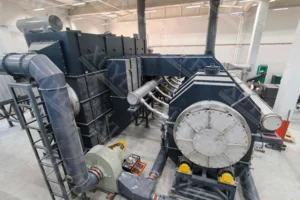
Customized activated carbon kiln specifications according to customer needs, providing full technical solutions from laboratory-level small equipment to large production lines, supporting PLC automation control.
View details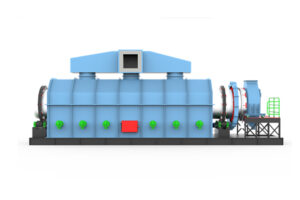
Activated carbon kiln, activated carbon production equipment, carbonization furnace, activation furnace
View details
Understand the chemical activated carbon production line equipment and professional production technology to help improve the adsorption performance of activated carbon.
View details
Activated carbon kiln, activated carbon production equipment, carbonization furnace, activation furnace
View details