 Henan Xuye Machinery Equipment Co., Ltd.

SEARCH WHAT YOU WANT
Search allProductNews
SEARCH
Coconut shell activated carbon production line equipment is key to the resourceful utilization of coconut shells. Its core equipment includes carbonization furnaces and activation furnaces, each with its own distinct focus on process design, performance parameters, and application scenarios.
Suitable for the continuous production of fruit shell materials. XUYE’s coconut shell carbonization furnaces achieve pollution-free carbonization, producing high-density coconut shell charcoal with a long combustion time, and can replace coal as a clean, renewable energy source. They feature large processing capacity and ease of operation. Some models incorporate an integrated gasification unit to recycle fuel gas for self-use.
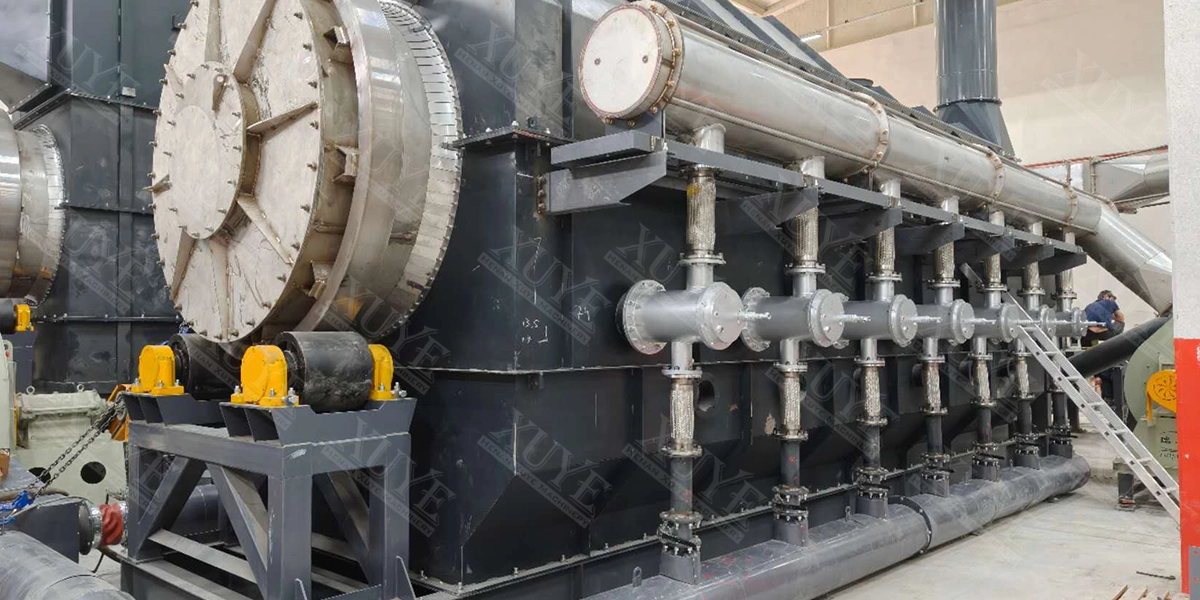
As a key piece of equipment in coconut shell activated carbon production, this Activation furnace is primarily used for high-temperature carbonization of coconut shell raw materials. The kiln’s rotating body ensures uniform heating of the material, resulting in the pyrolysis and gasification of organic matter to form activated carbon with a rich porous structure. The equipment supports automated control of temperature (800-1000°C), atmosphere, and time, and is equipped with flue gas purification and energy recovery systems, offering both high efficiency and environmental protection.
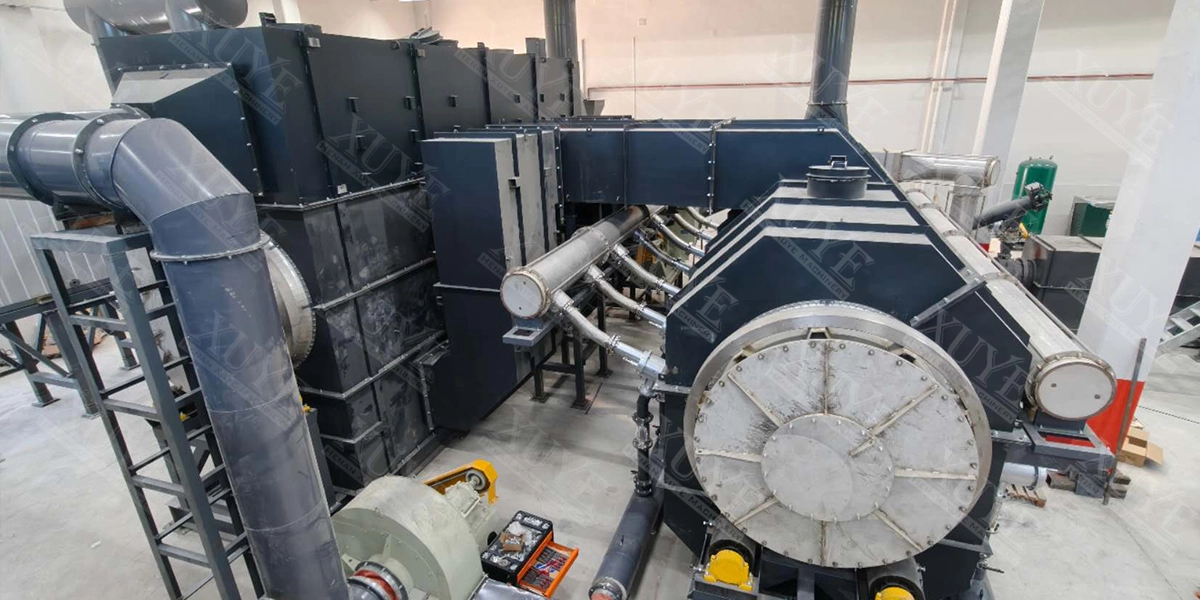
Coconut shell activated carbon is a type of activated carbon made from coconut shells. Its high surface area and rich pore structure give it excellent adsorption, separation, and catalytic properties, making it widely used in air purification, water treatment, the food industry, the pharmaceutical industry, and the chemical industry.
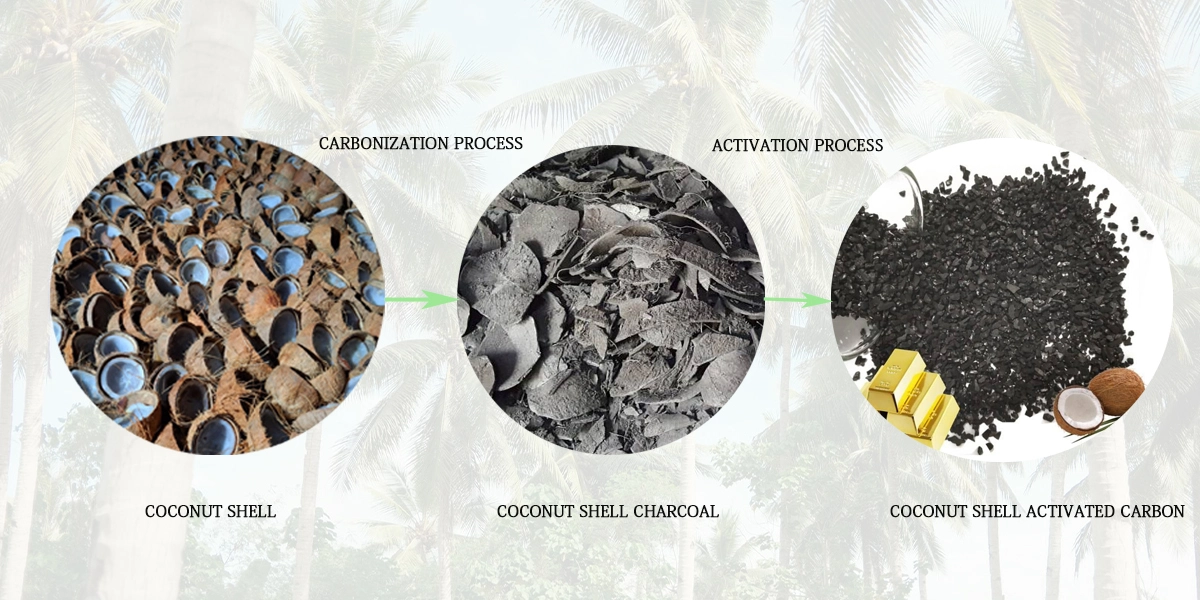
Raw Material Pretreatment: The raw material is first crushed and screened to a size of 1-3 cm. It then enters a drum dryer, utilizing waste heat from the production line to control the moisture content to 8-15%. The dryer exhaust undergoes dust removal and fume scrubbing to meet emission standards.
Carbonization: The coconut shells are carbonized using indirect heating at a temperature of 650-850°C. The carbonization furnace’s drum is constructed of high-temperature-resistant stainless steel, is fully enclosed, and operates at a slight negative pressure. The combustible gas generated during the carbonization process serves as fuel, providing heat for the carbonization process, eliminating the need for additional fuel. The carbonized coconut shell charcoal can be activated directly or cooled as a finished product for further processing.
Activation: Coconut shell charcoal is activated using direct heating at a temperature of 850-950°C for 60-120 minutes. The drum of the activation furnace is lined with carbon steel and refractory materials. The furnace is fully enclosed and operates at a slight negative pressure. Natural gas/oil fuel is used. Temperature, residence time, steam dosage, and oxygen supplementation can all be precisely controlled, enabling the production of coconut shell activated carbon to various specifications.
Cooling: Indirect water cooling is employed, using a water-cooled screw conveyor and drum cooler.
Waste gas treatment: Exhaust gases generated during the carbonization and activation processes are treated. These processes include secondary combustion, waste heat steam generation, waste heat recovery, temperature control, pulse dust removal, and wet deacidification. These processes remove harmful substances from the exhaust gas while maximizing waste heat utilization.
Product processing: The activated carbon undergoes crushing, grinding, screening, and packaging.

High carbon yield: One ton of activated carbon can be produced from 5-6 tons of raw material. Both carbonization and activation are performed in an oxygen-free environment, minimizing carbon loss. The carbonization furnace utilizes segmented temperature control for controlled carbonization.
Adjustable Product Quality: Adjustable production process parameters enable the production of coconut shell activated carbon in various specifications.
High Automation: The entire equipment utilizes PLC automation control, and sensors are installed at multiple process nodes throughout the production line to ensure safety at every stage. The equipment’s process parameters can be automatically adjusted via the PLC, providing exceptional flexibility. The entire production line utilizes minimal labor, saving labor.
High production output: 5-20 tons/day.
| capacity | 5-8t/d | 8-10t/d | 10-12t/d | 12-15t/d | 15-20t/d |
| Dryer model | HG-800 | HG-1000 | HG-1200 | HG-1500 | HG-1800 |
| Dryer power | 3kw | 4kw | 7.5kw | 15kw | 22kw |
| continuous carbonization furnace model | TH-1500 | TH-1500 | TH-1800 | TH-2000 | TH-2000 |
| Carbonization temperature | 600-850℃ | ||||
| Fixed carbon content after carbonization | 70-80% | ||||
| Carbonization furnace drum material | 309S/310S | 309S/310S | 309S/310S | 309S/310S | 309S/310S |
| Activation furnace model | HN-5 | HN-8 | HN-10 | HN-12 | HN-15 |
| Activation furnace power | 15kw | 22kw | 30kw | 37kw | 37kw |
| Activation furnace chamber material | QQ345+nano thermal insulation board+refractory | ||||
| Activation temperature | 850-950℃ | ||||
| Activator | Water vapor or Phosphoric acid (customized according to customer requirements, equipment design will be updated) | ||||
| Activation time | 1-2h | ||||
| Cooling machine model | GTL-1004 | GTL-1204 | GTL-1206 | GTL-1504 | GTL-1506 |
| Temperature after cooling | ≤40℃ | ||||
| Activated carbon crusher model | SGP-400 | SGP-400 | SGP-600 | SGP-800 | SGP-800 |
| Activated carbon finished product size | 4-60mesh | ||||
| Activated carbon iodine value | 800-1300mg/g | ||||
| Activated carbon specific surface area | 800-1500m²/g | ||||
| Activated carbon strength | ≥95 | ||||
| CTC | ≥60% | ||||
| Filling density | 0.45-0.55g/cm3 | ||||
| Activated carbon ash | ≤3% | ||||