 Henan Xuye Machinery Equipment Co.


BUSCA LO QUE QUIERAS
Buscar todosProductoNoticias
BUSCAR
Electric heating dryers use heating elements to generate heat, combined with a fan to circulate air, creating a heat exchange process to dry the material. The core process is divided into three stages: During the preheating stage, the heating element (such as a resistance wire or heating tube) is energized to generate heat, and a fan draws the hot air through the duct into the drying chamber. The control system adjusts the temperature to the set value in real time. During the drying stage, the material is fully exposed to the hot air through the rotating drum, gradually evaporating moisture. Some equipment uses a lifting plate to stir the material to ensure even heating. During the cooling and discharge stage (on some models), the material is cooled by cold air and automatically discharged, completing the drying cycle.
The basic structure of the equipment includes: the main body (support frame), the heating element (core heat source), the fan (air circulation), the control system (temperature/time control), the inlet and outlet ports, and the hot air duct. Some models use a drum design with lifting plates installed on the inner wall, which, combined with the forward and reverse rotation function, automatically feed and discharge the material.
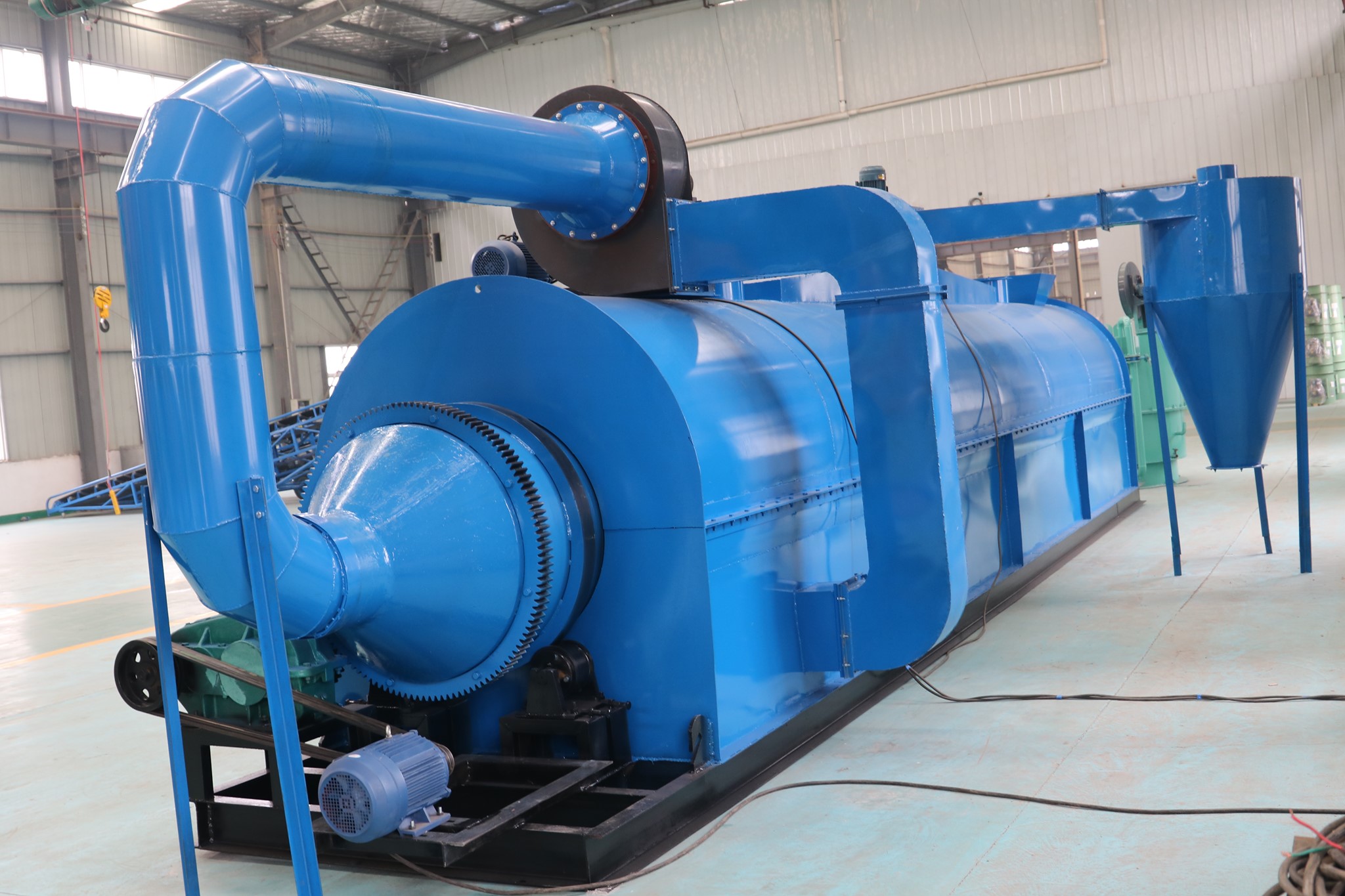
Its operating principle is based on the combined effects of heat conduction, convection, and radiation, with convection being the primary method. The basic process is as follows:
Heating: Electrical energy is converted into thermal energy through electric heating tubes (or other heating elements).
Heat Transfer: Cold air is drawn into the equipment by a fan, flows through the high-temperature electric heating tubes, and is heated into clean hot air.
Contact and Drying: Wet material is continuously and evenly fed into the slowly rotating drum by a feed mechanism. The material is repeatedly lifted and scattered by the lifting plates on the drum’s inner wall, forming a uniform material curtain that fully contacts the hot air flowing through the drum.
Mass and Heat Transfer: Moisture on the material surface rapidly vaporizes and evaporates into the hot air, increasing its humidity and lowering its temperature.
Separation and Discharge: The dried material is conveyed to the discharge end by the inclination and rotation of the drum. Wet exhaust gas is filtered by a dust removal device (such as a cyclone separator or bag filter) and discharged outdoors by an induced draft fan.
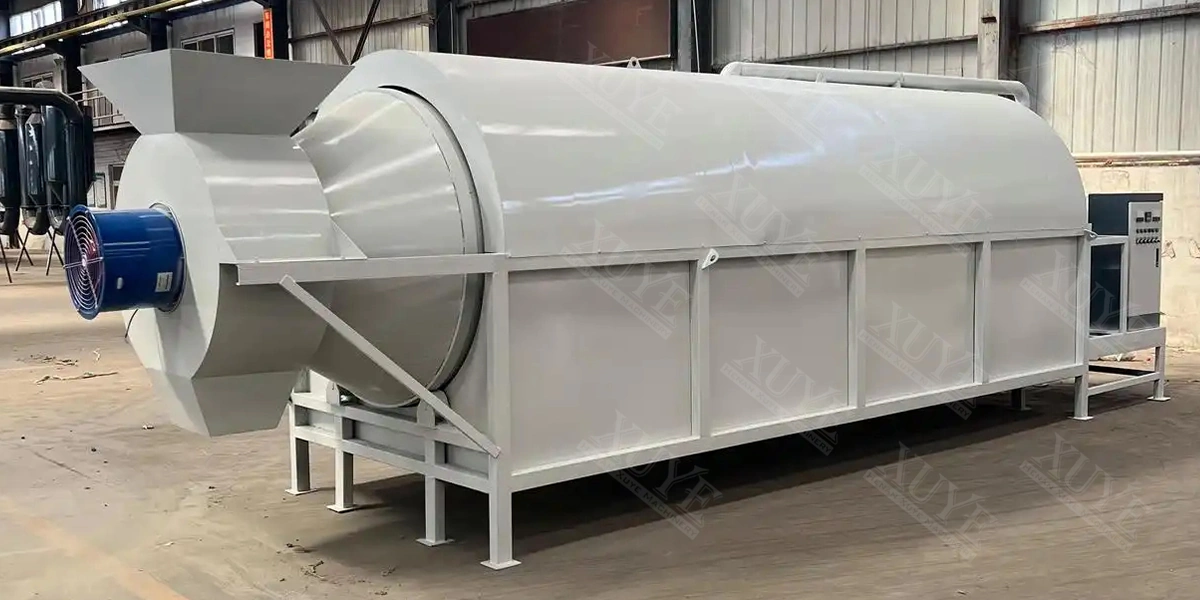

Technical Parameters
| Model | Cylinder diameter(mm) | Cylinder length(mm) | Cylinder volume(m3) | Cylinder rotary speed (r/min) | Power(kW) | Weight(t) |
| 0.6×5.8 | 600 | 5800 | 1.7 | 1-8 | 3 | 2.9 |
| 0.8×8 | 800 | 8000 | 4 | 1-8 | 4 | 3.5 |
| 1×10 | 1000 | 10000 | 7.9 | 1-8 | 5.5 | 6.8 |
| 1.2×5.8 | 1200 | 5800 | 6.8 | 1-6 | 5.5 | 6.7 |
| 1.2×8 | 1200 | 8000 | 9 | 1-6 | 5.5 | 8.5 |
| 1.2×10 | 1200 | 10000 | 11 | 1-6 | 7.5 | 10.7 |
| 1.2×11.8 | 1200 | 11800 | 13 | 1-6 | 7.5 | 12.3 |
| 1.5×8 | 1500 | 8000 | 14 | 1-5 | 11 | 14.8 |
| 1.5×10 | 1500 | 10000 | 17.7 | 1-5 | 11 | 16 |
| 1.5×11.8 | 1500 | 11800 | 21 | 1-5 | 15 | 17.5 |
| 1.5×15 | 1500 | 15000 | 26.5 | 1-5 | 15 | 19.2 |
| 1.8×10 | 1800 | 10000 | 25.5 | 1-5 | 15 | 18.1 |
| 1.8×11.8 | 1800 | 11800 | 30 | 1-5 | 18.5 | 20.7 |
| 1.8×15 | 1800 | 15000 | 38 | 1-5 | 18.5 | 26.3 |
| 1.8×18 | 1800 | 18000 | 45.8 | 1-5 | 22 | 31.2 |
| 2×11.8 | 2000 | 11800 | 37 | 1-4 | 18.5 | 28.2 |
| 2×15 | 2000 | 15000 | 47 | 1-4 | 22 | 33.2 |
| 2×18 | 2000 | 18000 | 56.5 | 1-4 | 22 | 39.7 |
| 2×20 | 2000 | 20000 | 62.8 | 1-4 | 22 | 44.9 |
| 2.2×11.8 | 2200 | 11800 | 44.8 | 1-4 | 22 | 30.5 |
| 2.2×15 | 2200 | 15000 | 53 | 1-4 | 30 | 36.2 |
| 2.2×18 | 2200 | 18000 | 68 | 1-4 | 30 | 43.3 |
| 2.2×20 | 2200 | 20000 | 76 | 1-4 | 30 | 48.8 |
| 2.4×15 | 2400 | 15000 | 68 | 1-4 | 30 | 43.7 |
| 2.4×18 | 2400 | 18000 | 81 | 1-4 | 37 | 53 |
Este sitio web utiliza cookies para mejorar su experiencia de navegación. Si continúa navegando, consideramos que acepta su uso. Los datos recogidos en este sitio web se procesan y almacenan en Estados Unidos.