 河南秀燁機械設備有限公司


欲しいものを探す
すべて検索製品ニュース
検索
As an important type of rotary drum dryer, stainless steel rotary drum dryer is widely used in the field of industrial and agricultural material drying. Its core advantage lies in the use of stainless steel (such as 304, 310S, etc.), which is particularly suitable for drying easily polluted materials (such as food, agricultural and sideline products, etc.), while taking into account high efficiency, energy saving and easy operation. Stainless steel rotary drum dryer is an efficient and continuous operation drying equipment. With its corrosion resistance, good hygiene and strong adaptability.
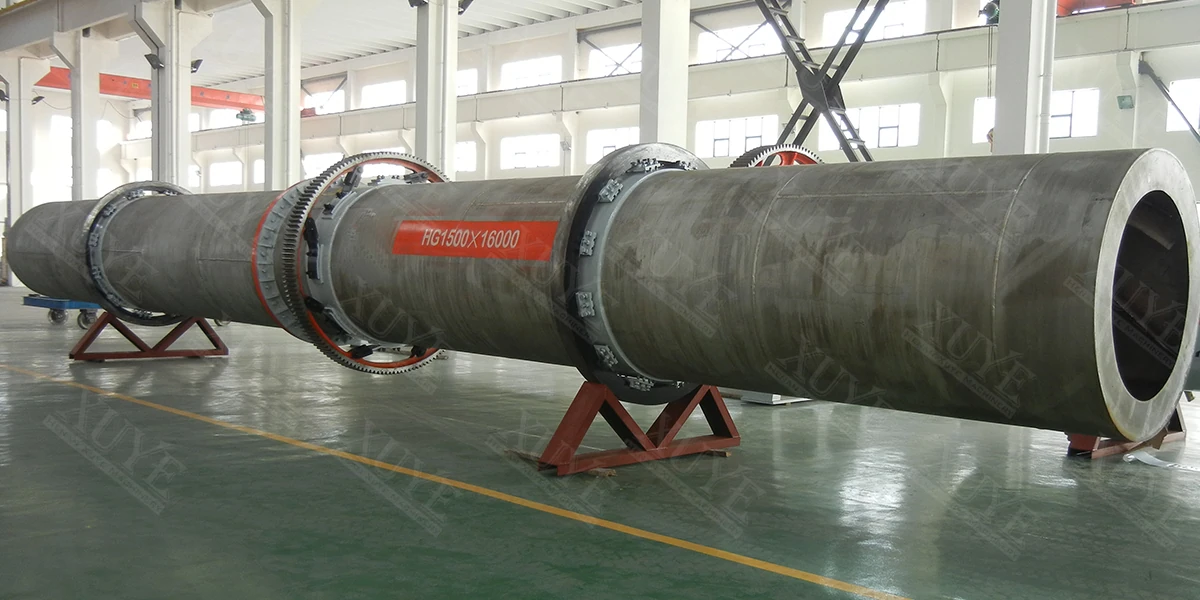
The main components of a stainless steel rotary drum dryer include:
| Component | Description | Common Materials/Forms |
|---|---|---|
| Drum | The main body where material tumbles and dries. Typically designed with a slight incline (e.g., 3-5 degrees) and adjustable rotation speed. | 304 Stainless Steel, 310S Stainless Steel, or Carbon Steel with Stainless Lining |
| Lifting Flights | Welded to the inner wall of the drum in various shapes (e.g., arc-shaped, spiral) to lift and scatter material, increasing the heat exchange area. | Usually made of stainless steel |
| Transmission System | Provides power to rotate the drum, including motor, reducer, gear (or pulley), etc. | |
| Support Device | Includes support rollers (to support the rotating part) and thrust rollers (to prevent axial movement). | Support rollers may use wear-resistant and corrosion-resistant materials |
| Sealing Device | Installed at the feed and discharge ends and drum connections to prevent heat loss and dust leakage. | |
| Heating System | Provides the heat source in various forms. | Electric heating, steam heating, gas hot air furnace, etc. |
| Feeding & Discharge System | Enables continuous and uniform material supply and product collection. | Can be equipped with screw conveyors, bucket elevators, etc. |
| Control System | Modern dryers often feature automatic control systems for precise adjustment of temperature, speed, air volume, etc. | PLC (Programmable Logic Controller), touch screen, etc. |
| Insulation Casing | Wraps around the drum to reduce heat loss and improve thermal efficiency. | Often uses high-quality aluminum silicate insulation wool, etc. |
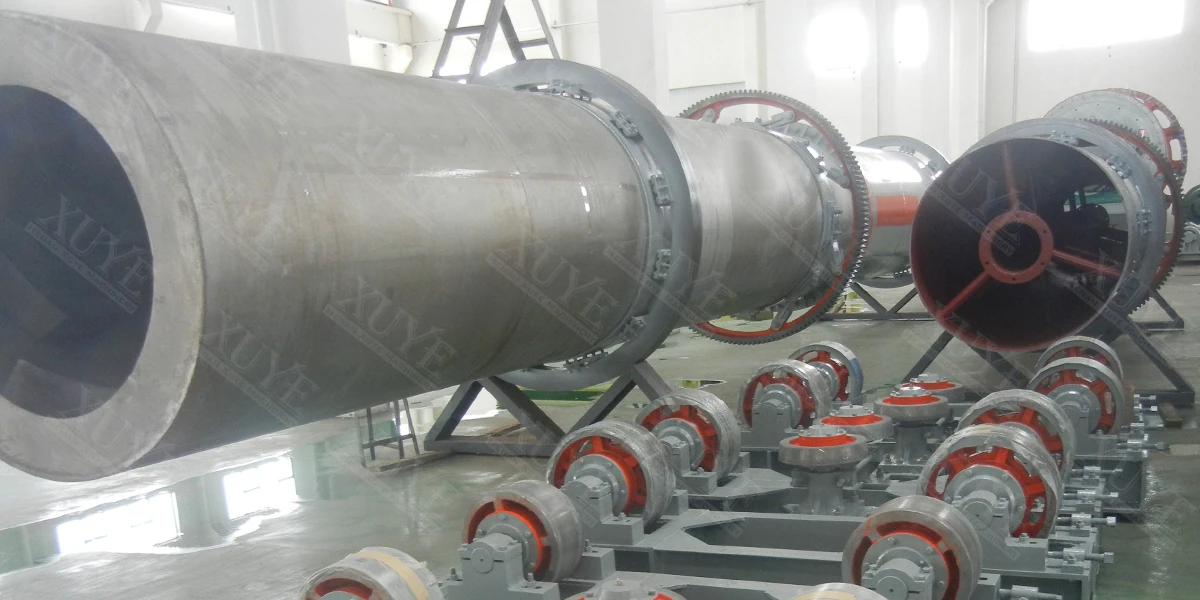
The operating principle of a stainless steel rotary drum dryer is primarily based on heat exchange. During operation, wet material enters a slightly inclined, adjustable rotating drum from the feed end. As the drum rotates, lifters (lifting plates) on the inner wall continuously lift and drop the material, causing it to tumble repeatedly within the drum, forming a uniform curtain of material.
At the same time, hot air (the heating medium) flows through the drum in either co-current or counter-current flow, depending on process requirements, effectively exchanging heat with the tumbling, dispersed wet material. The moisture in the material gradually evaporates and is carried away by the hot air, with the dried material then discharged from the discharge end. Exhaust gas containing water vapor and fine dust is typically treated with a dust removal device before discharge.
| Industry | Typical Materials | Device Advantages |
|---|---|---|
| Food and Agricultural By-Products | Soybean residue, distiller’s grain, starch residue, dried fruits and vegetables | Stainless steel material prevents pollution, good drying uniformity |
| Feed and Fertilizer | Fish meal, organic fertilizer, straw, drug residue | Can be connected to pelletizing and packing processes to form a complete production line |
| Chemicals and Mining | Metal powders, kaolin, activated white earth, gangue | Can withstand high temperatures (up to 1000°C), flexible heat carrier selection |
Food and agricultural product processing: Used for drying vegetables, fruits, tea, bean dregs, roasted rice, roasted wheat, etc., as well as for roasting and sterilizing materials.
Chemical industry: Used for drying chemical raw materials, mineral powders, fertilizers (such as phosphate fertilizers and ammonium sulfate), salts, molecular sieves, etc.
Mining and metallurgy: Used for processing ores, slag, quartz sand, bentonite, silicon carbide, iron powder, coal powder, etc.
Environmental protection and waste treatment: Used for drying sludge, distiller’s grains, etc.
Textile and other light industries: Large industrial dryers can be used to dry textiles and clothing. They are also used in the pharmaceutical and electronics industries.
Excellent corrosion resistance and hygiene: Stainless steel effectively resists corrosion from moisture, certain chemicals, and other materials, extending equipment life and meeting the stringent hygiene requirements of industries such as food and pharmaceuticals.
Strong material adaptability: Adjustable speed, temperature, air volume, and lift plate configuration can be tailored to the drying needs of materials with varying characteristics, providing operational flexibility.
High production efficiency and continuous operation: High processing capacity and 24-hour continuous operation make them ideal for large-scale industrial production.
Uniform and stable drying: Materials are continuously scooped up and down within the drum, ensuring full contact with the hot air, resulting in uniform drying.
Relatively stable and reliable operation: The simple structure ensures easy operation, minimal malfunctions, and low maintenance.
Energy-saving and environmentally friendly: Insulation materials can be used to reduce heat loss, and dust removal devices (such as pulse dust collectors) can be installed to reduce dust emissions and improve the working environment.
Material Characteristics: Initial and final moisture content, viscosity, particle size, thermal sensitivity, and corrosivity are key factors.
Heat Source Selection: Choose a heat source such as steam, natural gas, fuel oil, electricity, or coal based on site conditions, cost, and environmental requirements.
Production Capacity Requirements: Determine equipment specifications based on the required hourly or per-shift throughput (output).
Material Requirements: Choose either all-stainless steel (such as 304 or 316L) or carbon steel lined with stainless steel, depending on the corrosiveness and hygiene requirements of the material.
Environmental and Automation Requirements: Consider whether an advanced dust removal system and the degree of automation are required.

Technical Parameters
| Model | Cylinder diameter(mm) | Cylinder length(mm) | Cylinder volume(m3) | Cylinder rotary speed (r/min) | Power(kW) | Weight(t) |
| 0.6×5.8 | 600 | 5800 | 1.7 | 1-8 | 3 | 2.9 |
| 0.8×8 | 800 | 8000 | 4 | 1-8 | 4 | 3.5 |
| 1×10 | 1000 | 10000 | 7.9 | 1-8 | 5.5 | 6.8 |
| 1.2×5.8 | 1200 | 5800 | 6.8 | 1-6 | 5.5 | 6.7 |
| 1.2×8 | 1200 | 8000 | 9 | 1-6 | 5.5 | 8.5 |
| 1.2×10 | 1200 | 10000 | 11 | 1-6 | 7.5 | 10.7 |
| 1.2×11.8 | 1200 | 11800 | 13 | 1-6 | 7.5 | 12.3 |
| 1.5×8 | 1500 | 8000 | 14 | 1-5 | 11 | 14.8 |
| 1.5×10 | 1500 | 10000 | 17.7 | 1-5 | 11 | 16 |
| 1.5×11.8 | 1500 | 11800 | 21 | 1-5 | 15 | 17.5 |
| 1.5×15 | 1500 | 15000 | 26.5 | 1-5 | 15 | 19.2 |
| 1.8×10 | 1800 | 10000 | 25.5 | 1-5 | 15 | 18.1 |
| 1.8×11.8 | 1800 | 11800 | 30 | 1-5 | 18.5 | 20.7 |
| 1.8×15 | 1800 | 15000 | 38 | 1-5 | 18.5 | 26.3 |
| 1.8×18 | 1800 | 18000 | 45.8 | 1-5 | 22 | 31.2 |
| 2×11.8 | 2000 | 11800 | 37 | 1-4 | 18.5 | 28.2 |
| 2×15 | 2000 | 15000 | 47 | 1-4 | 22 | 33.2 |
| 2×18 | 2000 | 18000 | 56.5 | 1-4 | 22 | 39.7 |
| 2×20 | 2000 | 20000 | 62.8 | 1-4 | 22 | 44.9 |
| 2.2×11.8 | 2200 | 11800 | 44.8 | 1-4 | 22 | 30.5 |
| 2.2×15 | 2200 | 15000 | 53 | 1-4 | 30 | 36.2 |
| 2.2×18 | 2200 | 18000 | 68 | 1-4 | 30 | 43.3 |
| 2.2×20 | 2200 | 20000 | 76 | 1-4 | 30 | 48.8 |
| 2.4×15 | 2400 | 15000 | 68 | 1-4 | 30 | 43.7 |
| 2.4×18 | 2400 | 18000 | 81 | 1-4 | 37 | 53 |
| 2.4×20 | 2400 | 20000 | 91 | 1-4 | 37 | 60.5 |
| 2.4×23.6 | 2400 | 23600 | 109 | 1-4 | 45 | 69.8 |
| 2.8×18 | 2800 | 18000 | 111 | 1-3 | 45 | 62 |
| 2.8×20 | 2800 | 20000 | 123 | 1-3 | 55 | 65 |
| 2.8×23.6 | 2800 | 23600 | 148 | 1-3 | 55 | 70 |
| 2.8×28 | 2800 | 28000 | 172 | 1-3 | 75 | 75 |
| 3×20 | 3000 | 20000 | 14 | 1-3 | 55 | 75 |
| 3×23.6 | 3000 | 23600 | 170 | 1-3 | 75 | 85 |
| 3×28 | 3000 | 28000 | 198 | 1-3 | 90 | 91 |
| 3.2×23.6 | 3200 | 23600 | 193 | 1-3 | 90 | 112 |
| 3.2×32 | 3200 | 32000 | 257 | 1-3 | 110 | 129 |
| 3.6×36 | 3600 | 36000 | 366 | 1-3 | 132 | 164 |
| 3.8×36 | 3800 | 36000 | 408 | 1-3 | 160 | 187 |
| 4×36 | 4000 | 36000 | 452 | 1-3 | 160 | 195 |
このウェブサイトでは、お客様の閲覧体験を向上させるためにクッキーを使用しています。本サイトの利用を継続することにより、クッキーの使用に同意したものとみなされます。このウェブサイトから収集されたデータは、米国で処理・保存されます。