 Henan Xuye Machinery Equipment Co., Ltd.
SEARCH WHAT YOU WANT
Search allProductNews
SEARCH
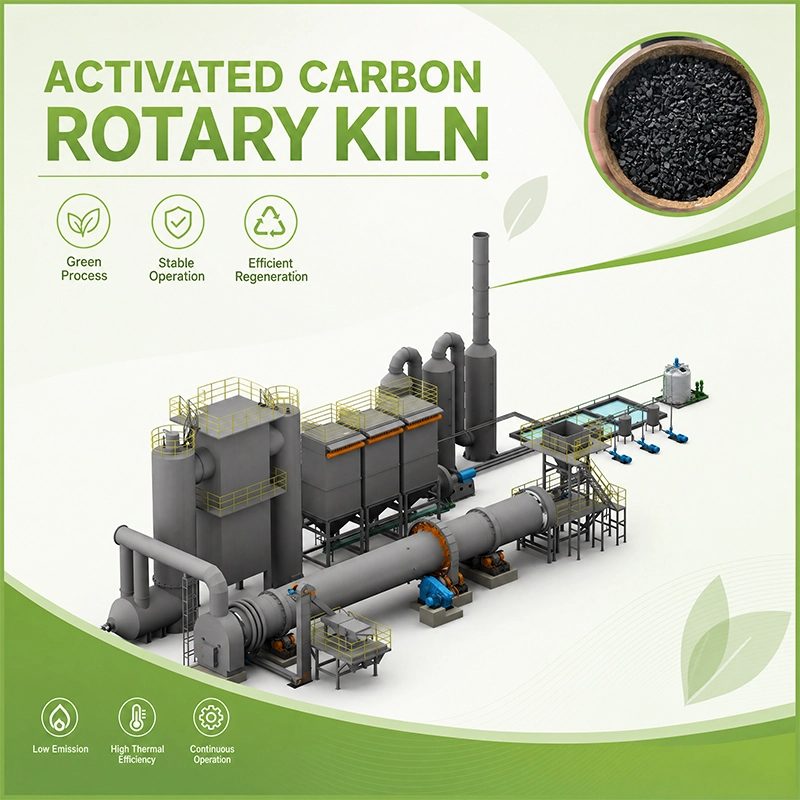
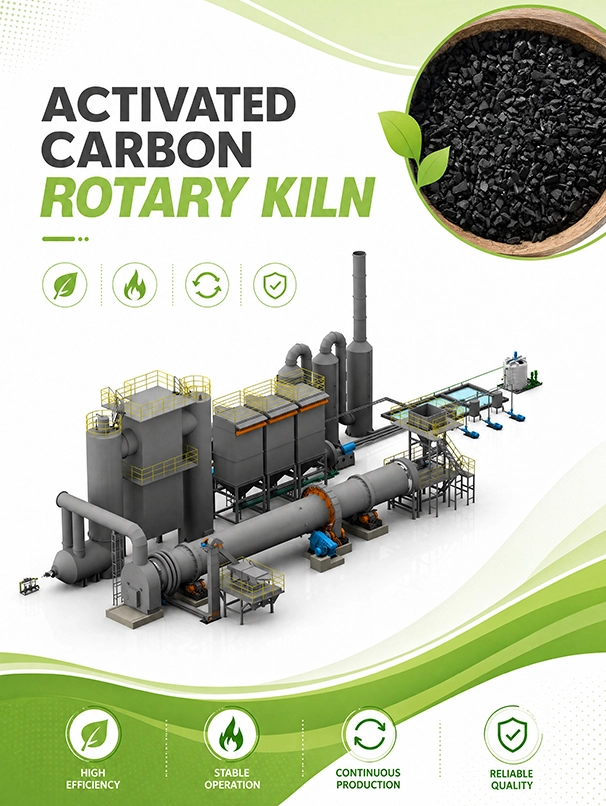
The Activated Carbon Rotary Kiln is an advanced internal heating furnace specially designed for the activation of carbonized materials into high-quality activated carbon. Unlike external heating rotary kilns, this system transfers heat directly inside the rotating drum through a controlled heat source, providing higher thermal efficiency, faster heat transfer, and more uniform temperature distribution. It is widely used for processing coconut shell, wood, bamboo, fruit shells, coal-based carbon, and other carbonaceous raw materials.
The kiln operates under precisely controlled temperatures, typically ranging from 800°C to 950°C, depending on the raw material and activation process. Steam or other activating gases can be introduced into the kiln to create a highly developed pore structure, resulting in activated carbon with excellent adsorption performance and consistent quality.
Equipped with an automatic feeding system, variable-speed rotary drive, intelligent temperature control, and continuous discharge system, the internal heating rotary kiln ensures stable production while reducing energy consumption and operating costs. Its compact design, reliable performance, and low maintenance requirements make it suitable for both new activated carbon production lines and capacity expansion projects.
The internal heating activated carbon rotary kiln is an ideal solution for manufacturers seeking high production efficiency, uniform product quality, and environmentally friendly operation. It can be customized in different capacities and configurations to meet various industrial production requirements and customer-specific process needs.
What Is an Internal Heating Activated Carbon Rotary Kiln?
Steam Physical Activation Process.
Working Principle of the Activated Carbon Rotary Kiln
Advantages of Internal Heating Design
Benefits of Steam Physical Activation
Complete Activated Carbon Production Line
Custom Engineering and Technical Support
Quality and Performance Control
Environmental and Operational Considerations
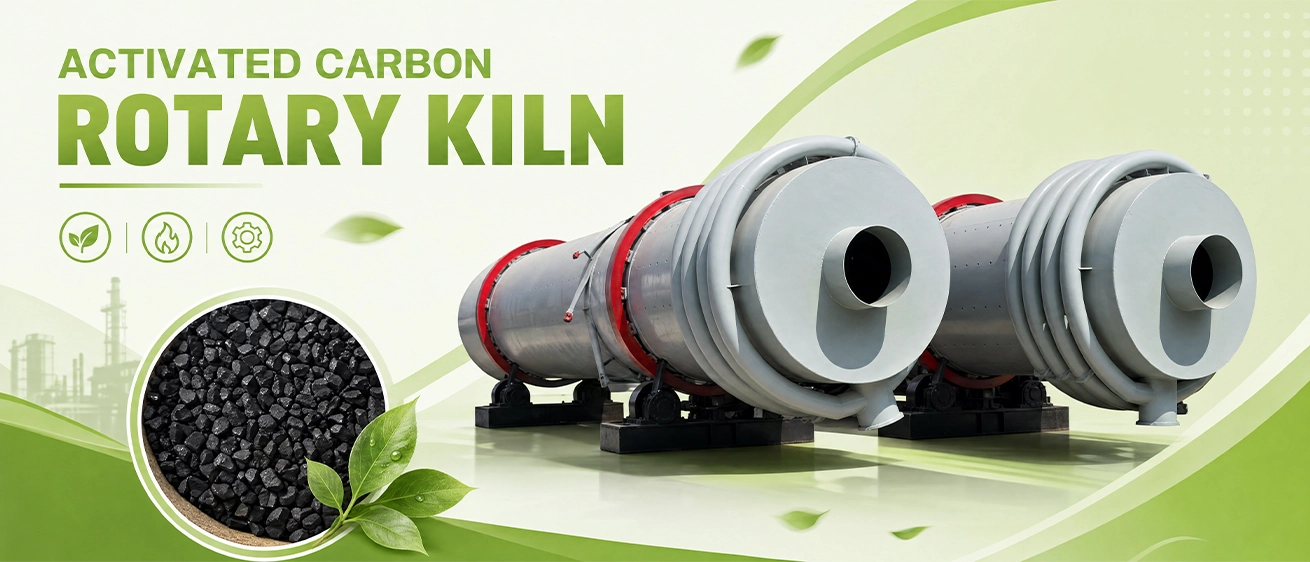
An internal heating activated carbon rotary kiln is a rotary thermal activation furnace in which heat is introduced directly into the kiln chamber. The heating source, hot gas flow, and activation atmosphere work inside the rotating cylinder, allowing the material to receive heat more directly and efficiently. This design is especially suitable for steam physical activation because the material must be heated to a high activation temperature and kept under controlled reaction conditions for a certain residence time.
In an internally heated rotary kiln, carbonized material enters from the feeding end and slowly moves forward as the kiln rotates at a controlled speed. At the same time, heat and steam are introduced into the kiln. The internal temperature is maintained within the required activation range, usually depending on raw material characteristics and target activated carbon performance. During this process, steam reacts with carbon at high temperature, gradually opening micropores, mesopores, and internal channels in the carbon structure.
The internal heating design offers several practical advantages. First, heat transfer is direct and efficient, which helps reduce unnecessary heat loss. Second, the rotating movement ensures that the material is constantly turned and exposed to the hot atmosphere, improving activation uniformity. Third, the equipment is suitable for continuous industrial operation, making it easier to control output, energy consumption, and product consistency. Fourth, the kiln can be matched with combustion systems, steam systems, cooling equipment, dust removal systems, and exhaust gas treatment systems to form a complete activated carbon production line.
For customers who need large-scale activated carbon production, the internal heating rotary kiln provides a strong balance between production capacity, activation efficiency, operating stability, and investment cost.
The steam physical activation process is a traditional and widely used method for producing activated carbon. The process usually includes two main stages: carbonization and activation. In the carbonization stage, raw materials such as coconut shell, wood, bamboo, or coal are heated under limited oxygen conditions to remove volatile matter and form carbonized material. In the activation stage, the carbonized material is treated at high temperature with steam inside the activated carbon rotary kiln.
During steam activation, the carbonized material reacts with steam through controlled gasification. This reaction removes part of the carbon atoms from the internal structure and gradually creates a developed pore network. The activation reaction can be simplified as a high-temperature reaction between carbon and water vapor, producing gases such as carbon monoxide and hydrogen. By controlling temperature, steam flow, residence time, material size, and kiln rotation speed, the pore structure and adsorption performance of the final activated carbon can be adjusted.
The steam physical activation method has several important benefits. It does not require chemical activating agents, so the process avoids chemical washing, acid recovery, and chemical wastewater treatment associated with many chemical activation routes. The final activated carbon is cleaner and more suitable for applications with strict purity requirements. The method is also highly flexible. By adjusting process parameters, manufacturers can produce activated carbon with different iodine values, methylene blue adsorption values, hardness levels, ash contents, and particle size distributions.
For coconut shell activated carbon, steam activation is especially popular because coconut shell charcoal has high hardness, low ash content, and good pore-forming potential. After activation in a rotary kiln, the product is widely used in drinking water treatment, air purification, gold extraction, gas masks, solvent recovery, and high-end adsorption applications. For coal-based activated carbon, steam activation can help produce granular or columnar activated carbon for industrial water treatment, sewage treatment, flue gas purification, and chemical adsorption. For wood and bamboo carbon, steam activation can produce activated carbon with strong decolorization and liquid-phase adsorption performance.
The activated carbon rotary kiln works through continuous feeding, internal heating, rotary movement, steam reaction, and controlled discharging. Prepared carbonized material is fed into the kiln through a sealed feeding device. The kiln body is installed at a slight slope, so the material slowly moves from the feeding end to the discharging end as the cylinder rotates. Inside the kiln, lifting plates or internal structures can help turn and distribute the material, increasing contact between the carbon and the hot activation atmosphere.
The heating system supplies thermal energy directly inside the kiln. Depending on the project design, the fuel can be natural gas, coal gas, diesel, biomass gas, pulverized coal, or other available fuels. The internal heating atmosphere raises the kiln temperature to the required activation range. Steam is introduced into the high-temperature zone, where it contacts the hot carbonized material and starts the physical activation reaction.
As the material moves through the kiln, it experiences different temperature and reaction zones. At the beginning, moisture and remaining volatile matter may be removed. In the main activation zone, steam reacts with the carbon structure and develops pores. Near the discharge end, the activated material completes the required residence time and exits the kiln. The hot activated carbon then enters a cooling system to reduce temperature safely before screening, crushing, grading, or packaging.
The entire process can be monitored and controlled by temperature sensors, pressure instruments, rotation speed control, fuel control, steam flow control, and electrical control systems. A well-designed control system helps maintain stable operating conditions, which is essential for producing activated carbon with consistent adsorption performance.
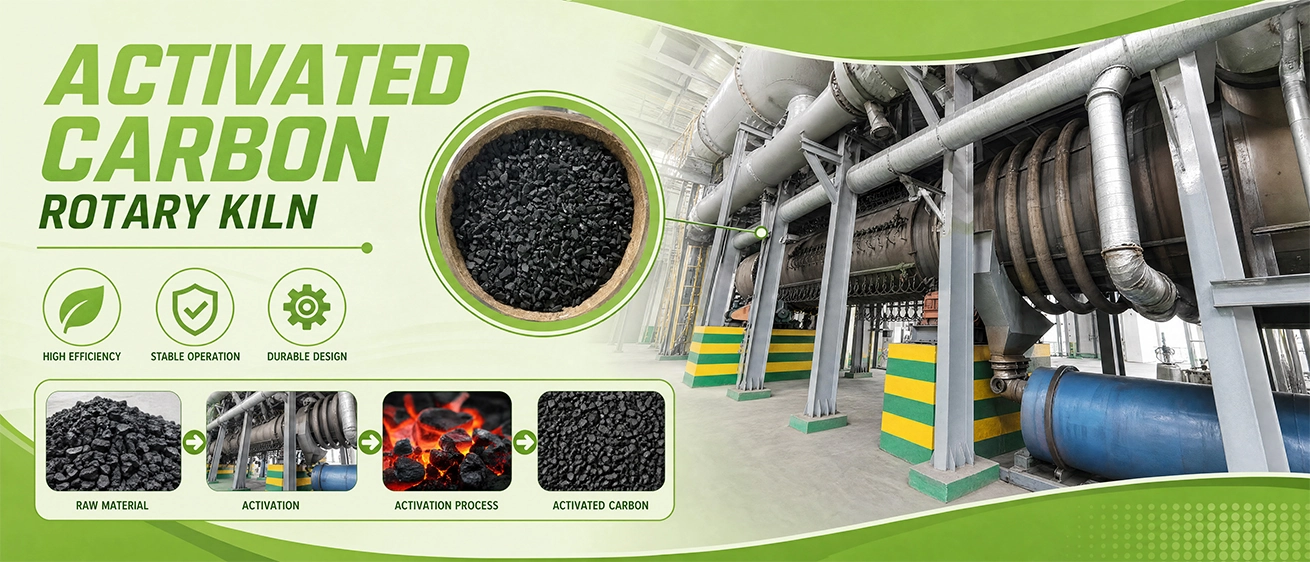
Our activated carbon rotary kiln is designed for industrial steam physical activation and long-term continuous operation. The internal heating structure improves heat utilization and provides strong thermal conditions for activation. The rotating kiln body ensures continuous material movement, reducing local overheating and improving activation uniformity.
The kiln can be customized for different raw materials and production goals. Coconut shell, coal, wood, bamboo, palm shell, and biomass materials all have different carbon structures and activation characteristics. Therefore, kiln diameter, kiln length, rotation speed, slope, refractory lining, burner arrangement, steam injection position, and residence time can be designed according to actual process requirements.
The kiln uses high-temperature refractory materials to protect the steel shell and maintain thermal stability. The sealing system at the feeding and discharging ends helps reduce air leakage and improve atmosphere control. A stable transmission system supports smooth kiln rotation. The supporting roller, thrust roller, gear ring, reducer, motor, and lubrication system are designed for reliable operation under heavy-duty working conditions.
The equipment can also be integrated with automatic feeding, steam generation, waste heat recovery, dust collection, exhaust gas treatment, cooling, screening, and packaging systems. For customers building a complete activated carbon plant, we can provide not only the rotary kiln itself but also full process layout and supporting equipment recommendations.
The internal heating design is one of the main advantages of this activated carbon rotary kiln. Because heat is introduced directly into the kiln chamber, the carbonized material can receive thermal energy more effectively. Compared with some external heating designs, internal heating can provide faster heat response, stronger activation intensity, and better suitability for continuous production.
Direct internal heating also makes it easier to create a high-temperature reaction atmosphere required for steam activation. Steam must contact hot carbon at the proper temperature to develop pores efficiently. If temperature is too low, activation is weak and the iodine value may not reach the target. If temperature is too high or residence time is too long, excessive burn-off may reduce yield and hardness. The internal heating rotary kiln allows operators to adjust fuel, air, steam, and material flow to maintain a practical balance between adsorption performance and production yield.
Another advantage is production flexibility. Different customers may need activated carbon for different markets. Water treatment activated carbon may require good hardness and stable iodine value. Gold recovery activated carbon may require high strength, low platelets, and good adsorption capacity. Decolorizing activated carbon may require stronger liquid-phase adsorption. Air purification activated carbon may require suitable pore distribution for gas adsorption. By adjusting internal heating temperature, steam flow, and residence time, the same rotary kiln system can support different product strategies.
Steam physical activation is a clean and reliable method for producing activated carbon. Since the process does not depend on chemical activating agents, it reduces chemical handling risks and post-treatment requirements. This is important for factories that want a more environmentally friendly production process and a simpler wastewater treatment system.
The activated carbon produced by steam physical activation usually has good mechanical strength, stable pore structure, and broad application value. For coconut shell activated carbon, steam activation can produce high-hardness granular activated carbon with excellent microporous structure. For coal-based carbon, the process can create activated carbon suitable for industrial water purification and gas treatment. For wood and bamboo materials, steam activation can improve decolorization and adsorption performance for liquid-phase applications.
Steam activation also allows flexible control over burn-off rate. Burn-off refers to the portion of carbon consumed during activation. A suitable burn-off level helps develop adsorption pores while maintaining product yield and hardness. If burn-off is too low, the activated carbon may have weak adsorption capacity. If burn-off is too high, the product may become fragile and yield may decrease. A well-designed rotary kiln helps control this balance through temperature, steam quantity, material residence time, and feed rate.
For many industries, physical activation is preferred because the final product is easier to wash, dry, and prepare for use. Activated carbon made by steam activation is widely accepted in environmental protection, water treatment, food and beverage, gas purification, mining, chemical production, and industrial recycling.
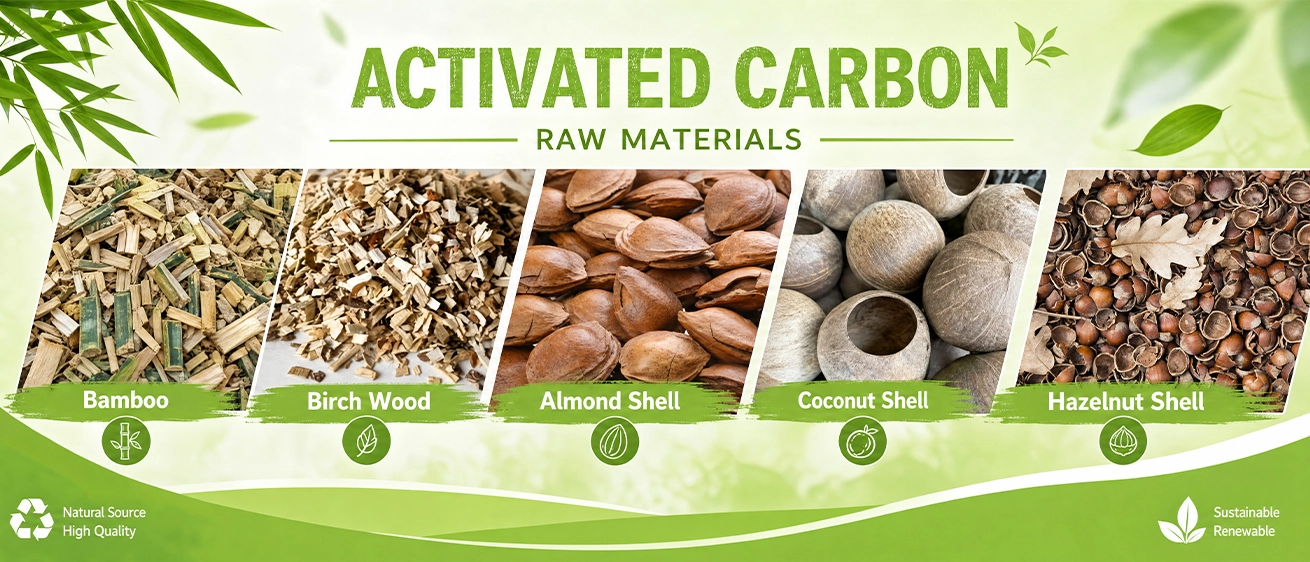
The activated carbon rotary kiln can be used for many carbon-rich raw materials after proper pretreatment and carbonization. Common raw materials include coconut shell, palm shell, wood, bamboo, coal, lignite, sawdust, fruit shell, biomass pellets, charcoal, and spent activated carbon.
Coconut shell is one of the best raw materials for high-quality granular activated carbon. It has high density, high hardness, and low ash content. After carbonization and steam activation, coconut shell activated carbon usually has strong adsorption capacity and good wear resistance. It is widely used in drinking water purification, gas purification, gold recovery, and high-value adsorption applications.
Wood and bamboo materials are renewable biomass resources. Activated carbon made from wood or bamboo often has good pore development and liquid adsorption performance. It can be used for decolorization, deodorization, wastewater treatment, and chemical purification.
Coal-based materials are commonly used for large-volume industrial activated carbon production. Coal-based activated carbon has stable raw material supply, adjustable particle form, and broad application in sewage treatment, flue gas treatment, solvent recovery, and industrial filtration.
Spent activated carbon can also be regenerated in a rotary kiln under proper process conditions. During regeneration, adsorbed organic matter is removed, and part of the adsorption capacity can be restored. This helps reduce waste disposal cost and supports circular use of activated carbon in industrial systems.
A complete activated carbon production line usually includes raw material preparation, drying, carbonization, activation, cooling, crushing, screening, dust collection, exhaust gas treatment, and packaging. The activated carbon rotary kiln is the core equipment in the activation section, but its performance depends on the coordination of the entire system.
Before activation, raw materials should be properly sized and carbonized. Uniform particle size helps improve kiln feeding stability and activation consistency. If the raw material moisture is too high, a dryer may be required before carbonization or activation. After carbonization, the charcoal or carbonized material is fed into the rotary kiln for steam activation.
After activation, the hot activated carbon must be cooled under controlled conditions to prevent oxidation or spontaneous combustion. A rotary cooler or water-cooled discharge system can be used depending on product type and plant design. After cooling, the material can be crushed, screened, and graded into powder, granular, or columnar activated carbon products. Dust collection equipment helps maintain a clean working environment, while exhaust gas treatment equipment reduces emissions and improves environmental compliance.
Supporting equipment may include crusher, dryer, carbonization furnace, activated carbon rotary kiln, steam boiler, burner system, induced draft fan, cyclone dust collector, bag filter, scrubber, cooler, screening machine, conveying equipment, storage silo, control cabinet, and packaging machine.
Every activated carbon project has different requirements. Raw material type, raw material size, moisture content, ash content, fixed carbon content, target iodine value, production capacity, local fuel price, steam source, land area, environmental standards, and investment budget can all affect equipment selection. For this reason, we provide customized engineering support rather than offering only a standard machine.
Our technical team can help customers evaluate the raw material and design a suitable process route. For customers who already have carbonized material, we can focus on the activation kiln and supporting steam system. For customers starting from raw biomass or coal, we can provide a complete production line solution including carbonization and activation. For customers who want to regenerate spent activated carbon, we can design a regeneration kiln system with exhaust gas treatment and safety control.
The rotary kiln size, heating method, refractory lining, burner configuration, steam injection system, sealing method, drive system, control system, and discharge cooling method can be customized. We also provide installation guidance, commissioning support, operator training, maintenance suggestions, and process optimization advice.
Activated carbon produced by an internal heating steam activation rotary kiln can be used in many industries. In water treatment, it removes chlorine, odor, color, organic pollutants, and trace contaminants from drinking water, industrial water, and wastewater. In air purification, it adsorbs volatile organic compounds, odors, harmful gases, and solvent vapors. In gold recovery, coconut shell activated carbon is used to adsorb gold from cyanide solution in carbon-in-pulp and carbon-in-leach processes.
In the food and beverage industry, activated carbon can be used for decolorization, deodorization, and purification when the product meets relevant quality standards. In chemical production, it can purify intermediates, recover solvents, and remove impurities. In environmental protection, activated carbon is used in sewage treatment, flue gas purification, soil remediation, and hazardous gas adsorption. In pharmaceutical and fine chemical industries, high-purity activated carbon can support purification and separation processes.
Because application requirements vary, the rotary kiln production process should be designed according to the final use of the activated carbon. Parameters such as iodine value, ash content, hardness, moisture, particle size, methylene blue value, carbon tetrachloride adsorption, and bulk density may all be important depending on the market.
Stable activated carbon quality depends on stable process control. In steam physical activation, important control factors include activation temperature, steam flow rate, material residence time, kiln rotation speed, feed rate, particle size, and internal atmosphere. If these factors fluctuate too much, the final activated carbon may show unstable iodine value, uneven activation, excessive ash, low hardness, or inconsistent adsorption performance.
Our activated carbon rotary kiln is designed to support stable operation and easier process adjustment. Temperature monitoring points can be arranged along the kiln to help operators understand the thermal condition. The steam system can be adjusted according to production demand. The rotation speed can be controlled to change material residence time. The feeding system can maintain continuous material input. The exhaust system helps control gas flow and remove reaction gas from the kiln.
With proper operation, the kiln can help manufacturers improve product consistency, reduce fuel waste, control burn-off, and maintain stable output. For factories selling activated carbon to demanding markets, consistent quality is just as important as high adsorption value.
The steam physical activation process is cleaner than many chemical activation processes, but proper environmental design is still important. During activation, exhaust gas may contain combustible gas, dust, water vapor, carbon monoxide, and other components depending on the raw material and process conditions. Therefore, the rotary kiln should be equipped with a suitable exhaust gas handling system.
Common environmental equipment includes cyclone dust collectors, bag filters, scrubbers, afterburners, heat recovery systems, and induced draft fans. A well-designed system helps reduce dust emissions, improve workplace safety, and meet local environmental requirements. Waste heat can also be recovered in some projects to improve overall energy efficiency.
Operational safety is also important. High-temperature equipment requires proper sealing, insulation, temperature monitoring, pressure control, and emergency procedures. Operators should be trained to control fuel, steam, feeding, discharging, and exhaust systems correctly. Regular maintenance of refractory lining, rollers, gears, seals, burners, steam pipelines, and electrical components helps extend equipment service life.
| Item | Model | Capacity | Size |
| Rotary activationFurnace(internal heat type) | Φ1.5m×12m | 1-2t/d | 16000*2300*4000mm |
| Φ1.5m×15m | 2-3t/d | 20000*2700*4500mm | |
| Φ2.0m×18m | 4-5t/d | 22000*3000*4500mm | |
| Φ2.6m×20m | 5-8t/d | 26000*3600*5000mm |
Frequently asked questions
Here are answers to some frequently asked questions about skid-mounted carbonization furnaces. If you have any other questions, please feel free to contact our customer service team directly, and we will be happy to provide you with a detailed explanation.
An activated carbon rotary kiln can process a wide range of raw materials, including coconut shell charcoal, wood charcoal, bamboo charcoal, coal-based carbon, fruit shells, nut shells, palm kernel shells, and other biomass or mineral carbon materials.
The operating temperature depends on the production process. Carbonization typically occurs between 400–700°C, while steam activation generally operates between 800–950°C. The kiln temperature can be accurately controlled according to the process requirements.
An indirect-heated rotary kiln prevents combustion gases from directly contacting the activated carbon, reducing contamination and improving product purity. It also provides more uniform temperature distribution, better process control, and higher-quality activated carbon.
Residence time is adjusted by changing the kiln rotation speed, inclination angle, and material feed rate. These parameters allow operators to optimize the activation or regeneration process for different raw materials.
Production capacity varies depending on the kiln size and application. Standard systems can range from 100 kg/h to over 10 tons per day, while customized solutions are available for larger industrial production lines.