 Henan Xuye Machinery Equipment Co., Ltd.


SEARCH WHAT YOU WANT
Search allProductNews
SEARCH
Xuye’s externally heated activated carbon making machine boasts stable system operation, a high degree of automation, and meets emission standards after combustion. The resulting biochar is of considerable value. The entire system features high carbonization efficiency, a long service life, high production efficiency, and a smokeless, environmentally friendly design. It can operate in a 24-hour continuous cycle, eliminating the shortcomings of traditional activated carbon production equipment, which suffer from low efficiency, high failure rates, high pollution, and high energy consumption.
Environmental Protection Technology For environmentally friendly activated carbon kiln, carbonization flue gas treatment is crucial. During the carbonization process, the flue gas generated in Xuye’s externally heated activated carbon production line is treated by a flue gas purification system, transforming it into a pure, combustible gas that is then passed into the bottom of the carbonization furnace for combustion, completing the carbonization process. This utilizes waste resources while eliminating flue gas pollution and damage to the environment.
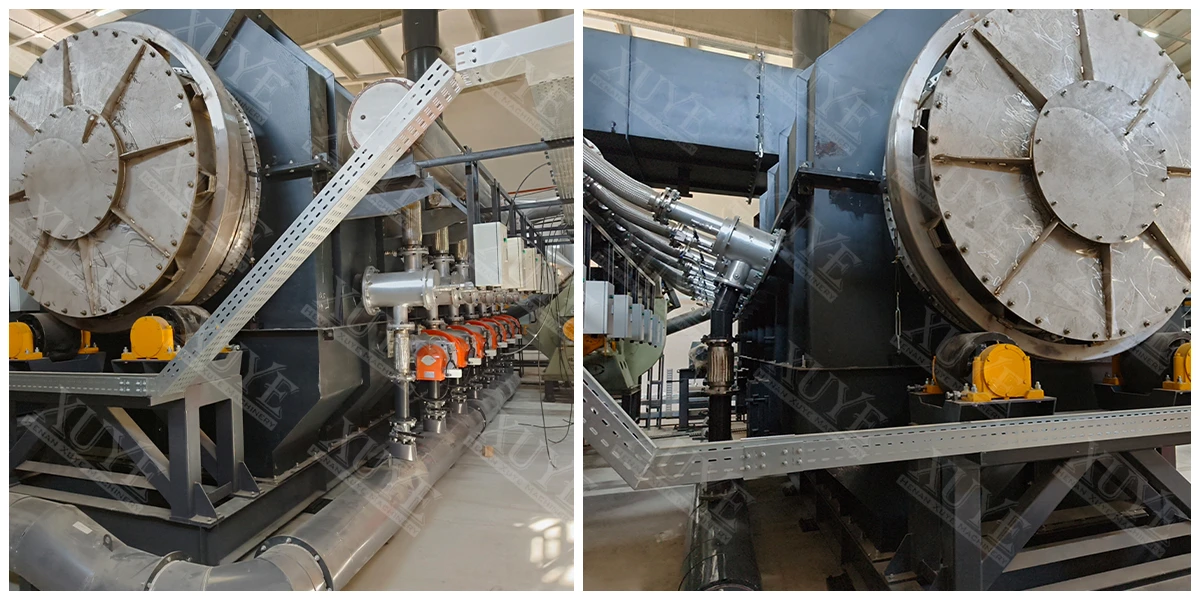
The material is continuously fed into the rotary kiln through a feed system and rotates within the furnace, achieving dynamic and uniform heating, avoiding the production bottlenecks associated with traditional batch processes.
At high temperatures (typically 800–950°C), water vapor reacts with the carbon material (C + H₂O → CO + H₂), expanding the pore structure and forming activated carbon with a high specific surface area. Steam as an activation agent is environmentally friendly and controllable.
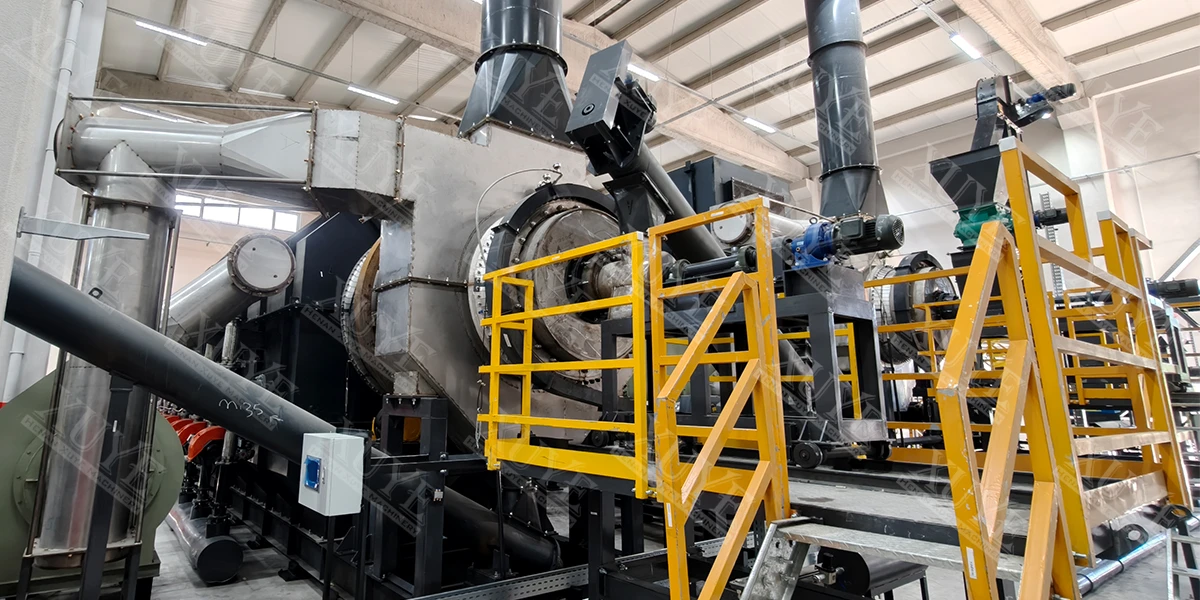
1.Feeding
Pretreated raw materials are continuously fed into the rotary kiln’s feed port via a specialized feeding device. This device, typically a screw feeder or other device, precisely controls the feed rate and amount, ensuring uniform distribution and a stable supply of material within the furnace.
In the preheating zone, the material gradually heats up through heat exchange with the hot flue gases or heating elements within the furnace, preparing for the subsequent activation reaction.
2.Preheating
Heating and Activation
Heating and Rising Zone
Temperature Range: 800-1050°C
Steam Activation Zone
Core Reaction Zone: The temperature is raised to a specified temperature, and superheated steam (pressure 0.1–0.4 MPa) is introduced.
3.Activation Reaction
C + H₂O → CO + H₂ (endothermic reaction)
C + H₂O → CO + H₂ (endothermic reaction)
The steam selectively oxidizes the carbon, expanding the microporous structure, resulting in an iodine value of 1700 mg/g and a specific surface area of 1500 m²/g.
Dynamic Contact: The rotary kiln rotates (1–5 rpm) to tumble the material, ensuring uniform and thorough steam contact.
The activated material enters the cooling zone. Within this zone, cool air is introduced into the furnace or other cooling methods are used to rapidly cool the material, preventing overreaction or degradation of product performance.
4.Cooling
Discharge
The activated carbon is discharged through a water-cooled screw discharger to prevent spontaneous combustion of the high-temperature material upon contact with air.
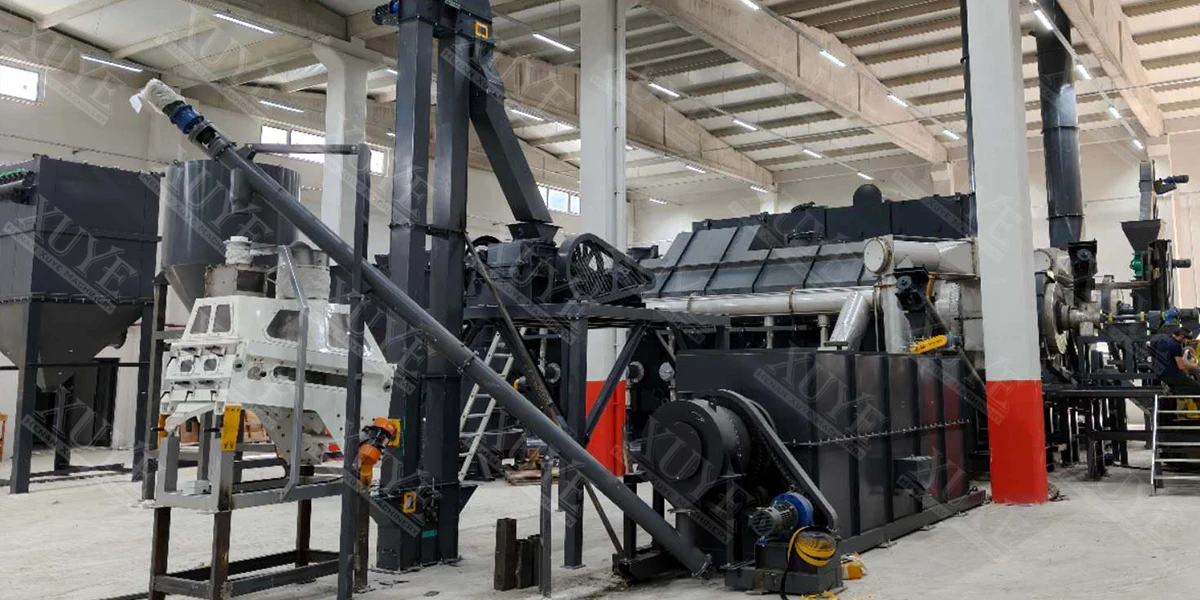
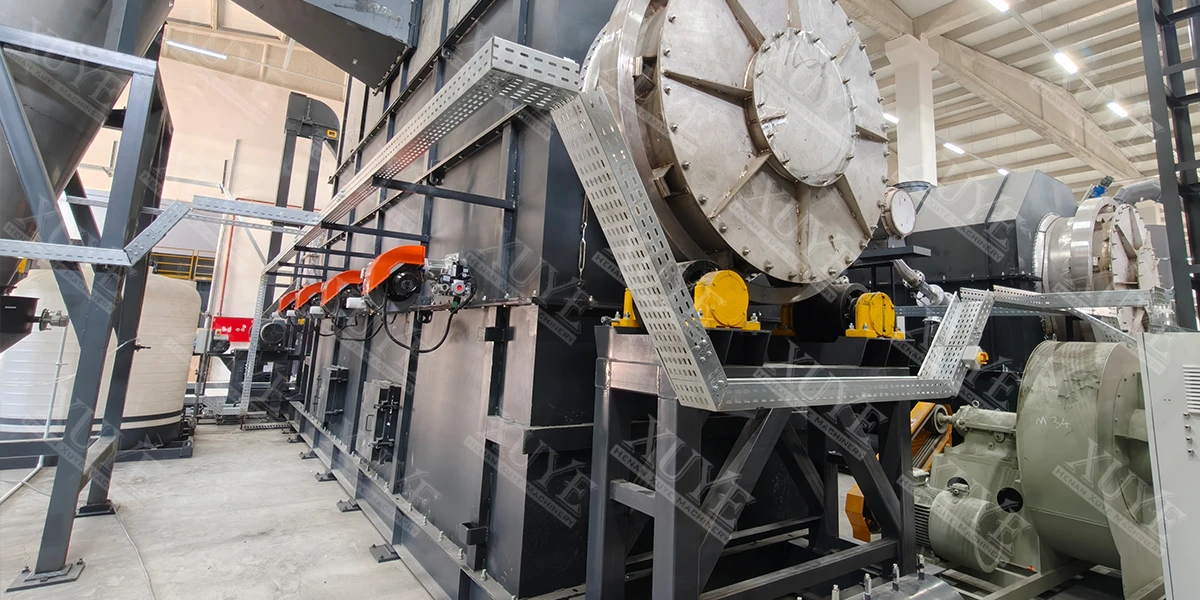
1.Furnace Design
The furnace body features a double-layered shell with a central fan, enabling rapid temperature changes and effectively reducing the shell surface temperature, minimizing heat loss. Furnace tubes are typically constructed of high-quality heat-resistant metals, such as 310S alloy, offering excellent high-temperature and corrosion resistance.
2.Heating System
Equipped with advanced heating devices, such as electric heating wires, the heating power can be adjusted according to production needs. High temperature control precision ensures uniform and stable furnace temperatures, meeting the activation process requirements of different materials.
3.Sealing Device
Reliable sealing structures, such as mechanical seals or stainless steel flange seals, are employed at both ends of the furnace body to prevent gas leakage and maintain a stable activation atmosphere.
4.Drive System
Comprising a rotary motor and a reducer, the gear transmission drives the furnace body at an appropriate speed, ensuring uniform heating and sufficient reaction within the furnace.
5.Feeding and Discharging System
Utilizing specialized feeders and dischargers, the system enables continuous and stable material feeding and discharging, ensuring a continuous production process.
Exhaust gas treatment: Unreacted steam and volatile substances are recovered through combustion or condensation, meeting environmental protection requirements.

| capacity | 5-8t/d | 8-10t/d | 10-12t/d | 12-15t/d | 15-20t/d |
| Dryer model | HG-800 | HG-1000 | HG-1200 | HG-1500 | HG-1800 |
| Dryer power | 3kw | 4kw | 7.5kw | 15kw | 22kw |
| continuous carbonization furnace model | TH-1500 | TH-1500 | TH-1800 | TH-2000 | TH-2000 |
| Carbonization temperature | 600-850℃ | ||||
| Fixed carbon content after carbonization | 70-80% | ||||
| Carbonization furnace drum material | 309S/310S | 309S/310S | 309S/310S | 309S/310S | 309S/310S |
| Activation furnace model | HN-5 | HN-8 | HN-10 | HN-12 | HN-15 |
| Activation furnace power | 15kw | 22kw | 30kw | 37kw | 37kw |
| Activation furnace chamber material | QQ345+nano thermal insulation board+refractory | ||||
| Activation temperature | 850-950℃ | ||||
| Activator | Water vapor or Phosphoric acid (customized according to customer requirements, equipment design will be updated) | ||||
| Activation time | 1-2h | ||||
| Cooling machine model | GTL-1004 | GTL-1204 | GTL-1206 | GTL-1504 | GTL-1506 |
| Temperature after cooling | ≤40℃ | ||||
| Activated carbon crusher model | SGP-400 | SGP-400 | SGP-600 | SGP-800 | SGP-800 |
| Activated carbon finished product size | 4-60mesh | ||||
| Activated carbon iodine value | 800-1300mg/g | ||||
| Activated carbon specific surface area | 800-1500m²/g | ||||
| Activated carbon strength | ≥95 | ||||
| CTC | ≥60% | ||||
| Filling density | 0.45-0.55g/cm3 | ||||
| Activated carbon ash | ≤3% | ||||
Frequently asked questions about activated carbon making machine
This website uses cookies to improve your browsing experience. By continuing to use this site, you accept the use of our cookies. Data collected from this website is processed and stored in the United States.