 Henan Xuye Machinery Equipment Co., Ltd.
SEARCH WHAT YOU WANT
Search allProductNews
SEARCH
Activated carbon is a porous carbon material widely used for water purification, air treatment, wastewater treatment, solvent recovery, gas purification, food processing, and many industrial applications. Its ability to adsorb contaminants comes from its highly developed internal pore structure and large specific surface area.
But how is activated carbon made?
The production of activated carbon generally involves several stages, including raw material preparation, drying, crushing or screening, carbonization, activation, cooling, screening, and final packaging. The exact process depends on the raw material, the required activated carbon properties, and the final application.
Common raw materials include coconut shells, wood, coal, bamboo, fruit shells, nut shells, and other carbon-rich biomass materials.
This article explains the complete activated carbon production process, the difference between carbonization and activation, commonly used activation methods, and the role of activated carbon production equipment.
Activated carbon is a carbonaceous material that has been processed to develop a large number of pores throughout its structure.
Unlike ordinary charcoal, activated carbon has undergone an additional activation process that significantly increases its internal pore structure. These pores provide adsorption sites where gases, dissolved organic compounds, odors, and other substances can be captured.
Activated carbon is available in several forms, including:
The manufacturing process can be adjusted to produce different pore structures and particle sizes for different applications.
A typical activated carbon manufacturing process can be divided into the following stages:
Raw Material Preparation → Drying → Crushing/Screening → Carbonization → Activation → Cooling → Screening → Packaging
Depending on the production line and raw material, some steps can be combined or modified.
For example, a coconut shell activated carbon production line may use coconut shells as the raw material, while a wood-based activated carbon line may require different preparation and carbonization conditions.
The two most important thermal stages are carbonization and activation.
The first step in activated carbon production is selecting a suitable carbon-rich raw material.
Different raw materials can produce activated carbon with different pore structures, hardness, ash content, and adsorption characteristics.
Common materials include:
Coconut shell is widely used for producing granular and powdered activated carbon. It is a relatively hard biomass material and can be suitable for applications requiring a developed microporous structure.
Wood is commonly used for producing activated carbon, particularly when a larger pore structure is desired for certain applications.
Coal is another important raw material for activated carbon manufacturing. Different coal types can result in different physical and adsorption characteristics.
Materials such as almond shells, walnut shells, hazelnut shells, apricot kernels, and other fruit or nut shells can also be processed into activated carbon.
Bamboo and other carbon-rich biomass materials may also be used when their characteristics and local availability are suitable.
The appropriate raw material should be selected according to the target product specifications rather than simply choosing the cheapest available material.
After the raw material is selected, it needs to be prepared for thermal processing.
Preparation may include:
A stable feed size helps improve the consistency of carbonization and activation.
For biomass-based raw materials, moisture content is particularly important because excessive moisture increases the energy required during drying and thermal processing.
Raw materials often contain moisture after collection, transportation, or storage.
A drying system can reduce moisture before carbonization.
Industrial dryers used for activated carbon production may include:
The required drying conditions depend on the raw material and the design of the production line.
Proper drying can help stabilize the downstream carbonization process and reduce unnecessary heat consumption.
After drying, the raw material may be crushed and screened to achieve the required particle size.
Particle size is important because it affects heat transfer, residence time, and the uniformity of thermal treatment.
For example, coconut shells or fruit shells may first be crushed into smaller pieces before entering a carbonization furnace.
A typical preparation system may include:
Feeding → Crushing → Screening → Storage → Carbonization
The exact configuration depends on the raw material and final product requirements.
Carbonization is one of the key stages in activated carbon manufacturing.
During carbonization, the prepared raw material is heated in a controlled environment with limited oxygen.
The purpose is to remove a significant portion of volatile components and convert the original biomass or carbonaceous material into a carbon-rich solid called char or carbonized material.
The process can be represented simply as:
Raw Material → Heating → Volatile Matter Removal → Carbonized Material
During thermal decomposition, gases, vapors, and other volatile components are released.
The carbonized material retains the basic carbon framework but generally does not yet have the fully developed pore structure required for high-performance activated carbon.
This is why carbonization and activation should not be considered the same process.
This is one of the most important questions in activated carbon production.
Carbonization converts the raw material into a carbon-rich char by thermal decomposition under limited oxygen conditions.
Its main purpose is to:
Activation further develops the pore structure of the carbonized material.
Its purpose is to:
Therefore:
Carbonization produces carbonized material, while activation develops its adsorption structure.
Both processes are important in many activated carbon manufacturing routes.
Activation is the stage that gives activated carbon its characteristic porous structure.
There are two major industrial activation methods:
The appropriate method depends on the raw material and the desired properties of the final activated carbon.
Physical activation generally involves treating carbonized material at elevated temperature in the presence of an activating gas.
Common activating agents include:
Steam activation is widely used in industrial activated carbon production.
A simplified process is:
Carbonized Material + Steam + Heat → Developed Pore Structure
At elevated temperature, steam reacts partially with carbon and gradually develops pores inside the carbonized material.
The activation conditions, including temperature, residence time, steam flow, and material properties, influence the resulting pore structure.
For this reason, activation needs to be carefully controlled rather than simply increasing the temperature.
Steam activation is commonly used for producing activated carbon from coconut shells, wood, fruit shells, and other carbonaceous materials.
A typical process includes:
Carbonized material is continuously fed into the activation furnace.
The material is heated to the required activation temperature.
Steam is introduced into the activation zone under controlled conditions.
Steam reacts with carbon and gradually develops the internal pore structure.
The residence time is adjusted according to the target product characteristics.
The activated product needs to be cooled under controlled conditions before further processing.
The actual activation temperature and operating conditions depend on the raw material, equipment design, and target product.
Chemical activation uses chemical activating agents to develop porosity.
Depending on the production technology, chemicals such as phosphoric acid or alkaline activating agents may be used.
A simplified process includes:
Raw Material Preparation → Chemical Impregnation → Thermal Treatment → Washing → Drying → Screening
Chemical activation can be suitable for certain raw materials and applications, but it requires additional chemical handling, washing, wastewater treatment, and process control.
Therefore, the choice between physical and chemical activation should be based on the required product properties, raw material, environmental requirements, and production conditions.
The activated carbon furnace is one of the most important pieces of equipment in an activated carbon production line.
Industrial systems can use different furnace configurations depending on the production capacity and process.
Common equipment includes:
The furnace needs to provide controlled heating and stable material residence time.
Important design factors include:
For continuous production, rotary equipment is often selected because material can move through the furnace continuously while being thermally treated.
In an external-heating system, heat is transferred to the processing material through the furnace wall rather than directly mixing the combustion gas with the material.
One possible industrial configuration uses combustible gases generated during thermal processing as a heat source.
The combustible off-gas can be directed to an external combustion chamber, where it is burned to generate heat for the furnace.
This approach can help improve heat utilization and reduce dependence on additional fuel under suitable operating conditions.
However, actual fuel consumption depends on:
Therefore, fuel consumption should be evaluated based on the complete process rather than a single equipment specification.
An internal-heating rotary kiln transfers heat to the material mainly through direct contact with hot gases.
The design can provide efficient heat transfer and continuous processing.
Internal-heating systems may be used for different thermal processing applications depending on the material and process requirements.
The selection between internal and external heating depends on the specific production process, material characteristics, required atmosphere, and product specifications.
Thermal processing of carbonaceous raw materials can generate combustible gases and vapors.
In appropriately designed systems, combustible gases can be collected and burned in a controlled combustion chamber to provide process heat.
A simplified heat-utilization system can be represented as:
Carbonization/Activation → Combustible Gas → Combustion Chamber → Heat → Furnace
This can improve overall thermal integration.
Some activated carbon production systems also incorporate heat recovery from high-temperature exhaust gases.
The actual energy performance depends on the complete system design and operating conditions.
After activation, the activated carbon remains at a high temperature.
It needs to be cooled before screening, storage, and packaging.
Controlled cooling is important because freshly activated carbon can react with oxygen at elevated temperatures.
Depending on the equipment configuration, cooling may be carried out using:
The cooling method should be selected according to the product, capacity, and plant design.
After cooling, the activated carbon can be screened into different particle sizes.
Typical products include:
Screening equipment separates the material according to particle size.
For some applications, the activated carbon may also undergo crushing, grinding, pelletizing, or shaping before final packaging.
Some activated carbon products require additional treatment after activation.
Depending on the production method, post-treatment can include:
Chemical activation normally requires more extensive washing and wastewater treatment than a conventional steam activation process.
The required treatment depends on the raw material, activation method, and final product specifications.
Activated carbon quality should be evaluated according to its intended application.
Important quality indicators can include:
Iodine number is commonly used as an indicator related to the adsorption characteristics of activated carbon, particularly for smaller pores.
Methylene blue adsorption is often used to evaluate adsorption behavior associated with larger pores.
Moisture content affects transportation, storage, and product performance.
Ash represents inorganic mineral components remaining in the carbon.
Hardness is particularly important for granular activated carbon used in applications involving repeated handling or water treatment.
Particle size affects pressure drop, adsorption kinetics, handling, and application performance.
Specific surface area provides information about the developed porous structure, although it should not be used alone to determine adsorption performance.
The appropriate testing parameters should be selected based on the customer’s application and product specification.
A typical biomass-based activated carbon production line may follow this process:
Raw Material
↓
Impurity Removal
↓
Crushing / Size Reduction
↓
Drying
↓
Screening
↓
Carbonization
↓
Carbonized Material
↓
Activation with Steam or Other Activating Agent
↓
Cooling
↓
Crushing / Grinding if Required
↓
Screening
↓
Quality Testing
↓
Packaging
The exact process can vary depending on whether the raw material is coconut shell, wood, coal, bamboo, almond shell, hazelnut shell, or another carbonaceous material.
Coconut shell is one of the commonly used biomass raw materials for activated carbon production.
A typical coconut shell activated carbon process includes:
Coconut Shell → Crushing → Drying → Carbonization → Steam Activation → Cooling → Screening → Packaging
The coconut shells are first cleaned and reduced to a suitable size.
After drying, the shells are carbonized in a controlled thermal environment.
The resulting char is then activated, commonly using steam at elevated temperature.
After activation, the product is cooled, screened, and classified according to the required particle size.
Coconut shell activated carbon is commonly used in applications such as water purification, drinking water treatment, air purification, and other adsorption processes.
Wood-based activated carbon can be manufactured using a somewhat different process from coconut shell carbon.
A simplified route is:
Wood → Size Reduction → Drying → Carbonization or Thermal Treatment → Activation → Cooling → Grinding/Screening → Packaging
Wood-based activated carbon can be processed into powdered or granular products.
The characteristics of the final product depend strongly on the wood species, preparation method, carbonization conditions, activation conditions, and post-treatment.
Fruit and nut shells can provide another biomass source for activated carbon production.
Examples include:
A typical production route is:
Shell Raw Material → Drying → Crushing → Carbonization → Activation → Cooling → Screening
The exact equipment configuration depends on the shell type, moisture content, particle size, required capacity, and desired activated carbon properties.
For commercial production, laboratory testing is recommended before finalizing industrial equipment parameters.
A complete activated carbon production line may contain several types of equipment.
Typical equipment includes:
A complete production line should be designed as an integrated system rather than selecting each machine independently.
Before purchasing activated carbon production equipment, several factors should be evaluated.
The first question is what raw material will be processed.
Coconut shell, wood, coal, bamboo, and fruit shells have different physical and chemical characteristics.
The required capacity can range from small pilot-scale production to continuous industrial production.
Capacity affects:
The required activation method should be determined based on the target activated carbon product.
Steam activation is widely used for physical activation, while chemical activation may be selected for specific applications.
The target product should be defined before equipment selection.
For example:
Different products may require different finishing equipment.
The plant should consider the available fuel, combustible process gas, electricity, steam, and heat recovery options.
Dust, exhaust gas, condensable vapors, and wastewater need to be considered during plant design.
The profitability of an activated carbon manufacturing project depends on many factors rather than equipment capacity alone.
Important factors include:
Waste biomass such as coconut shells, nut shells, and fruit shells may provide an attractive raw material source in areas where these materials are readily available.
However, a feasibility study should be completed before investing in a commercial production line.
Activated carbon can sometimes be regenerated after it becomes saturated with adsorbed contaminants.
Thermal regeneration is one industrial method used to restore adsorption capacity.
A simplified process is:
Spent Activated Carbon → Drying → Thermal Regeneration → Cooling → Reuse
Regeneration conditions depend heavily on the contaminants adsorbed onto the activated carbon.
Not every spent activated carbon product can be regenerated effectively. Some chemicals may decompose, react, remain strongly bonded to the carbon, or cause excessive loss of carbon during treatment.
Therefore, regeneration performance should be determined through testing rather than assuming that all spent activated carbon can be restored to its original performance.
It is important to understand that producing charcoal or biochar is not necessarily the same as producing activated carbon.
The primary objective is to convert biomass into carbon-rich material.
The objective is generally to produce a stable carbon-rich material for applications such as soil amendment, carbon management, or other uses.
The objective is to develop a highly porous carbon material with adsorption properties suitable for specific applications.
Therefore, an activated carbon production line normally requires a dedicated activation stage after carbonization.
Activated carbon is commonly produced by preparing a carbon-rich raw material, drying it, carbonizing it under controlled conditions, activating the carbonized material, cooling it, and finally screening and packaging the product.
Common raw materials include coconut shells, wood, coal, bamboo, almond shells, hazelnut shells, walnut shells, and other carbon-rich materials.
Activated carbon has undergone an additional activation process that develops its internal pore structure and adsorption capacity. Ordinary charcoal has not necessarily undergone this activation process.
The required temperature depends on the raw material and activation method. Industrial physical activation commonly uses high-temperature treatment, often around the range of approximately 800–1,000°C, but the appropriate operating conditions must be determined according to the material, equipment, and target product.
Yes. Coconut shells are commonly used as a raw material for activated carbon production and can be processed through carbonization followed by activation.
Yes. Various fruit and nut shells can be converted into carbonized material and subsequently activated when their properties are suitable for the intended product.
A commercial production line may include raw material preparation equipment, dryers, carbonization furnaces, activation furnaces, steam systems, coolers, crushers, screens, dust collectors, gas-treatment equipment, and packaging equipment.
Steam is commonly used in physical steam activation. However, not every activated carbon production process uses steam because chemical activation and other process routes are also possible.
Yes. Industrial activated carbon plants can be designed for continuous carbonization and activation using continuous rotary thermal processing equipment.
The activated carbon manufacturing process is a multi-stage thermal and mechanical process. While the exact production route varies according to the raw material and final application, the basic process generally includes raw material preparation, drying, carbonization, activation, cooling, screening, quality testing, and packaging.
Among these stages, carbonization and activation are particularly important. Carbonization converts the raw material into carbon-rich char, while activation develops the pore structure responsible for adsorption.
For industrial production, the selection of an activated carbon furnace, carbonization system, activation system, dryer, cooling system, and gas-treatment equipment should be based on the raw material, production capacity, target product, energy system, and environmental requirements.
For companies planning to produce activated carbon from coconut shells, wood, coal, fruit shells, nut shells, or other carbon-rich materials, pilot testing and process evaluation can help determine the appropriate production technology before investing in a complete production line.

Biochar is an environmentally friendly material produced by the pyrolysis of biomass that can improve soil fertility, absorb pollutants and help achieve carbon neutrality.
View details
Understand the chemical activated carbon production line equipment and professional production technology to help improve the adsorption performance of activated carbon.
View details
Phosphoric acid activation is a key technology for preparing highly porous activated carbon. This article explains in detail its production steps, phosphoric acid recovery methods and industry application cases.
View details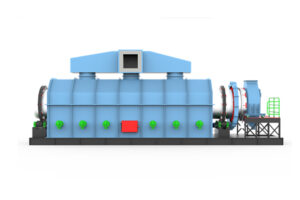
Activated carbon kiln, activated carbon production equipment, carbonization furnace, activation furnace
View details