 Henan Xuye Machinery Equipment Co., Ltd.
SEARCH WHAT YOU WANT
Search allProductNews
SEARCH
Steam activation is one of the most widely used methods for producing high-surface-area activated carbon from carbonaceous materials. By reacting carbonized raw materials with steam at high temperatures, the activation process develops a network of pores inside the carbon structure, significantly increasing its specific surface area, pore volume, and adsorption capacity.
The steam activation of activated carbon is commonly applied to coconut shells, wood, coal, bamboo, fruit shells, nut shells, and other biomass-derived carbon materials. Compared with chemical activation, physical activation using steam does not require chemical activating agents, making it an important process for industrial activated carbon production.
This article explains the principle, process flow, activation temperature, equipment, influencing factors, and applications of steam activation, helping manufacturers understand how steam can transform carbonized materials into high-performance activated carbon.
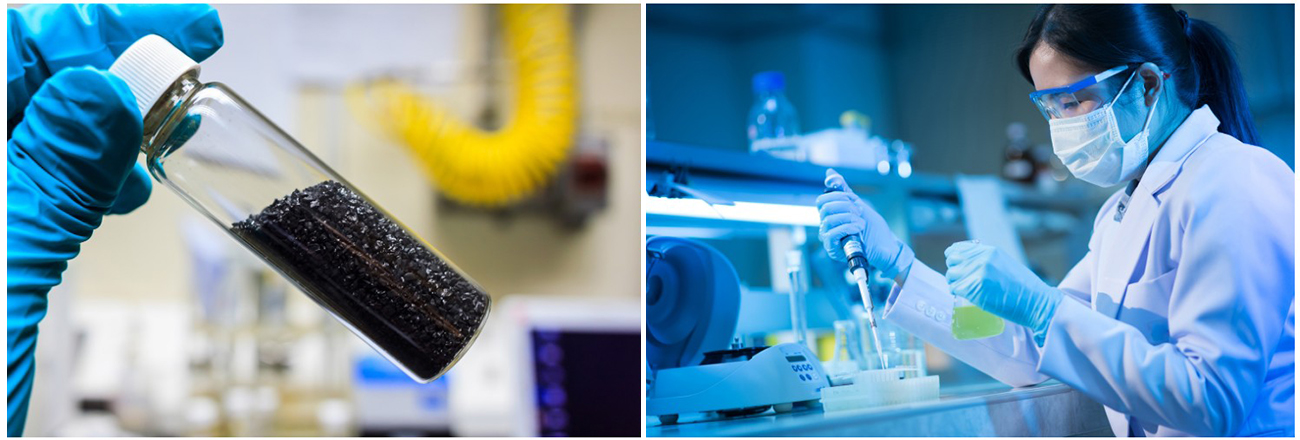
Steam activation is a physical activation process in which carbonized material reacts with water vapor at elevated temperatures. During this process, steam partially reacts with carbon atoms in the char, removing portions of the carbon matrix and creating or expanding pores.
The basic reaction can be simplified as:
C + H₂O → CO + H₂
A secondary reaction may also occur:
CO + H₂O → CO₂ + H₂
These reactions gradually consume part of the carbon structure. As carbon atoms are removed, previously inaccessible spaces become pores. The resulting activated carbon has a much larger internal surface area than the original carbonized material.
The objective is not to burn the carbon completely. Instead, the activation process must be carefully controlled so that a suitable pore structure is developed while maintaining a high carbon yield.
This balance between activation degree, pore development, carbon yield, and adsorption performance is one of the most important considerations in activated carbon manufacturing.
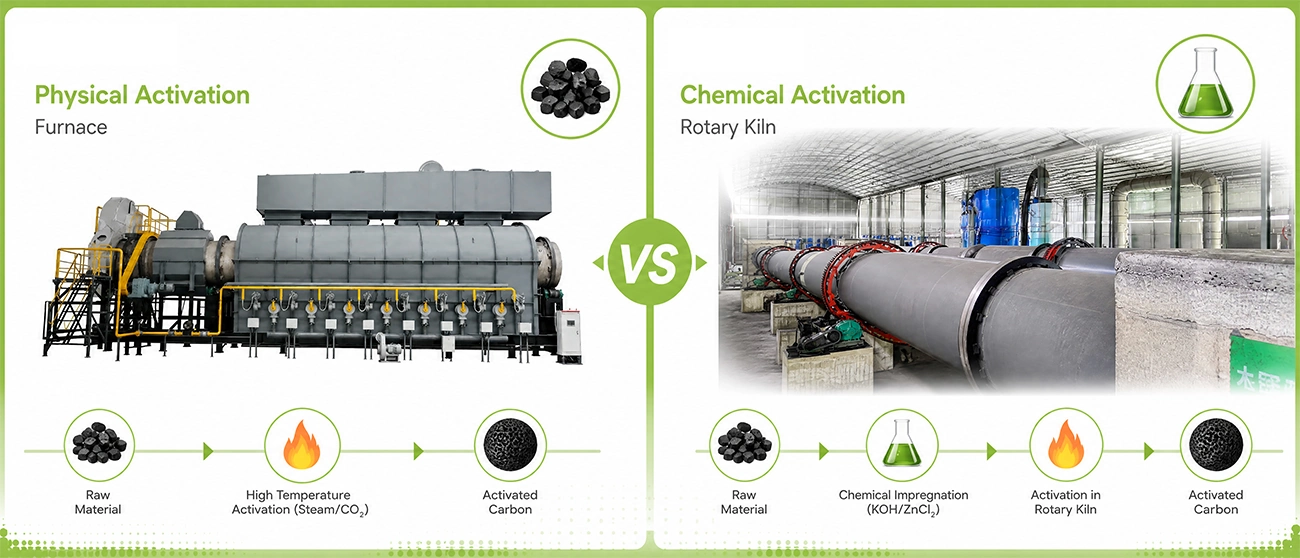
The principle of steam activation is based on the controlled gasification of carbon at high temperatures.
Carbonized material normally contains a relatively developed carbon skeleton, but many of its pores are blocked, narrow, or insufficiently developed. When high-temperature steam enters the activation furnace, it reacts with the reactive portions of the carbon structure.
As the reaction proceeds, carbon atoms are gradually removed from the walls and surfaces of existing pores.
The process generally involves three stages:
Initially, steam tends to react with the more reactive areas of the carbon matrix. Small pores and existing micropores may become more accessible. With increasing activation time and burn-off, some pores become larger and new pore channels can develop.
Therefore, the final pore structure depends strongly on the relationship between:
Proper process control is essential because excessive activation can enlarge micropores into mesopores or even destroy parts of the carbon structure.
Industrial steam activation usually consists of several major stages, from raw material preparation to final activated carbon processing.
The first step is selecting and preparing suitable carbonaceous raw materials.
Common materials include:
The raw material should generally have suitable carbon content and relatively low levels of undesirable inorganic components.
For biomass materials, particle size and moisture content are particularly important. Large variations in particle size can result in uneven heating and activation.
The material is therefore commonly crushed, screened, and dried before carbonization.
Before steam activation, many production processes first convert the raw material into charcoal or carbonized material.
Carbonization removes most volatile components from the feedstock through controlled heating in a low-oxygen or oxygen-limited environment.
The simplified process is:
Raw material → Carbonization → Charcoal/Char → Steam activation → Activated carbon
Carbonization and activation have different functions.
Carbonization primarily produces a stable carbon-rich structure, while activation develops the pore structure and increases adsorption capacity.
For example, coconut shells can first be converted into coconut shell charcoal and then processed through a high-temperature steam activation furnace.
The quality of the carbonized material has a direct influence on the final activated carbon.
After carbonization, the carbonized material enters the activation furnace.
The furnace is heated to a high operating temperature before or during the activation process. Steam is then introduced into the activation zone.
Industrial activation temperatures commonly fall within approximately 700–1000°C, although the optimum temperature depends on the raw material, furnace design, desired pore structure, activation time, and production target.
A higher temperature generally increases the reaction rate between carbon and steam. However, excessively severe conditions can result in excessive burn-off and reduced product yield.
Therefore, temperature should be selected together with steam flow rate and residence time rather than considered independently.
Once the activation zone reaches the required operating condition, steam is introduced into the furnace.
The steam must be distributed as evenly as possible throughout the carbon material.
The main function of steam is to react with the carbon matrix and develop pores.
If the steam supply is too low, activation may be insufficient.
If the steam supply is excessive, the reaction may become too aggressive, increasing carbon consumption and potentially reducing yield.
For continuous industrial production, the steam generation and distribution system should therefore be designed according to furnace capacity and material throughput.
This is the core stage of the steam activation process.
As steam reacts with the carbon structure, the carbon matrix is gradually gasified. Existing pores become more accessible and additional pores may form.
The resulting pore system generally includes:
Micropores are particularly important for adsorption of many small molecules, while mesopores and macropores can contribute to molecular transport and adsorption of larger molecules.
The desired pore-size distribution depends on the intended application of the activated carbon.
For example, activated carbon used for gas adsorption may require a different pore structure from activated carbon used for liquid-phase purification.
After reaching the desired activation level, the activated carbon should be cooled under controlled conditions.
Direct exposure of very hot activated carbon to air can result in oxidation or even combustion.
Therefore, cooling conditions should be carefully controlled before the product is exposed to atmospheric oxygen.
The cooled material can then be discharged for subsequent processing.
The activated carbon may subsequently undergo:
The final processing method depends on the required product form.
Activated carbon can be supplied as:
Particle size and pore characteristics should be selected according to the application.
Activated carbon activation temperature is one of the most important process parameters.
Steam activation is generally carried out at high temperatures, often around 700–1000°C. However, there is no single activation temperature suitable for every raw material or product.
The optimum temperature depends on several factors.
Different raw materials have different carbon structures and reactivity.
Coconut shell charcoal, wood charcoal, coal, bamboo charcoal, and other carbonized materials may require different activation conditions.
At the same temperature, a longer residence time can result in a higher degree of activation.
Steam concentration and flow rate affect the carbon-steam reaction.
If a product requires a high proportion of micropores, the activation conditions may differ from those used to produce a material with a greater proportion of mesopores.
Burn-off refers to the amount of carbon consumed during activation.
Increasing burn-off generally develops the pore structure but also reduces product yield.
Therefore, industrial production must find an appropriate balance between pore development and carbon recovery.
Activated carbon can generally be produced through physical activation or chemical activation.
Steam activation is a form of physical activation.
| Feature | Steam Activation | Chemical Activation |
|---|---|---|
| Activating agent | Steam | Chemical agents |
| Typical temperature | High | Generally lower |
| Process atmosphere | Controlled gas/steam atmosphere | Chemical environment |
| Chemical consumption | Low | Higher |
| Post-treatment | Usually simpler | May require washing |
| Pore development | Highly controllable | Highly dependent on chemical agent |
| Common raw materials | Coconut shell, coal, wood, biomass | Biomass and other carbonaceous materials |
Steam activation has the advantage of avoiding large quantities of chemical activating agents.
However, it generally requires higher temperatures and considerable thermal energy.
Chemical activation, meanwhile, can generate highly developed pore structures under different processing conditions, but chemical recovery, washing, and wastewater treatment may become important considerations.
The appropriate method depends on the raw material, product specifications, plant configuration, energy availability, and environmental requirements.
A reliable activation furnace is essential for industrial steam activation.
The main equipment used in a steam activation production line may include:
The activation furnace provides the high-temperature environment required for the carbon-steam reaction.
Depending on the production design, activated carbon can be processed using rotary kilns, rotary activation furnaces, or other specialized thermal processing equipment.
A continuous rotary kiln can provide continuous feeding, heating, activation, and discharge.
A steam generator supplies the water vapor required for activation.
The steam system should provide stable and controllable steam conditions.
The feeding system transfers carbonized material into the activation furnace.
A controlled feeding system helps maintain stable production capacity and residence time.
After activation, the material must be discharged from the furnace while maintaining suitable operating conditions.
The activated carbon must be cooled before further processing.
Fine carbon particles can be generated during material handling and processing. Industrial production may therefore require dust collection and gas treatment systems.
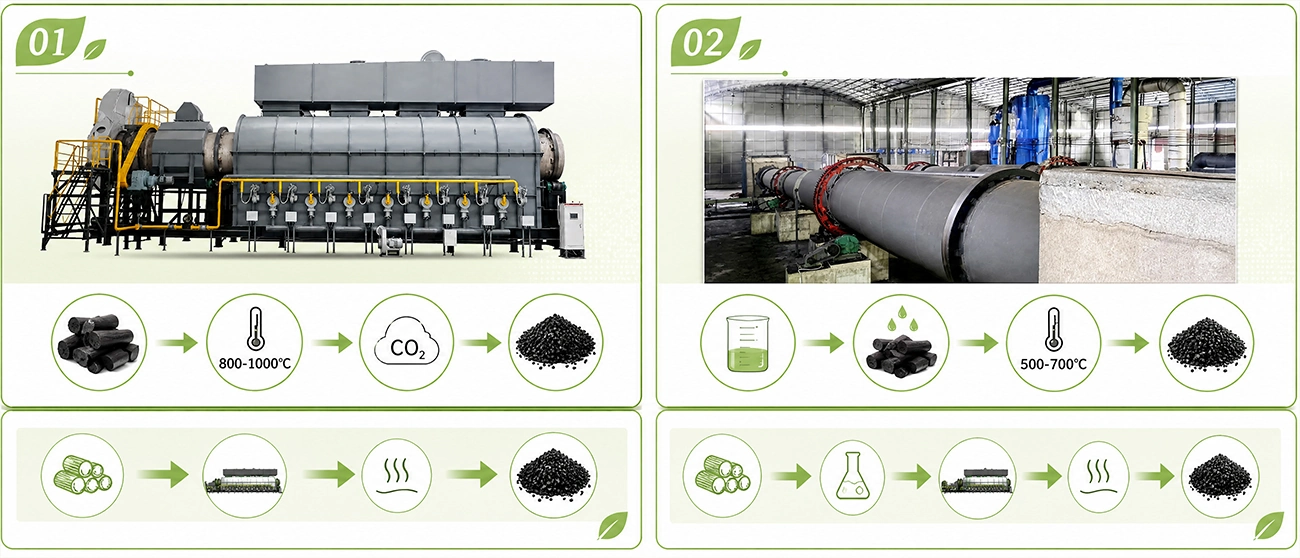
For large-scale activated carbon manufacturing, continuous activation equipment can provide several production advantages.
A continuous steam activation furnace can continuously feed carbonized material into a high-temperature activation zone.
The basic process can be represented as:
Carbonized material → Feeding → Preheating → High-temperature activation → Steam reaction → Cooling → Discharge
Compared with batch processing, continuous production can help maintain stable operating conditions and improve production efficiency.
A rotary kiln is particularly suitable for processing granular or irregular carbonized materials because the rotating cylinder continuously moves and mixes the material as it passes through the furnace.
The actual equipment configuration should be designed according to the raw material, required capacity, particle size, activation degree, fuel type, and plant conditions.
One of the key reasons activated carbon has excellent adsorption properties is its enormous internal surface area.
A piece of charcoal may appear solid from the outside, but its internal structure can contain a large network of pores.
Steam activation selectively removes carbon from this structure.
Imagine a dense carbon matrix containing small channels. As steam reacts with carbon, some carbon walls are removed. The channels become deeper, wider, and more interconnected.
This creates additional internal surfaces.
Consequently, a relatively small quantity of activated carbon can provide a very large surface area for adsorption.
The increase in surface area is therefore closely related to the development of the pore network during activation.
However, higher surface area does not automatically mean better performance for every application. Pore size distribution, surface chemistry, particle size, ash content, and other characteristics can also affect adsorption performance.
Several parameters influence the final activated carbon quality.
Temperature affects the reaction rate between steam and carbon.
Higher temperatures generally accelerate activation, but excessive temperature can increase burn-off.
Longer activation time usually results in greater carbon conversion.
However, excessive activation may cause pore widening and structural degradation.
Steam must be supplied at a suitable rate to achieve uniform activation.
Insufficient steam may cause incomplete activation, while excessive steam can increase carbon consumption.
Particle size affects heat transfer and gas penetration.
Uniform particle size can contribute to more consistent activation.
The properties of the starting char strongly influence the final activated carbon.
Poorly carbonized material may lead to inconsistent activation.
In a continuous furnace, residence time determines how long the material remains under activation conditions.
Stable residence time is important for maintaining consistent product quality.
Burn-off is a critical indicator of activation severity.
Moderate burn-off can significantly improve pore development, while excessive burn-off can reduce yield and damage the carbon structure.
Steam activation has several advantages for industrial activated carbon production.
Steam itself acts as the activation medium, reducing the need for chemical activation agents.
Steam activation can be integrated with continuous rotary furnaces and automated feeding systems.
A wide range of carbonaceous materials can be processed.
Temperature, residence time, steam supply, and burn-off can be adjusted to control pore development.
With appropriate furnace design and process control, steam activation can be applied to industrial-scale production.
Activated carbon kiln, activated carbon production equipment, carbonization furnace, activation furnace
View details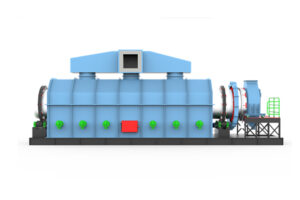
Activated carbon kiln, activated carbon production equipment, carbonization furnace, activation furnace
View details
Activated carbon kilns designed specifically for coconut shells, wood, coal and other raw materials optimize carbonization and activation processes, improve the adsorption performance of finished products, and provide free raw material testing ser...
View details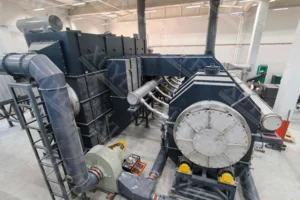
Customized activated carbon kiln specifications according to customer needs, providing full technical solutions from laboratory-level small equipment to large production lines, supporting PLC automation control.
View details